Pension is a basic entitlement and its payment cannot be denied: HC
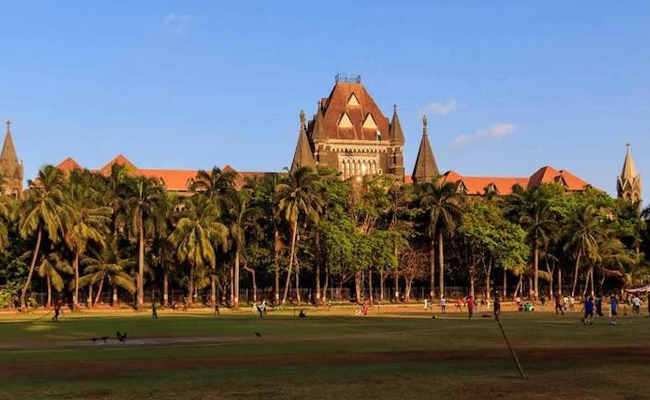
Mumbai (PTI): Pension is a basic entitlement and retired employees cannot be deprived of this payment, which is a very source of livelihood for them, the Bombay High Court has said, rapping the Maharashtra government for withholding the dues of a man for more than two years after his retirement.
A division bench of Justices G S Kulkarni and Jitendra Jain on November 21 said such a "state of affairs was totally unconscionable".
The HC was hearing a petition filed by one Jayram More, who used to work as a 'hamal' (coolie) with the Savitribai Phule Pune University since 1983, seeking a direction to the Maharashtra government to release his pension amount.
The high court noted that More had rendered a meritorious and unblemished service but still on untenable and technical grounds for a period of two years from his retirement (May 2021), he was not paid pension.
More in his plea claimed that the pension was not being paid despite submission of all necessary documents by the University to the concerned department of the state government.
"From the beginning of the present proceedings, we were wondering as to whether any person who superannuates after a long unblemished service should at all suffer such a plight, after having rendered a long service of about 30 years and be deprived of basic entitlement of pension, being the very source of livelihood," the bench said.
The bench referred to a four-decade-old Supreme Court order and said the antiquated notion of pension being a bounty, a gratuitous payment depending upon the sweet will or grace of the employer and not claimable as a right, was held as wrong.
"In such a decision, the Supreme Court had authoritatively ruled that pension is a right and payment of it does not depend on the discretion of the government and would be governed by the rules," the high court said.
The bench noted that from a large number of cases coming to this court with people seeking for their pension amount to be paid to them, it appears that the SC order was "more forgotten than applied and implemented in its true spirit".
The high court had in its earlier orders noted that More had suffered for three years and had directed the government to take all necessary steps to release the pension benefits to More within four weeks.
On Tuesday, the bench was informed by the government that More's pension along with arrears had been released and received by him.
The bench accepted the statement and disposed of the petition but said henceforth More should be paid his monthly pension regularly and with no default.
The HC noted that this case was an "eye-opener" that if government officers promptly consider the grievances of its staff, then there would be no need for such aggrieved persons to approach the courts.
"We may observe that many of such issues, in fact, do not require adjudication and can stand resolved at the level of the department, providing there is a willingness to do so, by the officers of the state government," the bench said.
Let the Truth be known. If you read VB and like VB, please be a VB Supporter and Help us deliver the Truth to one and all.
People are voting fearlessly in West Bengal this time: PM Modi
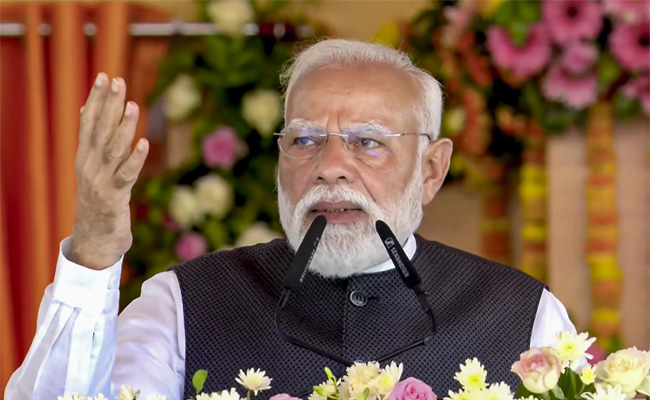
Hardoi (UP) (PTI): Prime Minister Narendra Modi on Wednesday said voters
are casting their vote in West Bengal this time in a "fearless atmosphere", which was unimaginable in the past six or seven decades.
He also asserted that the assembly poll results on May 4 will further strengthen the resolve of a developed India.
Voting is underway in 142 constituencies of West Bengal in the second and final phase of polling.
Addressing a gathering after the inauguration of the Ganga Expressway here, Modi said today marks an important day in the festival of democracy.
"Voting for the second phase is underway in Bengal, and reports indicate a massive turnout, with people stepping out in large numbers just like in the first phase. Images of long queues at polling stations are flooding social media, reflecting the enthusiasm of the people to exercise their democratic right," he said.
"What we are witnessing in Bengal today is unprecedented which was difficult to imagine in the past six to seven decades, a fearless environment where people are voting without fear," he said.
The prime minister said this is a powerful symbol of the country's Constitution and the strengthening of democracy.
"I express my gratitude to the great people of Bengal for being so aware of their rights and participating in large numbers," he said.
With several hours of voting still left, the prime minister urged the people of Bengal to continue participating in this democratic festival with the same enthusiasm.
Modi said in the recent Bihar Assembly elections, the BJP and NDA achieved a historic and decisive victory.
"Just yesterday, results of local body elections in Gujarat showed that the BJP secured victories in nearly 80 to 85 percent of municipalities and panchayats.
"The results on May 4 will further strengthen the resolve of a developed India and will infuse new energy into the pace of development of the country."
The first phase of polling for 152 seats -- out of the 294-member West Bengal assembly -- was held on April 23.
The counting of votes for assembly polls in Kerala, West Bengal, Puducherry, Assam and Tamil Nadu will take place on May 4.