People have right to clean air, water, says SC on reasons for closure of Vedanta plant in TN
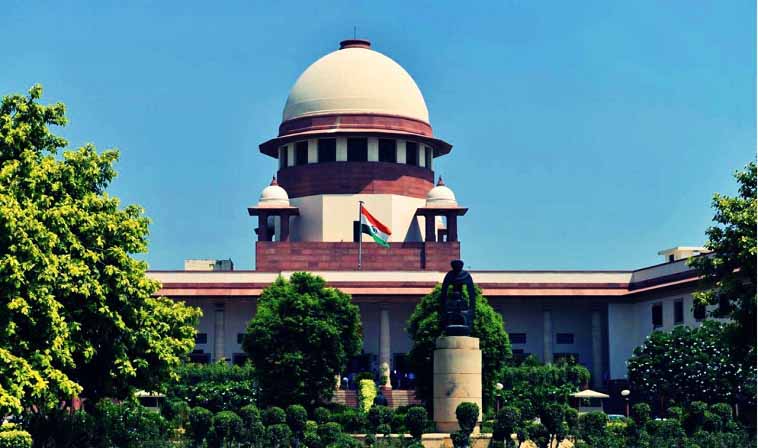
New Delhi (PTI): People have a right to breathe clean air, drink clean water and live a life free from disease and sickness, the Supreme Court has said, while upholding the principle of sustainable development and coming down hard on polluting industries.
In a reasoned order on the closure of the Vedanta group firm Sterlite Copper in Tamil Nadu's Thoothukudi, a bench headed by Chief Justice D Y Chandrachud said closure of industry is not a matter of first choice but the nature of violations by the unit and repeated and severe breaches of environmental norms would have left neither the statutory authorities nor the Madras High Court with the option to take any other view unless they were to be oblivious of their plain duty.
The bench, also comprising Justices JB Pardiwala and Manoj Misra, had on February 29 dismissed an appeal of Vedanta Ltd. against the high court order upholding the closure of the copper smelting plant, closed since May 2018 over pollution concerns.
"It is an undeniable and fundamental truth that all persons have the right to breathe clean air, drink clean water, live a life free from disease and sickness, and for those who till the earth, have access to uncontaminated soil," the apex court said.
It said these rights are not only recognised as essential components of human rights but are also enshrined in various international treaties and agreements, such as the Universal Declaration of Human Rights, the Convention on Biological Diversity, and the Paris Agreement.
"As such, they must be protected and upheld by governments and institutions worldwide, even as we generate employment and industry. The ultimate aim of all our endeavours is for all people to be able to live 'the good life'. Without these basic rights, increased revenue and employment cease to have any real meaning. It is not merely about economic growth but about ensuring the well-being and dignity of every individual," the bench said.
The court said it is conscious of the fact that the unit has been contributing to the productive assets of the nation and providing employment and revenue in the area.
"While these aspects have undoubted relevance, the Court has to be mindful of other well-settled principles including the principles of sustainable development, the polluter pays principle, and the public trust doctrine," it said.
The polluter pays principle, a widely accepted norm in international and domestic environmental law, asserts that those who pollute or degrade the environment should bear the costs of mitigation and restoration.
The verdict, which was uploaded on Wednesday, said the polluter pays principle serves as a reminder that economic activities should not come at the expense of environmental degradation or the health of the population.
While dismissing the appeal, the bench said, the public trust doctrine, recognised in various jurisdictions, including India, establishes that the state holds natural resources in trust for the benefit of the public.
It added while the industry has played a role in economic growth, the health and welfare of the residents of the area is a matter of utmost concern, and in the ultimate analysis, the state government is responsible for preserving and protecting their concerns.
"As consistently held in numerous decisions of this Court, the unequivocal right to a clean environment is an indispensable entitlement extended to all persons. Air, which is polluted beyond the permissible limit, not only has a detrimental impact on all life forms including humans, but also triggers a cascade of ecological ramifications. The same is true for polluted water, where the pervasive contamination poses a profound threat to the delicate balance of ecosystems," it said.
It added that the impact of environmental pollution and degradation is far reaching and it is often not only severe but also persists over the long term.
"While some adverse effects may be immediately evident, the intensity of other kinds of harm reveals itself over time. Persons who live in surrounding areas may develop diseases which not only result in financial burdens but also impact the quality of life. The development and growth of children in these communities may become stunted, creating a tragic legacy of compromised potential," the bench said in its 17-page detailed order.
The bench also dismissed a separate plea filed by the Tamil Nadu Pollution Control Board (TNPCB) which was aggrieved by some observations made against it by the high court.
The plant has been closed since May 2018 after 13 people were killed as police opened fire to quell a protest over alleged pollution caused by it.
Thoothukudi, formerly known as Tuticorin, is an industrial city in Thoothukudi district of Tamil Nadu.
At least 13 people were killed and many injured on May 22, 2018, when police opened fire on a huge crowd of people protesting against pollution allegedly caused by the copper smelting unit and its proposed expansion.
Subsequently, the Tamil Nadu government and the TNPCB ordered closure of the mining group's plant over pollution concerns.
Let the Truth be known. If you read VB and like VB, please be a VB Supporter and Help us deliver the Truth to one and all.
Late flourish masks CSK’s batting woes on lively Chepauk track, hosts post 158/7

Chennai (PTI): Bowlers calling the shots in a format dominated by big hitters is a rarity, but that script played out at Chepauk on Sunday as Gujarat Titans exploited a lively, bounce-friendly surface to stifle Chennai Super Kings before the hosts managed a late flourish to reach 158 for 7.
On a pitch that offered sharp carry, stroke-making demanded discretion and adaptability. Instead, CSK’s batters often opted for high-risk shots without fully assessing conditions, and paid the price with a flurry of miscued dismissals.
Invited to bat, CSK never quite found rhythm but skipper Ruturaj Gaikwad’s maiden half-century (74 not out) of the current IPL season lent a semblance of respectability to the total in a season where 200-plus scores have become commonplace.
Gaikwad's knock came off 60 balls with six fours and four sixes after a laboured start.
The tone was set early by GT pacer Mohammed Siraj, who extracted steep bounce and forced errors.
Sanju Samson (11) began watchfully, negotiating the first over before opening up against Kagiso Rabada to bring up his 5000 IPL runs milestone. However, Rabada’s bounce soon accounted for him as a hard slash outside off resulted in a faint edge that Jos Buttler pouched safely.
The dismissal triggered a collapse. Urvil Patel (4) fell in the same Rabada over attempting an ambitious pull, while Sarfaraz Khan (0) succumbed to Siraj’s extra lift, mistiming a short ball to offer a simple catch.
At 28 for 3 inside the Powerplay, CSK were already in trouble.
Gaikwad and Dewald Brevis (2) needed to rebuild, but the latter’s impatience against spinner Manav Suthar led to his downfall, holing out after failing to get to the pitch of the ball.
The mounting wickets forced Gaikwad into a shell — an approach that, while understandable, further stalled the momentum. His reluctance to improvise allowed dot balls to pile up, with CSK reaching 50 only in the 12th over.
The skipper eventually broke free, taking on Arshad Khan and Jason Holder with a couple of towering sixes, but the acceleration came too late.
Shivam Dube, dropped thrice on 6, 11 and 22, struggled for fluency before Arshad cleaned him up.
Kartik Sharma (15) and Jamie Overton (18) provided late impetus with a few lusty hits, but the damage had already been done.
On a pitch that rewarded discipline and smart shot selection, Titans' bowlers executed their plans to perfection, while CSK’s batters failed to read the conditions in time, a lapse that ultimately defined the innings.