Permitting COVID-19 tests without prescription to make it "accessible' to more people: Experts
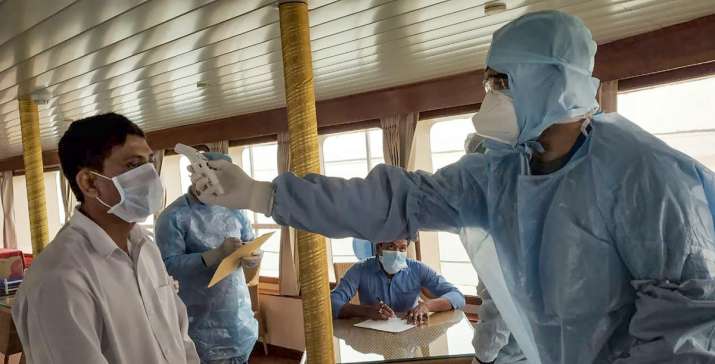
New Delhi: Hospitals and private labs on Wednesday welcomed the Delhi High Court's order that doctor's prescription will not be mandatory for COVID-19 testing, saying the new system will make the tests "accessible and affordable" to more people in the city.
Until now, it was mandatory for a person to get a doctor's prescription or symptoms to get tested for the virus. The Delhi government on Wednesday also issued an order, saying a doctor's prescription for COVID-19 testing would not be required in the city.
Doctor Arjun Dang, CEO, Dr Dangs Lab, said testing of COVID-19 without prescription is "the need of the hour" in view of cases re-surging in the national capital.
"It would make the tests more available, accessible and affordable for the population," he said, adding that there are a lot of requests from international travellers.
Concerned over the spurt in new cases, the Delhi High Court on Tuesday ordered that doctor's prescription will not be mandatory from now for those going voluntarily for RT/PCR test to detect COVID-19 infection in the national capital.
The High Court said people need to carry Aadhaar card for Delhi address proof and fill up a form as prescribed by the ICMR for COVID-19 testing.
According to a spokesperson of Dr. Lal PathLabs Ltd, as lockdown opens up and people start moving out, COVID-19 cases are expected to rise.
"We believe opening up testing facility for all is a very good move by the government to keep check on the rate of rising COVID-19 infections.
"With help of diagnostic companies, the government can install COVID-19 testing centres across the city where people while following the social distancing norms can freely approach such centres for test," the spokesperson added.
BL Sherwal, the managing director of Rajiv Gandhi Super Specialty Hospital said, "We have been conducting rapid-antigen tests to trace asymptomatic cases. Those with symptoms have been undergoing RT-PCR tests."
We can increase the number of (RT-PCR) tests, there is no problem in that. The only issue is that a large team is needed to collate data. The data entry process takes a long time. Otherwise, there is no problem, he said.
The hospital authorities have set up counters for this purpose. The number of counters will be increased as and when the need arises, Sherwal said.
A record over 45,000 COVID-19 tests were conducted in the last 24 hours in the national capital, the Delhi government's health bulletin had said on Tuesday.
The Delhi government has significantly ramped up testing in the past few days.
Barring August 31, when over 14,000 tests were conducted and 1,358 fresh cases reported, since August 30, daily cases count has been recorded in excess of 2,000.
On September 7, the number of tests conducted was 22,954, while the single-day spike was 2,077.
Suresh Kumar, the medical director of Lok Nayak Jai Prakash Hospital, said the hospital was waiting for the government to issue guidelines to conduct tests without doctor's prescription.
A Delhi government on condition of anonymity that they have been following ICMR guidelines for testing purposes at health facilities across the city.
"We have already been conducting tests without doctor's prescription at testing centres set up at screening points and containment zones. Those who have symptoms have to undergo RT-PCR tests. Rapid Antigen tests are for symptomatic people," he said.
Dr Gauri Aggarwal, founder of Seeds of Innocence and Genestrings Lab, New Friends Colony, however, said that there is an ambiguity.
"There is an ambiguity. The High Court said only 2,000 tests can be done without precsription. So how will labs come to know whether 2,000 tests have been done. Uttar Pradesh and Gurgaon have not allowed tests without a prescription.
"The ICMR had issued an advisory stating that RT-PCR tests can be done on demand for asymptomatic people. There is no clarity on that. We need a clarity on how it needs to be done," she opined.
Dang said even though the test will be done without prescription, doctor's advice will be necessary after the patient gets the report. Even if you get a test without doctor's prescription, you need to see a doctor after the report," he said.
Dr. Manoj Sharma, Senior Consultant, Medicine and Incharge at Medeor Hospital Qutab Institutional Area, said, hospitals can have dedicated inlet and outlet for patients coming only for testing purposes while also maintaining proper social distancing and ensuring that each person is wearing masks.
"Hospitals also need to keep in mind their testing capacity (how many tests can be done and staff working hours) and accordingly take only those many patients whose samples can be take. They need to avoid keeping people waiting in long queues for hours to get their tests done," he said.
Labs said they have already ramped up facilities in order to meet the increased demands.
"In the past week, we have increased our testing, we have increased our manpower and our drive-through centres. This is continuous effort to give the best turnaround time to our patients," said Dr Dang.
The spokesperson from Dr. Lal PathLabs Ltd said in terms of precautionary protocol, they have been following the safety measures from collecting the sample from the patient's home to performing the tests on the samples.
"We have enough capacity of phlebotomist at all our labs who are well-trained and equipped to collect the nasopharyngeal swab, they follow all safety norms to perform each activity," the spokesperson added.
Let the Truth be known. If you read VB and like VB, please be a VB Supporter and Help us deliver the Truth to one and all.
Three arrested for running fake Aadhaar racket in UP's Badaun
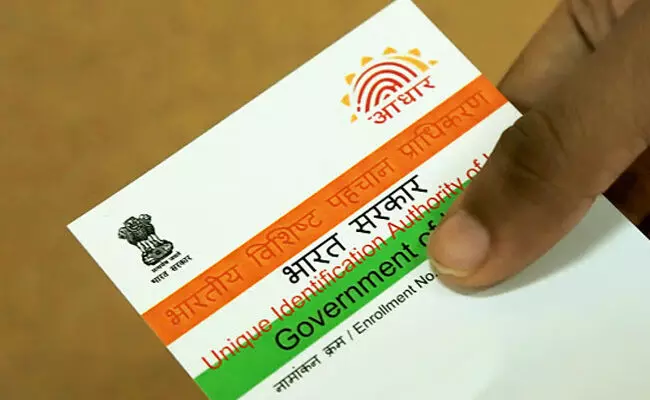
Budaun (UP), Apr 30 (PTI): The Budaun Police on Thursday busted a gang allegedly involved in preparing fake Aadhaar cards and forged documents, and arrested three of its members, officials said.
The action was carried out in the Hazratpur area, where the accused were found operating an illegal setup to generate fake identity documents, they said.
The accused have been identified as Farman Ali, a resident of Munshi Nagla, Anuj Kumar of Uprela, and Brajnandan of Sirsauli.
The police said a fingerprint scanner, three laptops, a hard disk, a scanner, a large number of Aadhaar cards and several suspicious documents were recovered from their possession.
ALSO READ: Hit by car, delivery agent dies after falling from flyover in Delhi
During interrogation, it was revealed that the gang had been involved in preparing fake identity documents for a long time, misleading people and earning money through illegal means, officials said.
Station House Officer Pushpendra Singh said the accused have been produced before a court, and efforts are underway to identify and arrest other members of the gang.
He added that further revelations are likely as the investigation progresses.