Petrol, diesel price hiked by 60 paisa per litre after 83-day hiatus
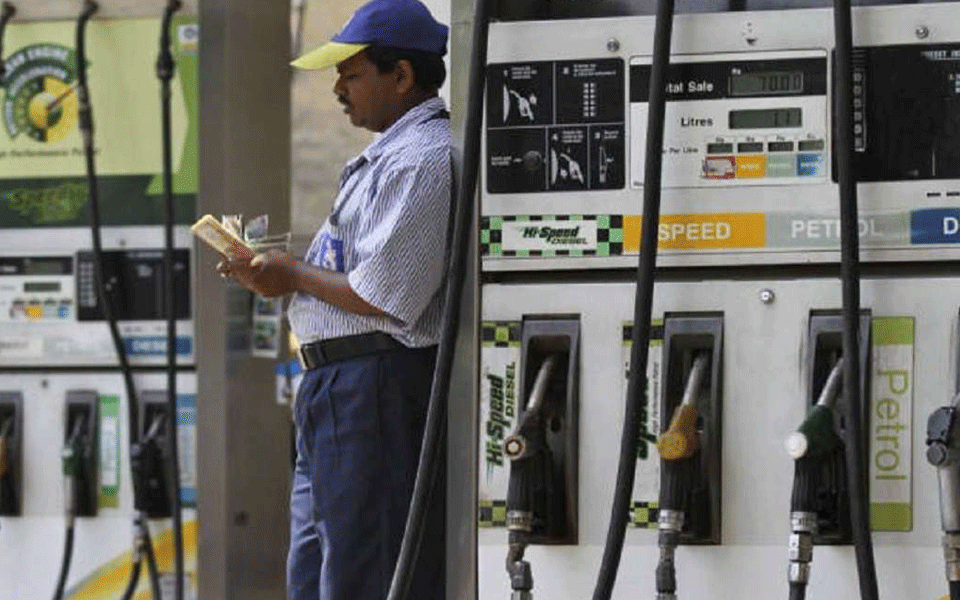
New Delhi: Petrol and diesel price was on Sunday hiked by 60 paisa per litre, as the state-owned oil firms restarted daily price revisions after a 82-day hiatus.
Petrol price in Delhi was hiked to Rs 71.86 per litre from Rs 71.26 a litre till Saturday, while diesel rates were increased to Rs 69.99 per litre from Rs 69.39, according to a price notification of state oil marketing companies.
Daily price revision has restarted, an oil company official said.
While oil PSUs have regularly revised ATF and LPG prices, they had since March 16 kept petrol and diesel prices on hold, ostensibly on account of extreme volatility in the international oil markets.
Auto fuel prices were frozen soon after the government raised excise duty on petrol and diesel by Rs 3 per litre each to mop up gains arising from falling international rates.
The government on May 6 again raised excise duties by Rs 10 per litre on petrol and Rs 13 per litre on diesel.
Oil companies, instead of passing on the excise hike to consumers, decided to adjust them against the reduction required because of the drop in international oil prices. They used the same tool and did not pass on the Re 1 per litre hike required for switching over to ultra-clean BS-VI grade fuel from April 1.
Petrol price in Mumbai and Kolkatta was hiked by 59 paisa each to Rs 78.91 and Rs 73.89 per litre, respectively. In Chennai, the hike was 53 paisa to Rs 76.07, according to the price notification.
For diesel, price was hiked by 58 paisa in Mumbai to Rs 68.79 and in Kolkata by 55 paisa to Rs 66.17. In Chennai, the price was hiked from Rs 68.22 to Rs 68.74.
While petrol and diesel prices had been kept on hold for nearly three months, they are regularly revised for ATF and LPG despite the fact that the same volatility was witnessed in their prices as well.
More importantly, no airline operated between mid-March to May 25 in view of the restrictions placed to check the spread of coronavirus, yet oil companies have continued to revise downward jet fuel prices.
In fact, oil companies used to revise ATF prices on the 1st of every month, but adopted fortnightly revisions on March 21 to pass on the benefit of falling international oil prices to airlines.
Though the government has deregulated petrol and diesel prices, rate changes have been in the past put on hold by public sector oil companies -- Indian Oil Corp (IOC), Bharat Petroleum Corp Ltd (BPCL) and Hindustan Petroleum Corp Ltd (HPCL) -- for reasons that appear to be non-commercial.
There was a 19-day price freeze on petrol and diesel ahead of Karnataka polls in May 2018, despite international fuel prices going up by nearly USD 5 per barrel. However, no sooner were the elections over, they rapidly passed on to customers the desired increase -- over 16-straight days post-May 14, 2018, petrol price climbed by Rs 3.8 per litre and diesel by Rs 3.38 per litre.
Similarly, they had stopped revising fuel prices for almost 14 days ahead of the assembly elections in Gujarat in December 2017.
These companies had also imposed a freeze on petrol and diesel prices between January 16, 2017 and April 1, 2017, when assembly elections in five states -- Punjab, Goa, Uttarakhand, Uttar Pradesh and Manipur -- were held.
During the 2019 general elections, they moderated the revision by not passing on all of the desired increase in rates to consumers, industry sources said.
The rates began to rise a day after the final phase of polling for the Lok Sabha elections ended.
Let the Truth be known. If you read VB and like VB, please be a VB Supporter and Help us deliver the Truth to one and all.
Strictest action promised after students forced to remove sacred thread at Bengaluru CET exam centre
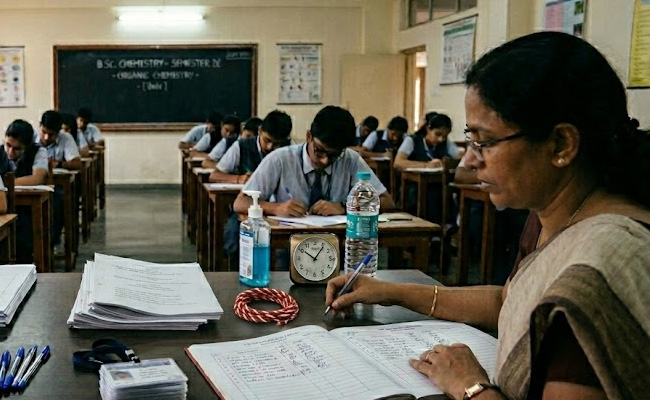
Bengaluru (PTI): Bengaluru Urban Deputy Commissioner Jagadeesha G on Monday said the government has decided to take the “strictest possible action” against those responsible for allegedly forcing some students to remove their ‘janivara’ (sacred thread) before entering the venue of the CET exam last week.
He said a committee of senior officials constituted to inquire into the incident reported that, prima facie, it appears the students were “intentionally” made to remove the ‘janivara’.
The city police have already booked three staff members of a private college in Bengaluru for allegedly forcing some students to remove their ‘janivara’ before entering the venue of the Common Entrance Test (CET-2026) last week.
Similar incidents last year in Shivamogga and Bidar had triggered controversy, following which the Karnataka Examinations Authority (KEA) issued clear directions not to force students to remove any religious identification or symbol during exams.
“Despite KEA taking measures such as appointing dress code officials and providing training on dos and don’ts to prevent such incidents from recurring after last year’s cases, there has been a dereliction of duty this time,” Jagadeesha told reporters here.
“To take strict action against those responsible, an FIR has been registered, and arrests have been made. An inquiry has been conducted by senior officials, and those responsible have been suspended,” he added.
Stating that the inquiry report has been submitted at the district level, he said it will be forwarded to the government.
Based on the findings, it has also been decided that KEA will not conduct CET exams at the institution where the incident occurred, he added.
“The strictest possible action is being taken by the district administration and the government,” he added.
The deputy commissioner had constituted a committee headed by the additional deputy commissioner to investigate the incident and submit a report within two days.
“Exams have been held at several centres across the state, and nowhere else has this issue occurred. If students were forced to remove ‘janivara’ at this centre, it appears that it was intentional. We have taken it seriously,” he said, adding that strict action has been recommended to ensure such incidents do not recur.
Noting that senior officials were appointed for the inquiry, the DC said that after a thorough investigation and verification—which included statements from students, the school principal, exam observers, CCTV footage, and documents—it prima facie appears that students were intentionally made to remove the ‘janivara’.
“We are recommending strict action. The government has also ordered a detailed police investigation, and an FIR has been registered in connection with the incident,” he added.