PG medical admission counselling to be carried out only in online mode: NMC
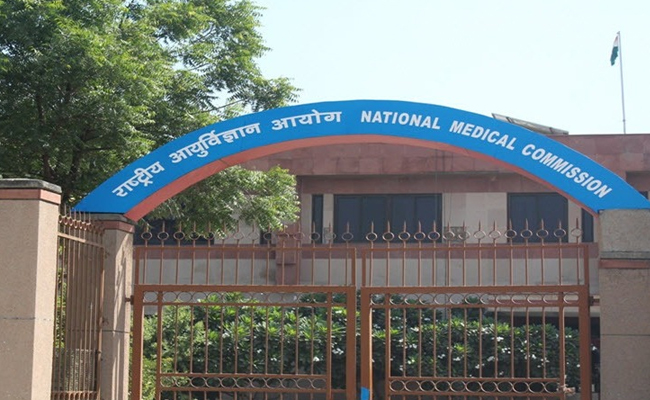
New Delhi (PTI): Counselling for post graduate medical admissions will be done only in online mode now and colleges will have to declare fees for each course beforehand, the National Medical Commission (NMC) has said underlining that no college will admit candidates on their own.
Medical education regulator NMC recently notified the "Post-Graduate Medical Education Regulations, 2023" according to which all rounds of counselling for all PG seats will be held on online mode by state or central counselling authorities.
There shall be common counselling for admission to post-graduate courses in medicine for all medical institutions in India solely based on the merit list of respective exams, the new regulations states.
"All rounds of counselling for all seats will be held on online mode by state or central counselling authority and no medical college/institution will admit any candidate themselves," it said.
"While entering details in seat matrix, medical colleges shall mention the amount of fees for each course, failing which seat will not be counted," the regulations stated.
Some changes in the examination system have also been introduced which include formative assessment and option of multiple-choice questions in university examinations, Dr Vijay Oza, president of Post-Graduate Medical Education Board of the NMC said.
"This is to bring objectivity in examination and match international standards," he said.
Another change has been made in the District Residency Programme (DRP) to facilitate its implementation for better training of students.
Previously, a district hospital was defined as a 100-bedded hospital. In the new regulations, the requirement has been reduced to 50 beds, Dr Oza explained.
"Under the DRP, doctors can be trained in a district hospital which shall be a functional public sector/government-funded hospital of not less than 50 beds instead of the previous requirement of 100 beds," the regulations read.
The DRP aims to train post-graduate students in district health systems and hospitals to strengthen healthcare services at the grassroots level.
According to the new regulations, once a medical college is granted permission to start PG courses or seats, the course will be treated as recognised for the purpose of registration of qualification for students.
This will solve many difficulties faced by students to register their degree after passing postgraduate examinations, Dr Oza said.
According to the new regulations, undergraduate medical colleges can start postgraduate courses from the third year now. Previously it was from the fourth year in clinical specialties.
Existing or proposed non-teaching hospitals owned and managed by government can start post graduate courses without having undergraduate colleges. This will facilitate government to start post graduate medical colleges in smaller government hospitals/district hospitals, Dr Oza said.
There will be a minimum standard requirement document which will prescribe requirement of infrastructure and faculty clinical material etc. for postgraduate institute.
All students will have to undergo courses in research methodology, ethics and cardiac life support skills.
"For better implementation of these regulations, there is provision of penalty clause which includes monetary penalty, reduction in number of seats( admission capacity) or complete stoppage of admissions," the regulations stated.
Let the Truth be known. If you read VB and like VB, please be a VB Supporter and Help us deliver the Truth to one and all.
NIA registers case to probe recovery of 79 crude bombs in poll-bound West Bengal
New Delhi (PTI): The National Investigation Agency (NIA) on Sunday registered a case to probe recovery of 79 crude bombs in poll-bound West Bengal, officials said.
The move came following a directive by the Union Home Ministry in this regard, they said.
In pursuance to the home ministry's order, the anti-terror agency on Sunday registered a case, which was originally filed at Uttar Kashi police station, Bhangar division, Kolkata on Saturday, and took up the investigation, an NIA spokesperson said in a late night statement.
"The case pertains to recovery of 79 crude bombs and other incriminating materials by Kolkata police, which were being stored at a spot, thereby endangering human life and property," the spokesperson said.
Earlier in the day, the Election Commission had directed the West Bengal Police to launch a special drive to arrest those involved in illegal manufacturing of crude bombs in the poll-bound state, an official said.
It asserted that all cases related to the making of any such explosive would be probed by the National Investigation Agency, the official said.
The directive came after the police recovered a large number of crude bombs from the house of a person, allegedly a TMC worker, at Bhangar in South 24 Parganas district, days ahead of the second and final phase of the assembly polls in the state.
The explosives were recovered during a search at the residence of Rafikul Islam following specific inputs, the official said.
The poll panel also issued a warning to senior police officers across the state over any lapse in maintaining law and order before the April 29 polling.
The first phase of the assembly elections in West Bengal was held on April 23, while the second phase will take place on April 29. Votes will be counted on May 4.
A record 93.19 per cent turnout has been recorded in the first round of polling. Bhangar will vote in the second phase.