P&H High Court denies anticipatory bail to man accused of replacing national flag with saffron flag
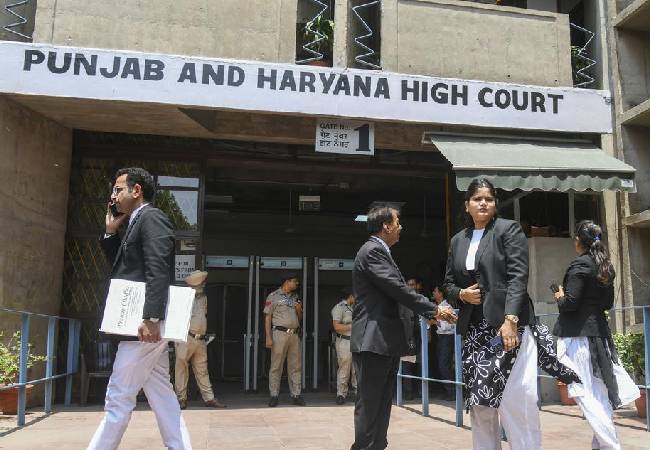
Chandigarh: The Punjab and Haryana High Court has refused to grant anticipatory bail to Vikas Tomar, who is accused of removing the national flag from a mosque in Gurugram’s Uton village and replacing it with a saffron flag.
Justice Manisha Batra, presiding over the case Vikas Tomar @ Vikash Tomar v. State of Haryana, observed that the allegations against the petitioner were not vague but specific, and supported by conversations between him and other co-accused.
“The gravity of the offence and its potential impact on public order and communal peace cannot be overlooked at this stage,” the Court noted. It further stated that no exceptional circumstances had been presented that would justify granting pre-arrest bail, especially given the “serious communal and constitutional implications” of the alleged conduct.
According to the prosecution, a complaint was filed on July 7 in Bilaspur, Gurugram, reporting that anti-social elements had replaced the national flag atop a mosque with a saffron flag. Audio and video evidence were submitted along with the complaint. Two other accused were initially arrested under the Bharatiya Nyaya Sanhita (BNS) and Section 2 of the Prevention of Insult to National Honours Act, 1971, but were granted bail the same day.
The Sessions Court had earlier denied anticipatory bail to Tomar on July 15, with Additional Sessions Judge Sandeep Chauhan observing that such acts threaten the social fabric in a diverse country like India. He remarked, “Any person of ordinary prudence and slightest of patriotism in his heart would not have dared to commit such a crime.”
Tomar's counsel argued before the High Court that he was not named in the FIR and had no role in the alleged incident. However, opposing counsel representing the State and the complainant contended that Tomar aimed to provoke communal unrest in the region.
Justice Batra, after considering the arguments, concluded that custodial interrogation of the accused was necessary. “No ground for grant of anticipatory bail is made out,” the Court held.
Advocate Abhimanyu Singh appeared for the petitioner, while Additional Advocate General Apoorv Garg represented the State of Haryana. Advocate Rosi appeared for the complainant.
The bail plea was dismissed.
Let the Truth be known. If you read VB and like VB, please be a VB Supporter and Help us deliver the Truth to one and all.
Hospital wall collapse: CM orders suspension of executive engineer; kin of victims get solatium
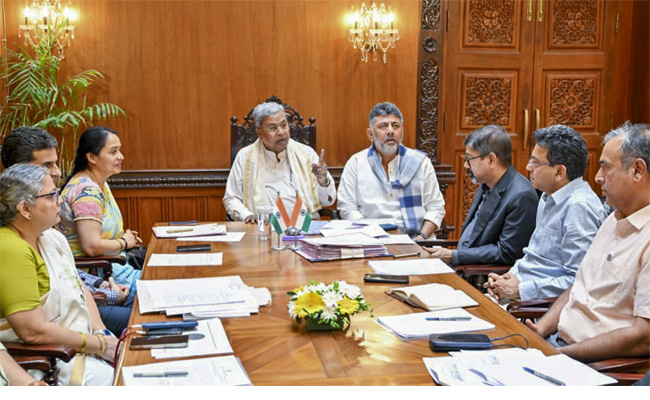
Bengaluru (PTI): Karnataka Chief Minister Siddaramaiah on Thursday ordered the immediate suspension of an executive engineer for the Bowring and Lady Curzon Hospital wall collapse that claimed the lives of seven people, during a high-level review meeting at Vidhana Soudha.
A compensation of Rs 5 lakh, as announced by the CM Siddaramaiah, was distributed to the families of seven victims who lost their lives in the tragedy on Wednesday evening, which occurred due to heavy downpour with gusty winds and hailstorm.
The meeting of municipal commissioners of the five corporations, chaired by the chief minister and attended by Deputy Chief Minister D K Shivakumar, focused on fixing accountability and examining lapses that led to the tragedy.
"Why was soil dumped in a way that damaged the wall? Why did you not monitor this?" Siddaramaiah asked, pulling up hospital authorities during the meeting.
A statement from the chief minister's office said that the CM ordered the immediate suspension of the executive engineer of the Karnataka Health Systems Development Project (KHSDP).
ALSO READ: Three arrested for running fake Aadhaar racket in UP's Badaun
He also questioned the hospital authorities, asking why they failed to monitor the dumping of soil that weakened the structure.
The chief minister directed that a notice be issued to the head of the Hospital.
During the meeting, Siddaramaiah said the rains had caused extensive damage in the city, with over 250 trees uprooted.
The Chief Minister instructed officials to take necessary measures before the onset of the monsoon to avoid untoward incidents.
Commissioners of all five municipal zones in Bengaluru have been asked to take precautionary steps, including trimming dry and dangerous tree branches, the CMO said.
Siddaramaiah also directed them to get the silt cleared from stormwater drains to prevent flooding, and that immediate action be taken to remove debris and fallen branches from roads.
Further, he instructed that barricades be placed at underpasses where water stagnates and restricts public movement.
The Greater Bengaluru Authority (GBA) Chief Commissioner M Maheshwar Rao said in a statement that Shivajinagar MLA Rizwan Arshad distributed compensation cheques of Rs 5 lakh each to the families of the deceased on Thursday.
Seven people, including a six-year-old girl, were killed and seven others injured when the compound wall collapsed amid heavy rain, strong winds and a hailstorm on Wednesday evening.
Police said the victims, comprising three from Bengaluru, two from Kerala on a study tour and one each from Uttar Pradesh and Assam, had taken shelter near the wall when it suddenly gave way, trapping them under the debris.
The chief minister questioned officials over the dumping of soil near the wall despite knowing it could weaken the structure, and directed that a notice be issued to the head of Bowring Hospital.
Siddaramaiah, who had visited the spot soon after the incident along with senior officials, reviewed the situation and ordered a detailed probe into the collapse.