Pharma company distributed Rs 1000 Cr freebies to prescribe Dolo 650mg tablets: SC told
"Serious issue", says Supreme Court
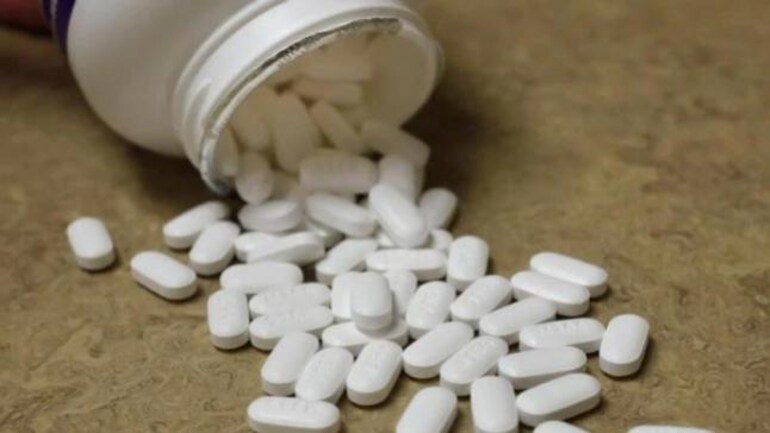
New Delhi, Aug 18: The Supreme Court on Thursday described as a "serious issue" the matter raised by an NGO relating to the CBDT's allegation against the makers of Dolo tablets that they had distributed freebies worth about Rs 1,000 crore to doctors for prescribing their 650 mg anti-inflammatory, fever reducer drug.
A bench of Justices DY Chandrachud and AS Bopanna was told by senior advocate Sanjay Parikh and advocate Aparna Bhat, appearing for petitioner 'Federation of Medical and Sales Representatives Association of India', that the market price of any tablet up to 500 mg is regulated under price control mechanism of the government but the price of the drug above 500 mg can be fixed by the Pharma company concerned.
Parikh alleged that to ensure a higher profit margin, the company manufacturing Dolo tablets distributed freebies to doctors to prescribe the 650 mg drug. The advocate also said he would like to bring more such facts to the knowledge of the court after a response is filed by the Centre.
"What you are saying is music to my ears. This is exactly the drug that I had when I had COVID recently. This is a serious issue and we will look into it," Justice Chandrachud said.
The bench then asked Additional Solicitor General KM Nataraj to file his response to the plea by the petitioner in ten days and gave one week time thereafter to the latter to file his rejoinder.
It listed the matter for further hearing on September 29.
The Central Board of Direct Taxes(CBDT) had on July 13 accused the makers of the Dolo-650 tablet of indulging in "unethical practices" and distributing freebies worth about Rs 1,000 crore to doctors and medical professionals in exchange for promoting products made by the pharmaceutical group.
The claims were made after the Income Tax department had on July 6 raided 36 premises of the Bengaluru-based Micro Labs Ltd. across nine states.
A counsel sought permission from the court to file an intervention on behalf of the Pharma companies, which the court allowed saying it would like to hear them also on the issue.
On March 11, the top court agreed to examine a plea seeking direction to the Centre for formulating a Uniform Code of Pharmaceutical Marketing Practices to curb alleged unethical practices of Pharma companies and ensure an effective monitoring mechanism, transparency, accountability as well as consequences for violations.
The top court had said that it wants to know what the government has to say on this issue.
Parikh had said that this is an important issue in the public interest.
He submitted that Pharmaceutical companies are claiming that they are not liable for punishment as the bribe-takers are the doctors.
Parikh said the government should look into this aspect and the code should be made statutory in nature as "we all know what happened with Remdesivir injections and other drugs of those combinations .
The top court had then asked the petitioner why can't a representation be made to the government to which Parikh had said they have already done it.
He had said that they have been pursuing the issue with the government since 2009 and till the time the government comes out with the code to regulate, this court may lay down some guidelines.
The petition said the Indian Medical Council (Professional Conduct, Etiquette and Ethics) Regulations of 2002 prescribe a Code of conduct for doctors in their relationship with the pharmaceutical and allied health sector industry, and prohibit acceptance of gifts and entertainment, travel facilities, hospitality, cash or monetary grants by medical practitioners from Pharmaceutical companies.
"This Code is enforceable against doctors. However, it does not apply to drug companies, leading to anomalous situations where doctors' licenses are cancelled for misconduct which is actuated, encouraged, aided, and abetted by pharma companies. The pharma companies go scot-free", it added.
The petition claimed that though termed as sales promotion,' in fact, direct or indirect advantages are offered to doctors (as gifts and entertainment, sponsored foreign trips, hospitality, and other benefits) in exchange for an increase in drug sales.
It said unethical drug promotion can adversely influence doctors' prescription attitudes and harm human health by over-use/over-prescription of drugs, prescription of higher doses of drugs than necessary, prescription of drugs for a longer period than necessary, prescription of a higher number of drugs than necessary and prescription of an irrational combination of drugs.
Let the Truth be known. If you read VB and like VB, please be a VB Supporter and Help us deliver the Truth to one and all.
Karnataka Muslim Convention to be held in Bengaluru on May 16
Muslim organisations to release report on Congress govt’s three-year performance
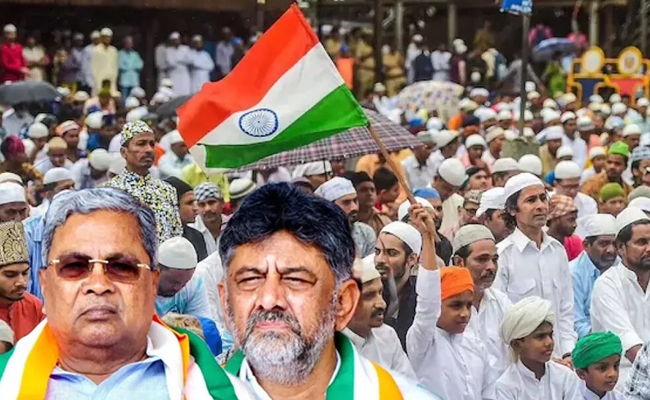
Bengaluru: Major Muslim organisations and federations in Karnataka have decided to organise a large public convention titled ‘Karnataka Muslim Convention’ at Town Hall in Bengaluru on May 16. During the convention, a comprehensive report reviewing the three-year performance of the Congress government under the theme “What did the Congress government promise? What did it do? What next?” will be released.
According to a statement issued on Friday, no politicians will be invited to the convention. The report will be submitted to the government and all MLAs after the event.
The convention is being held at a time when the Congress government is nearing the completion of three years in office on May 20. Muslim organisations have expressed dissatisfaction, alleging that despite extending strong support to the Congress in bringing it to power, the community is being neglected.
The Convention is being organised at time when there are concerns over inadequate political representation for Muslims, alleged neglect of community demands, and the suspension of senior Muslim leaders who had worked for the party for decades.
The organisers said the convention aims to raise questions on what the Congress government has delivered so far and what further steps are expected from the government.
The decision to hold the convention was taken during a meeting held on May 6 at A J International Hotel in Shivajinagar, Bengaluru. Representatives of major Muslim organisations, associations, ulema bodies, federations, and members of the ad hoc committee of Karnataka Rajya Muslim Okkoota attended the meeting.
More than 75 representatives and delegates, including senior ulemas, jamaat leaders, lawyers, retired officials, journalists and members of the KRMO ad hoc committee, participated in the discussions.
Members of the KRMO ad hoc committee’s report preparation team and experts from different sectors presented a detailed report on the Congress government’s three-year performance. The report examined promises made to Muslims on ten major issues, the extent to which they were fulfilled, pending promises, alleged discrimination in representation, and the demands now being placed before the government.
The report covered issues such as the hijab ban, reservation cancellation, hate speech and hate crimes, budget allocation, political representation, waqf matters, the anti-cow slaughter law, anti-conversion law, scholarships and educational grants.
Participants offered suggestions and recommendations on various points, and necessary corrections to the report were accepted after detailed discussions.
The meeting also reportedly expressed strong dissatisfaction over the manner in which the Congress government has treated the Muslim community. Participants are said to have opined that if the government and the Congress party continue in the same manner, the community should keep its political options open.
It was later decided that the report would be officially released at the large public convention on May 16 under the title “Karnataka Muslim Convention – What did the Congress government promise? What did it do? What next?”
The organisers appealed to people from all districts of the state to participate in large numbers and send a strong message to the government and the Congress party through the convention.
They also decided that all organisations, jamaats and associations should work towards ensuring participation from every district in Karnataka.
The statement reiterated that no politicians would be invited to the May 16 convention and that the report on the Congress government’s three-year performance would be submitted to the Chief Minister, Deputy Chief Minister, ministers and MLAs after the event.