
PIL in SC seeking action against racial violence targeting northeastern citizens
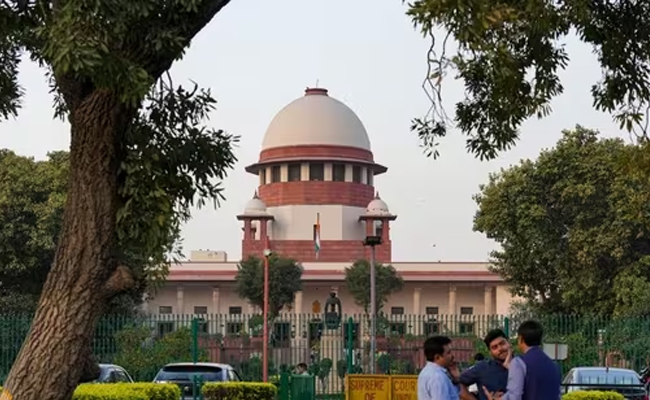
New Delhi (PTI): A PIL was filed in the Supreme Court seeking judicial intervention to address the "continuing constitutional failure" to prevent and respond to racial discrimination and violence against citizens from northeastern states and other frontier regions.
The PIL was filed on December 28 in the backdrop of the brutal killing of Anjel Chakma, a 24-year-old MBA student from Tripura, who succumbed on December 27 to grievous injuries sustained in a racially motivated attack in Selaqui area of Dehradun.
Anjel from Unakoti district's Machmara went to Dehradun after completing his graduation in Holy Cross School, Agartala, to pursue MBA, where he was stabbed to death in the presence of his younger brother Michael.
ALSO READ: Finish all projects without delay, says Karnataka CM Siddaramaiah
The family members of Chakma want capital punishment or at least life imprisonment for all the accused involved in the incident. Anoop Prakash Awasthi, a Delhi-based lawyer, has made the Centre and all the states and Union territories as parties to the PIL.
"That the present writ petition is being filed seeking issuance of writ under Article 32 of the Constitution seeking issuance of writ in the nature of mandamus, order, direction or any other appropriate writ for the violation of fundamental rights as under article 14, 19 (1) a & (g) and 21, and thus seeking judicial intervention to address the issue of racial discrimination and violence against Indian citizens from the north-eastern states and other frontier regions of India," the plea said.
"We are Indians. What certificate should we show to prove that?" words that tragically became the last recorded assertion of Anjel Chakma about his constitutional belonging before the confrontation escalated into brutal violence, it said while recounting the offence leading to his death.
The plea referred to media reports about Chakma's death.
The attackers allegedly assaulted and stabbed both brothers and Chakma sustained severe injuries to his neck and spine, remained unconscious throughout his treatment, and died after more than fourteen days in intensive medical care, it said, adding his death triggered widespread anguish, protests, and demands for justice across the country.
ALSO READ: NESO demands capital punishment for those responsible for killing Tripura student in Dehradun
"Issue an appropriate writ (ad interim till a legislation is made) in the nature of formulating comprehensive guidelines, recognising 'racial slur' as a separate category of hate crimes and determining punishment for the same," the plea said.
It sought a direction to the Centre and the states to create a "nodal agency or a permanent body or commission or directorate" at the central level as well as at the level of each state where such racial crimes can be reported and redressed.
"Direct the respondents at central level as well as at the level of each state to make and create a dedicated special police unit in each district/metropolitan area to address the racial crimes," it said.
The plea sought a direction to the Centre and the states to organise "workshops and debates at educational institutes on the issue of prevailing racial discrimination and ways to redress the same".
The petition said that despite the unmistakable hate-based and racial motivation behind the crime, India's criminal justice system lacks any mechanism to recognise or record racial bias at the initial stage of investigation.
As a result, such offences are treated as ordinary crimes, "erasing motive, diluting constitutional gravity, and perpetuating a pattern of impunity", it said.
The plea said that the killing of Chakma is not an isolated incident but part of a long-standing pattern of racial abuse and violence against citizens from the northeastern states.
The petition recalls earlier cases, including the death of Nido Taniam in 2014 and numerous assaults on students and workers in metropolitan cities, incidents that have been formally acknowledged by the Centre in parliamentary replies but, according to the petitioner, remain unaddressed through any dedicated legislative or institutional framework.
Let the Truth be known. If you read VB and like VB, please be a VB Supporter and Help us deliver the Truth to one and all.
First-ever life-size Vivekananda statue in US unveiled in Seattle
_vb_02.jpeg)
New York (PTI): The first-ever life-size statue of Swami Vivekananda in the US was unveiled in Seattle, honouring the renowned Indian philosopher and spiritual leader.
The life-size bronze statue, installed at the busy Westlake Square in downtown Seattle, is the first such installation hosted by a city government anywhere in the US, officials said.
Sculpted by Indian artist Naresh Kumar Kumawat, it was jointly unveiled on Saturday by Seattle Mayor Katie Wilson and Consul General of India in Seattle Prakash Gupta.
"From Chicago 1893 to Seattle 2026! Seattle's skyline has a new Indian icon: Swami Vivekananda! City of Seattle becomes the first city government to host the Swami Vivekananda Monument in the heart of downtown Seattle," the Consulate General of India in Seattle said in a social media post.
Addressing the event, Wilson said the monument reflects Seattle's inclusive spirit and strengthens cultural ties between India and the diverse metropolitan tech hub in the US Pacific Northwest.
The statue has been gifted by the Indian Council of Cultural Relations (ICCR) to the City of Seattle in recognition of its "in recognition of the city’s rich multicultural character and spirit of inclusivity", the Indian mission in Seattle said in a statement.
The unveiling of the statue was held on the occasion of the celebration of ICCR Day and is part of India's broader cultural diplomacy initiatives aimed at strengthening people-to-people ties between India and the US Pacific Northwest, the Consulate said.
Located at the bustling Westlake Square, which sees over 400,000 visitors daily, the monument stands near prominent landmarks including the Amazon headquarters ‘Spheres’, the Seattle Convention Centre and the Seattle Centre Monorail.
The unveiling ceremony was attended by several local leaders, including mayors from cities in the Greater Seattle area, community representatives and members of the Indian-American diaspora.
Swami Vivekananda had delivered his historic address at the World’s Parliament of Religions in Chicago in 1893, introducing Hindu philosophy to a global audience.
_vb_92.jpeg)
_vb_08.jpeg)
_vb_31.jpeg)