Pilot not to be blamed, don't carry burden on yourself: SC to father of AI-171 pilot killed in crash
_vb_02.jpeg)
New Delhi (PTI) The Supreme Court on Friday told the 91-year-old father of the pilot who died in the Air India plane crash in Ahmedabad that his son is not to be blamed for the accident and he should not carry the burden on himself.
A bench of Justices Surya Kant and Joymalya Bagchi issued notice to the Centre and the Director General of Civil Aviation (DGCA) on his plea.
"You should not carry burden on yourself. The pilot is not to be blamed for the plane crash. It was an accident. There is no insinuation against him even in the preliminary report," the bench said.
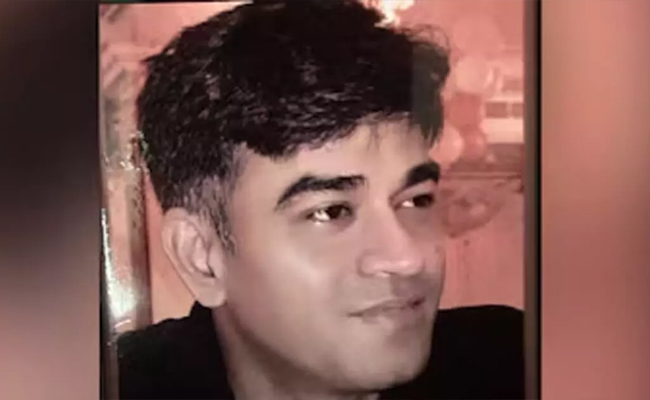
Senior advocate Gopal Sankaranarayanan, appearing for the pilot's father, Pushkaraj Sabharwal, said there was a news article in US publication Wall Street Journal with regard to the pilot, Captain Sumeet Sabharwal.
"It was nasty reporting only to blame India," the bench responded.
It read out a paragraph from the preliminary report of the Aircraft Accident Investigation Board (AAIB) issued on July 12 and said nowhere it is said that the pilot is to be blamed for the accident and it only refers to the conversation between the two pilots of the plane.
"The scope of the AAIB investigation is not to blame but to suggest preventive measures to avoid future tragedies. If necessary, we will clarify that the pilot cannot be blamed," the bench said.
The court listed the matter for further hearing on November 10, along with other pending petitions on the incident.
The June 12 plane crash claimed 260 lives -- 229 passengers, 12 crew members, and 19 people on the ground.
Last month, Pushkaraj Sabharwal and the Federation of Indian Pilots moved the Supreme Court for a court-monitored inquiry headed by a former apex court judge into the plane crash.
The nonagenarian has sought a "fair, transparent and technically robust" investigation into the tragic incident.
"An incomplete and prejudiced inquiry, without identification of the exact cause of the accident, endangers the lives of future passengers and undermines aviation safety at large, causing a violation of Article 21 of the Constitution," his plea said.
The petition, filed through AP&J Chambers on October 10, made Union Ministry of Civil Aviation, DGCA and AAIB respondents.
The plea seeks directions for the constitution of an independent committee, also comprising aviation and technical experts, to probe the crash.
The ill-fated aircraft had taken off from Ahmedabad for London Gatwick but crashed within minutes, impacting the BJ Medical College hostel located less than a nautical mile from the end of the runway.
The Emergency Locator Transmitter (ELT) failed to activate, and both the pilot-in-command Captain Sumeet Sabharwal and co-pilot Captain Clive Kunder lost their lives in the crash, the plea said.
New Delhi, Nov 7 (PTI) The Supreme Court on Friday told the 91-year-old father of the pilot who died in the Air India plane crash in Ahmedabad that his son is not to be blamed for the accident and he should not carry the burden on himself.
A bench of Justices Surya Kant and Joymalya Bagchi issued notice to the Centre and the Director General of Civil Aviation (DGCA) on his plea.
"You should not carry burden on yourself. The pilot is not to be blamed for the plane crash. It was an accident. There is no insinuation against him even in the preliminary report," the bench said.
Senior advocate Gopal Sankaranarayanan, appearing for the pilot's father, Pushkaraj Sabharwal, said there was a news article in US publication Wall Street Journal with regard to the pilot, Captain Sumeet Sabharwal.
"It was nasty reporting only to blame India," the bench responded.
It read out a paragraph from the preliminary report of the Aircraft Accident Investigation Board (AAIB) issued on July 12 and said nowhere it is said that the pilot is to be blamed for the accident and it only refers to the conversation between the two pilots of the plane.
"The scope of the AAIB investigation is not to blame but to suggest preventive measures to avoid future tragedies. If necessary, we will clarify that the pilot cannot be blamed," the bench said.
The court listed the matter for further hearing on November 10, along with other pending petitions on the incident.
The June 12 plane crash claimed 260 lives -- 229 passengers, 12 crew members, and 19 people on the ground.
Last month, Pushkaraj Sabharwal and the Federation of Indian Pilots moved the Supreme Court for a court-monitored inquiry headed by a former apex court judge into the plane crash.
The nonagenarian has sought a "fair, transparent and technically robust" investigation into the tragic incident.
"An incomplete and prejudiced inquiry, without identification of the exact cause of the accident, endangers the lives of future passengers and undermines aviation safety at large, causing a violation of Article 21 of the Constitution," his plea said.
The petition, filed through AP&J Chambers on October 10, made Union Ministry of Civil Aviation, DGCA and AAIB respondents.
The plea seeks directions for the constitution of an independent committee, also comprising aviation and technical experts, to probe the crash.
The ill-fated aircraft had taken off from Ahmedabad for London Gatwick but crashed within minutes, impacting the BJ Medical College hostel located less than a nautical mile from the end of the runway.
The Emergency Locator Transmitter (ELT) failed to activate, and both the pilot-in-command Captain Sumeet Sabharwal and co-pilot Captain Clive Kunder lost their lives in the crash, the plea said.
Let the Truth be known. If you read VB and like VB, please be a VB Supporter and Help us deliver the Truth to one and all.
Sujit Nair raises concerns over speculation of DMK-AIADMK understanding to block TVK
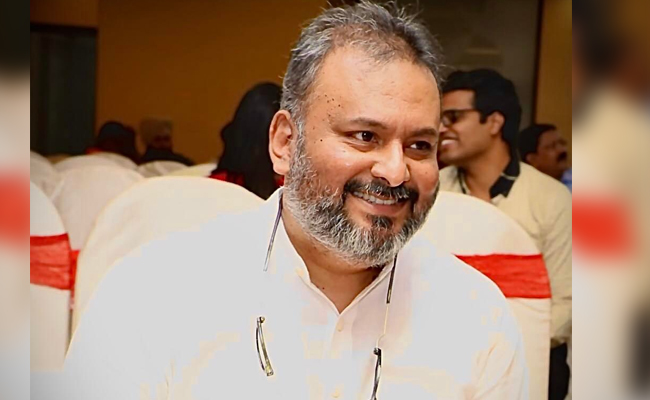
Chennai: Journalist and political commentator Sujit Nair has expressed concern over speculation that the Dravida Munnetra Kazhagam and the All India Anna Dravida Munnetra Kazhagam could explore a post-poll understanding to prevent Vijay-led Tamilaga Vettri Kazhagam from forming the government in Tamil Nadu.
In a social media post, Sujit Nair said the election verdict in Tamil Nadu reflected a clear public demand for political change and argued that the mandate should be respected irrespective of political preferences.
Referring to reports and political discussions surrounding a possible understanding between the DMK and AIADMK, he said he hoped such developments remained only speculative conversations and did not turn into reality.
Nair stated that if such an alliance were to take shape, it would raise serious questions about ideological politics in the country. He said TVK had emerged through a democratic electoral process and that the legitimacy to govern in a parliamentary democracy comes from the people’s verdict.
According to him, attempts to prevent an electoral winner from forming the government through unexpected political arrangements may be constitutionally valid, but many people could view them as politically opportunistic.
He further said that such a move could particularly affect the political image of the DMK, which has historically projected itself around ideology, social justice and opposition politics. Nair said that in ideological terms, the DMK appeared closer to TVK than to the AIADMK, and joining hands with its long-time political rival only to remain in power could weaken its broader political narrative.
He added that the same questions would apply to the AIADMK as well, as the party had spent decades positioning itself against the DMK and such an arrangement could create discomfort among its cadre and supporters.
Drawing a comparison with Maharashtra politics in 2019, Nair said he had expressed similar views when the Shiv Sena formed an alliance with the Indian National Congress and the Nationalist Congress Party after the Assembly elections.
He said post-poll alliances between long-standing political rivals often create a public perception that ideology and electoral mandates become secondary when political power equations come into play.
Nair also said such developments increase public cynicism towards politics and reinforce the belief among voters that ideology is often sidelined after elections.
He maintained that the Tamil Nadu verdict was emphatic and said respecting both the spirit and substance of the mandate was important for the credibility of democratic politics.