Plea for entry of women into mosques, SC asks Centre to reply by Nov 5
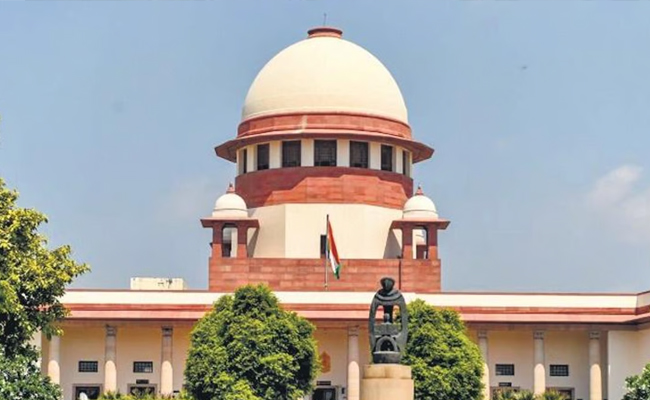
New Delhi, Oct 25: The Supreme Court on Friday sought the Centre's response by November 5 on a plea seeking entry of Muslim women in mosques across the country and claiming that such restriction was "unconstitutional" and violative of fundamental rights to life, equality and gender justice.
A bench headed by Chief Justice Ranjan Gogoi took note of the fact that it had issued notices to parties, which included union ministries of Women and Child Welfare and Law and Justice and Minority Affairs and the National Commission for Women, in April and three respondents (parties) have not been served with its notices.
The bench, also comprising justices S A Bobde and S A Nazeer, ordered that the notices along with copies of the petition be served on the Maharashtra State Board of Wakf, Central Wakf Council and All India Muslim Personal Law Board.
The bench then fixed the plea filed by Yasmeen Zuber Ahmad Peerzade and Zuber Ahmad Nazir Ahmad Peerzade, a Pune-based couple, for further hearing on November 5.
The central government, represented by lawyer Rajat Nair, on Friday accepted the notice.
The plea sought issuance of a direction to the government authorities and Muslim bodies to allow entry of Muslim women into mosques to offer namaz there.
"Permit Muslim women to enter through the main door of mosques and have an Islamic right to visual and auditory access to the musalla (main sanctuary)," it said, adding that "any fatwa", restraining women from entering into mosques, of Muslim bodies be set aside.
It also said that the alleged customary tradition be held as "unconstitutional and violative of Articles 14 (right to equality), 15 (gender justice) and 21 (right to life and liberty) of the Constitution".
Referring to constitutional provisions, the petitioners said there should not be any discrimination against any citizen of the country on the ground of religion, race, caste, sex and place of birth.
They added that a life of dignity and equality is the most sacrosanct fundamental right and a Muslim woman cannot be prohibited from entering a mosque.
The petitioners had told the court that the mosques in India were enjoying the benefits and grant extended to them by the State and hence they can be directed to allow entry of women inside mosques.
While issuing the notice, the Supreme Court had earlier said that it would hear the PIL only because of its judgment in the Sabarimala temple case.
On September 28 last year, a five-judge constitution bench headed by the then chief justice Dipak Misra, in a 4:1 verdict, had paved the way for entry of women of all ages into the Sabarimala temple in Kerala, saying the ban amounted to gender discrimination.
Let the Truth be known. If you read VB and like VB, please be a VB Supporter and Help us deliver the Truth to one and all.
4 workers die after being buried under coal slurry in Jharkhand's Dhanbad
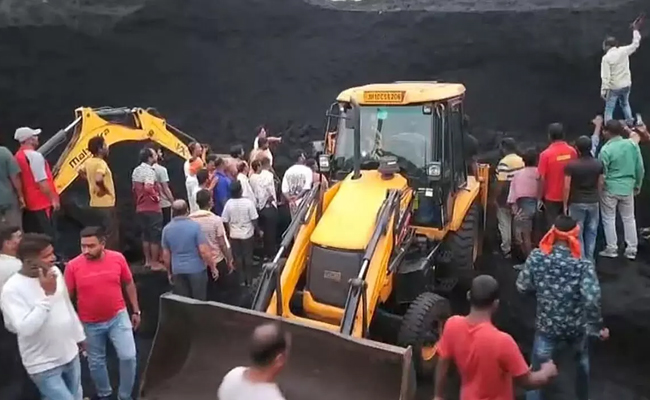
Dhanbad (Jharkhand) (PTI): At least four workers died after being buried under coal slurry in Jharkhand's Dhanbad district on Saturday, a police official said.
The incident took place at Moonidih coal washery in the command area of Bharat Coking Coal Limited (BCCL).
"Bodies of all four workers were dug out of debris during a rescue operation," Putki police station in-charge Waqar Hussain told PTI.
The incident took place when coal slurry was being loaded into trucks by workers, during which a large chunk of slurry fell and trapped several workers underneath, officials said.
The deceased have been identified as Manik Bauri, Dinesh Bauri, Deepak Bauri, and Hemlal Gope.
Meanwhile, the family members of the deceased and local villagers placed the bodies in front of the washery gate and began a protest.
They demanded compensation, jobs for dependents and action against those responsible for the incident.
Police and administration officials are trying to pacify the protesters, an official said.