PM cracked joke on how media trying to extract anti-Modi statement from me: Abhijit Banerjee
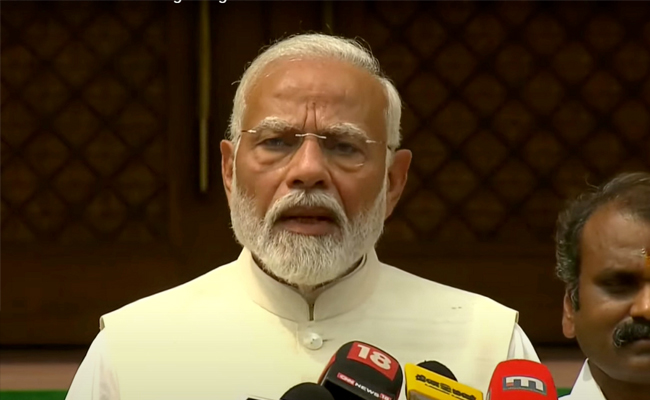
New Delhi, Oct 22: Nobel laureate Abhijit Banerjee, who met Narendra Modi here on Tuesday, said the prime minister joked about the media trying to bring out "anti-Modi" remarks from him.
In a media interaction after the meeting at the prime minister's official residence, Banerjee refused to take questions on the state of economy and refrained from commenting on policies of the government.
"I had a cordial and good meeting. Prime Minister Modi started by cracking a joke on how media is trying to trap me to say anti-Modi things. He's been watching TV and he's been watching you guys. And he knows what you are trying to do," he told reporters when asked about the meeting taking place against the backdrop of a debate over his comments on an economic slump.
After his meeting with Banerjee, Modi tweeted, "Excellent meeting with Nobel Laureate Abhijit Banerjee. His passion towards human empowerment is clearly visible. We had a healthy and extensive interaction on various subjects. India is proud of his accomplishments. Wishing him the very best for his future endeavours."
Banerjee, an Indian-born American professor at Massachusetts Institute of Technology, won the Nobel Memorial Prize in Economic Sciences, commonly referred to as the Nobel Prize in Economics, jointly with wife Esther Duflo and Michael Kremer of the US for "experimental approach to alleviating global poverty".
Let the Truth be known. If you read VB and like VB, please be a VB Supporter and Help us deliver the Truth to one and all.
4 workers die after being buried under coal slurry in Jharkhand's Dhanbad
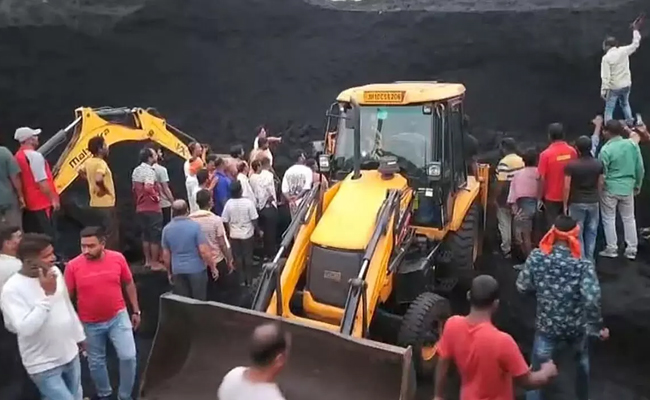
Dhanbad (Jharkhand) (PTI): At least four workers died after being buried under coal slurry in Jharkhand's Dhanbad district on Saturday, a police official said.
The incident took place at Moonidih coal washery in the command area of Bharat Coking Coal Limited (BCCL).
"Bodies of all four workers were dug out of debris during a rescue operation," Putki police station in-charge Waqar Hussain told PTI.
The incident took place when coal slurry was being loaded into trucks by workers, during which a large chunk of slurry fell and trapped several workers underneath, officials said.
The deceased have been identified as Manik Bauri, Dinesh Bauri, Deepak Bauri, and Hemlal Gope.
Meanwhile, the family members of the deceased and local villagers placed the bodies in front of the washery gate and began a protest.
They demanded compensation, jobs for dependents and action against those responsible for the incident.
Police and administration officials are trying to pacify the protesters, an official said.