PM highlights Manipuri man's effort to resolve electricity problem through solar energy
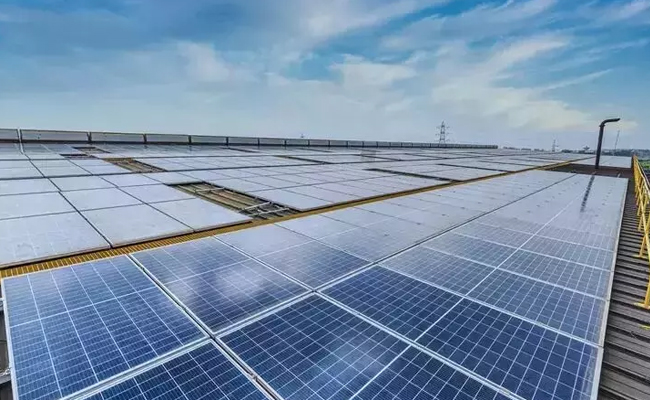
New Delhi (PTI): Prime Minister Narendra Modi on Sunday highlighted a Manipuri man's effort to bring electricity to his remote village, describing how he found the solution in solar power that brought light to hundreds of houses in the area.
Talking about Shriram Moirangthem in his monthly radio address 'Mann Ki Baat', Prime Minister Modi said the 40-year-old man has once again proved true the old saying 'where there is a will, there is a way' when he resolved the major electricity problem in his area in Manipur.
ALSO READ: Maharashtra cops bust ₹1.2 crore worth drugs in Bengaluru ahead of New Year
To overcome the challenge of ensuring a regular supply of electricity, Moirangthem focused on local solutions. "In our Manipur, it is anyway easy to generate solar energy. So, Moirangthem started a campaign to install solar panels and on account of this campaign, today solar power has reached hundreds of houses in his area," the prime minister said.
Modi said the special thing is that Moirangthem has used solar power to improve health care and livelihood.
"Today, owing to his efforts, many health centres in Manipur are also getting solar power. The women of Manipur have also benefited a lot from this endeavour. Local fishermen and artists have also been helped through this," he said.
The prime minister also talked about his government's flagship programme to provide solar power to households. He said that under the 'PM Surya Ghar Muft Bijli Yojana', the government is providing approximately Rs 75,000 to Rs 80,000 to each beneficiary family for installing solar panels.
"While Moirangthem's efforts are personal, they are giving new impetus to every campaign related to solar power. I extend my best wishes to him through 'Mann Ki Baat'," he said.
#WATCH | Manipur: On being recognised by PM Modi in the 129th edition of 'Mann Ki Baat' for his solar power solutions, Entrepreneur Moirangthem Seth says, "I feel very happy and proud of today's 'Mann Ki Baat' because our work has been recognised by the Prime Minister of India.… pic.twitter.com/c0F7yxZq7X
— ANI (@ANI) December 28, 2025
Let the Truth be known. If you read VB and like VB, please be a VB Supporter and Help us deliver the Truth to one and all.
UP: Petrol pump manager booked for denying fuel to ambulance; causing man's death
Ballia (UP) (PTI): Police on Saturday registered a case against a petrol pump manager in connection with the death of a 50-year-old man who allegedly could not be taken to hospital in time after a private ambulance was denied fuel.
The case has been filed against Ashok Kumar Bharti, manager of M/s Bhushan Service Station in Tengrahi village, under sections of the Essential Commodities Act, officials said.
According to police, the FIR was lodged following a complaint by Supply Inspector Indresh Kumar Tiwari. During the inquiry, the manager admitted that an ambulance had arrived at the petrol pump around 9.20 pm on April 22 seeking fuel, stating that it had run out of petrol. However, fuel was not provided, citing non-availability, officials said.
The ambulance allegedly remained stationed at the pump for about 15 minutes. However, records showed that the petrol pump had sufficient stock on that day, including 4,595 litres of motor spirit, 4,784 litres of high-speed diesel and 3,475 litres of premium petrol, indicating that fuel was available but not supplied, the FIR said.
District Magistrate Mangla Prasad Singh said an inquiry was conducted under the supervision of the Additional District Magistrate by a team comprising the Sub-Divisional Magistrate of Bairia and the District Supply Officer. Based on the findings, directions were issued to register a case.
Circle Officer (Bairia) Mohammad Fahim Qureshi said police have launched a probe and are searching for the accused manager.
Earlier, District Supply Officer Devmani Mishra had said that Chhatthu Sharma (50), a resident of Pandeypur village in Bairia tehsil, fell critically ill on the night of April 22. His family was taking him to the district hospital in a private ambulance when it ran out of fuel on the way.
The family approached a petrol pump near Tengrahi village for fuel, but the operator allegedly refused, citing a shortage. The family claimed that Sharma died on the way as he could not be taken to the hospital in time due to a lack of petrol.
The district magistrate said that CCTV footage confirmed that the ambulance had reached the petrol pump and sought fuel, which was not provided. He added that the pump operator cited low stock, but inspection revealed sufficient stock of petrol and diesel at the outlet.
Officials said that representatives of Indian Oil have also visited the site, and further action against the petrol pump will be recommended based on the findings.