PM leaving no stone unturned to save 'flailing image': Cong slams UGC's 'selfie points' directive
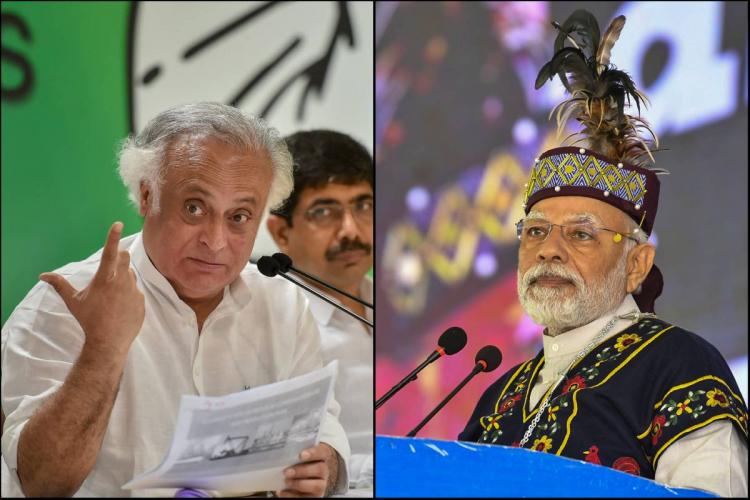
New Delhi, Dec 2: The Congress on Saturday attacked the Centre over the UGC asking universities and colleges to set up selfie points to highlight "transformative initiatives propelling India's growth", alleging Prime Minister Narendra Modi is leaving no stone unturned to save his "flailing image" in the run-up to the Lok Sabha polls.
Jairam Ramesh, the Congress general secretary, said at the fag end of 10 years, the people of India are sick and tired of this "obnoxious level of self-promotion" and will give a suitable answer very soon.
Sharing a media report on X on the UGC asking universities and colleges to set up selfie points, Ramesh said, "Our selfie-obsessed and self-obsessed PM is so insecure in the run up to Lok Sabha polls that he's leaving no stone unturned to save his flailing image."
"First, it was the Army being asked to set up selfie points. Then, he asked IAS officers and other senior govt officials to take out 'Rath Yatras'. Now, he has directed UGC to set up selfie points in all universities," the Congress general secretary said on X.
"Earlier, he hijacked the Chandrayaan-III landing by appearing on the live feed. Before that, he pasted his face onto all COVID-19 vaccine certificates," Ramesh added.
These are only a few examples and it reflects the man's tremendous insecurities and the "sickening sycophancy" around him, he said.
"At the fag end of 10 years, the people of India are frankly sick and tired of this obnoxious level of self-promotion surpassed only by North Korean dictators. The people will give a suitable answer very soon," Ramesh further said.
The University Grants Commission (UGC) has asked universities and colleges across the country to set up selfie points at strategic locations in the campus to raise awareness among youngsters about India's achievements in various fields, according to officials.
The institutions can only put up the selfie points in accordance with the approved designs in 3D layouts shared by the Union Ministry of Education.
"These selfie points will not only serve as a source of pride, but also enlighten every citizen about the transformative initiatives that have propelled India's growth on the global stage. Students and visitors should be encouraged to capture and share these special moments on social media platforms, fostering a sense of collective pride," UGC Secretary Manish Joshi had said.
https://t.co/ztodbZ64Cb
— Jairam Ramesh (@Jairam_Ramesh) December 2, 2023
Our selfie-obsessed and self-obsessed PM is so insecure in the run up to Lok Sabha polls that he’s leaving no stone unturned to save his flailing image.
First, it was Army being asked to set up selfie points.
Then, he asked IAS officers and other…
Let the Truth be known. If you read VB and like VB, please be a VB Supporter and Help us deliver the Truth to one and all.
4 held for sexually assaulting woman, girl on moving bus after social media alert in UP's Agra
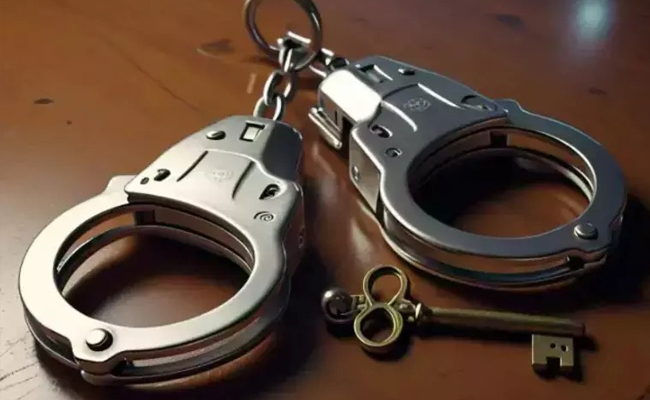
Agra (UP) (PTI): Four people were arrested, after a prompt response by police following a social media alert, for allegedly sexually assaulting a woman and a girl inside a moving bus here, officials said on Tuesday.
According to an official police statement, at 12:27 am on April 27, information was received on the social media platform X about an incident of sexual assault on a bus travelling from Kanpur to Ahmedabad, which was approaching Namner crossing in Agra.
Acting under the direction of Police Commissioner Deepak Kumar, the Agra Police social media team immediately alerted the Rakabganj police station within minutes and coordinated with the victims to confirm the incident and obtain the exact location, it stated.
Police teams launched intensive checking at Namner crossing and intercepted the bus as it reached the spot. The four accused involved in the incident were apprehended on the spot, and legal action was initiated against them, the statement said.
The police said the swift response and coordination between the social media team and field units ensured timely action, bringing relief to the victims and other passengers, who expressed gratitude towards the police, it added.