PM Modi announces 'PM Surya Ghar: Muft Bijli Yojana' to boost solar power
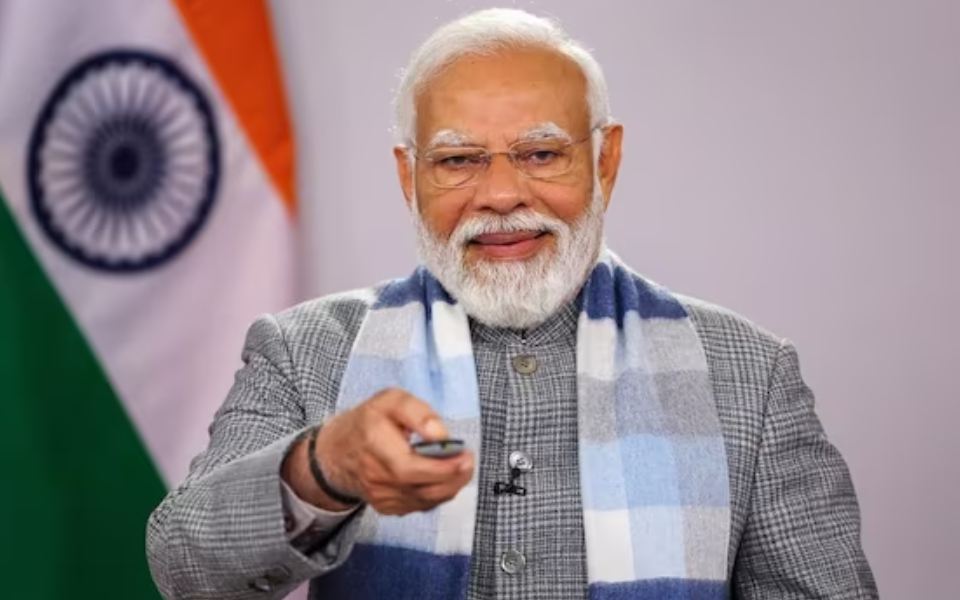
New Delhi, Feb 13: In a bid to boost solar power and sustainable progress, Prime Minister Narendra Modi on Tuesday announced that his government is launching the 'PM Surya Ghar: Muft Bijli Yojana' which aims to light up one crore households by providing up to 300 units of free electricity every month.
Modi said the project would entail an investment of over Rs 75,000 crore.
"In order to further sustainable development and people's wellbeing, we are launching the PM Surya Ghar: Muft Bijli Yojana. This project, with an investment of over Rs 75,000 crore, aims to light up 1 crore households by providing up to 300 units of free electricity every month," the prime minister said on X.
From substantive subsidies, which will be given directly to people's bank accounts, to heavily concessional bank loans, the central government will ensure that there is no cost burden on the people, he said.
All stakeholders will be integrated to a National Online Portal, the prime minister added.
Modi said that in order to popularise this scheme at the grassroots, urban local bodies and panchayats shall be incentivised to promote rooftop solar systems in their jurisdictions.
"At the same time, the scheme will lead to more income, lesser power bills and employment generation for people," the prime minister said.
"Let's boost solar power and sustainable progress. I urge all residential consumers, especially youngsters, to strengthen the PM - Surya Ghar: Muft Bijli Yojana by applying at -- https://pmsuryaghar.gov.in," Modi said.
Let’s boost solar power and sustainable progress. I urge all residential consumers, especially youngsters, to strengthen the PM - Surya Ghar: Muft Bijli Yojana by applying at- https://t.co/sKmreZmenT
— Narendra Modi (@narendramodi) February 13, 2024
Let the Truth be known. If you read VB and like VB, please be a VB Supporter and Help us deliver the Truth to one and all.
Iran foreign minister Araghchi meets Pakistan Army chief Munir
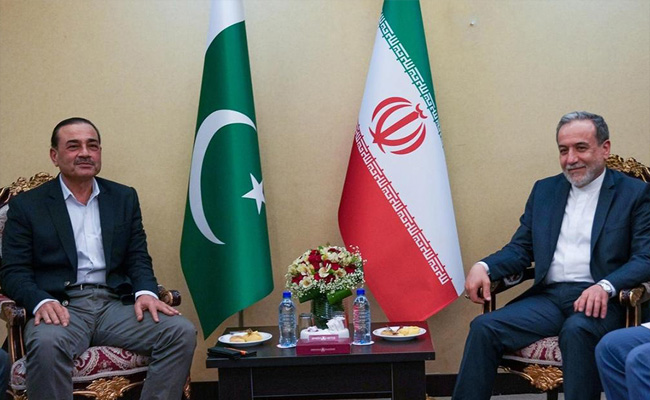
Islamabad (PTI): Iranian Foreign Minister Abbas Araghchi on Saturday met Pakistan Army chief Field Marshal Asim Munir here, as Islamabad continued its efforts to facilitate engagement between the US and Iran.
The meeting, according to a short video posted by the Iranian embassy on social media, was also attended by Iranian foreign ministry spokesperson Esmaeil Baghaei, and Iran's ambassador Reza Amiri Moghadam.
Araghchi calls on Munir, the embassy said in the video caption.
It did not provide further details about the discussions.
Araghchi arrived here late Friday for engagements with the Pakistani leadership. He was received by senior officials, including Munir, foreign minister Ishaq Dar and interior minister Mohsin Naqvi.
ALSO READ: Fire engulfs over 100 jhuggies in Delhi's Shakur Basti; no casualties
However, there is no clarity on whether direct talks between Washington and Tehran will take place during the visit.
"No meeting is planned to take place between Iran and the US. Iran's observations would be conveyed to Pakistan," Baqaei said in a social media post on Saturday.
Araghchi, before leaving for Islamabad, said that he was embarking on a timely tour of Islamabad, Muscat, and Moscow, and the purpose of his visits is to "closely coordinate with our partners on bilateral matters and consult on regional developments".
"Our neighbours are our priority," he said.
As the Iranian team landed in Islamabad, White House Press Secretary Karoline Leavitt said that US Special Envoy on the Middle East Steve Witkoff and President Donald Trump's adviser Jared Kushner would be leaving for Pakistan on Saturday "to engage in direct talks" with representatives of the Iranian delegation.
However, the US team has not yet arrived.
Meanwhile, Pakistan's Deputy Prime Minister and Foreign Minister Dar, in a social media post, expressed hope for "meaningful engagements" between the two warring parties to promote regional peace and stability.
The first round of US-Iran talks held on April 11 and 12 failed to produce a breakthrough, prompting a flurry of diplomatic efforts by host Pakistan to cool tensions and revive hopes for another round of dialogue.
On Tuesday, Trump extended the two-week ceasefire with Iran indefinitely to give Tehran more time to prepare a unified proposal to end the war, just hours before the truce was set to expire.
The Iran war began on February 28 with US-Israeli strikes.

_vb_19.jpeg)