PM Modi announces Rs 100 cut in LPG cylinder price
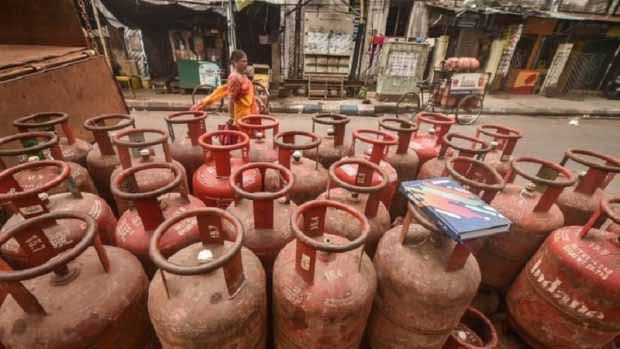
New Delhi (PTI): Prime Minister Narendra Modi announced a reduction of Rs 100 in cooking gas cylinder prices on Friday on the occasion of International Women's Day.
This will significantly ease the financial burden on millions of households across the country, especially benefiting "Nari Shakti" (women power), he said in a post on X.
"By making cooking gas more affordable, we also aim to support the well-being of families and ensure a healthier environment. This is in line with our commitment to empowering women and ensuring Ease of Living' for them," he said.
In a related decision, the government on Thursday announced the extension of Rs 300 per LPG cylinder subsidy to poor women under the Ujjwala Yojana for the next fiscal starting April 1.
The government in October last year hiked the subsidy from Rs 200 per 14.2-kg cylinders for up to 12 refills per year to Rs 300 per bottle. The Rs 300 per cylinder subsidy was for the current fiscal, which ends on March 31.
In another post on X, Modi greeted people on the International Women's Day.
"We salute the strength, courage, and resilience of our Nari Shakti and laud their accomplishments across various fields. Our government is committed to empowering women through initiatives in education, entrepreneurship, agriculture, technology and more," he said.
This is also reflected in the government's accomplishments in the last decade, Modi added.
Today, on Women's Day, our Government has decided to reduce LPG cylinder prices by Rs. 100. This will significantly ease the financial burden on millions of households across the country, especially benefiting our Nari Shakti.
— Narendra Modi (@narendramodi) March 8, 2024
By making cooking gas more affordable, we also aim…
Let the Truth be known. If you read VB and like VB, please be a VB Supporter and Help us deliver the Truth to one and all.
At least 16 dead in strikes as Chernobyl anniversary highlights nuclear risks of Russia-Ukraine war
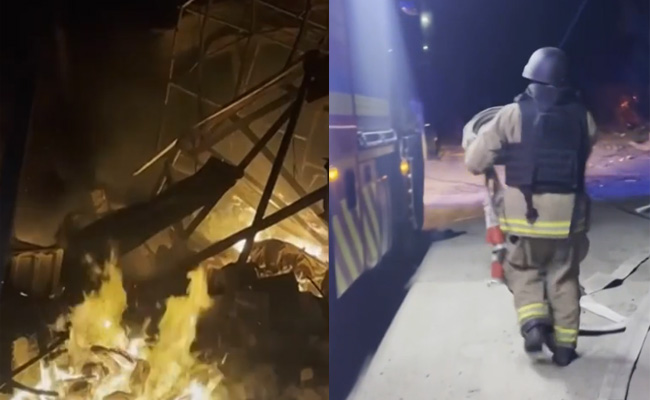
Kyiv (AP): At least 16 people have been killed in strikes over the weekend across Ukraine, Russian-occupied territory and Russia, local authorities said, as the 40th anniversary of the Chernobyl nuclear disaster prompted fresh warnings about the risks posed by attacks near the plant during Russia's more than four-year invasion of its neighbour.
The death toll from Russian drone and missile strikes on the city of Dnipro rose to nine, regional head Oleksandr Hanzha said Sunday.
One man was killed in a Ukrainian drone strike on the port city of Sevastopol, in Russian-occupied Crimea, Moscow-installed authorities said Sunday. Russia annexed the peninsula from Ukraine in 2014, a move that most of the world considered illegal, and has used it as a staging and supply point during the war.
Leonid Pasechnik, the Russia-installed governor in Ukraine's Luhansk region — of which Russia earlier this month said it had taken full control, a claim denied by Ukraine — said three people were killed in an overnight Ukrainian drone strike on a village, after reporting two people were killed in the early hours of Saturday.
Ukraine did not comment on either attack, which could not be independently verified by The Associated Press.
The latest strikes came after a woman was killed in a Ukrainian drone attack on Russia's Belgorod border region, according to local authorities.
Ukrainian forces also struck an oil refinery in Yaroslavl, deep inside Russian territory, Ukraine's General Staff said Sunday. The strikes sparked fires at the facility, which processes 15 million tons of oil a year and produces gasoline, diesel and jet fuel for the Russian military. Russia did not immediately comment.
Ukraine has developed its own long-range drones, which can reach targets some 1,500 kilometres inside Russia. It has used them recently against Russian oil facilities as Moscow looks to boost its exports after the Trump administration gave it a temporary waiver from sanctions to ease supply constraints.
Kyiv officials complain that Russia will use the additional revenue on new weapons to hit Ukraine harder.
Ukraine's President Volodymyr Zelenskyy marked the anniversary of the Chernobyl nuclear disaster to warn that Russian attacks risk repeating history.
“Through its war, Russia is once again bringing the world to the brink of a man-made disaster — Russian-Iranian Shaheds regularly fly over the plant, and one of them struck the confinement last year,” he wrote on Facebook.
“The world must not allow this nuclear terrorism to continue, and the best way is to force Russia to stop its reckless attacks,” he said.
Rafael Grossi, director general of the International Atomic Energy Agency, echoed those concerns during a visit to Kyiv, saying repairs to the plant's damaged outer protective shell must begin immediately. IAEA assessments show the damage sustained after a strike last year has already compromised a key safety function of the structure, he said, warning that years of inaction could heighten danger to the original sarcophagus beneath it.
The European Bank for Reconstruction and Development said repairs would require at least 500 million euros (USD 586 million).
Ukrainian officials say a Russian drone struck the outer shell of the plant's New Safe Confinement structure — a USD 2.1 billion archlike enclosure completed in 2019 over the remains of Reactor No 4 — in February 2025. Moscow denied targeting the plant, alleging Kyiv staged the attack.