PM Modi lands in China after gap of 7 years; all eyes on his talks with President Xi on Sunday
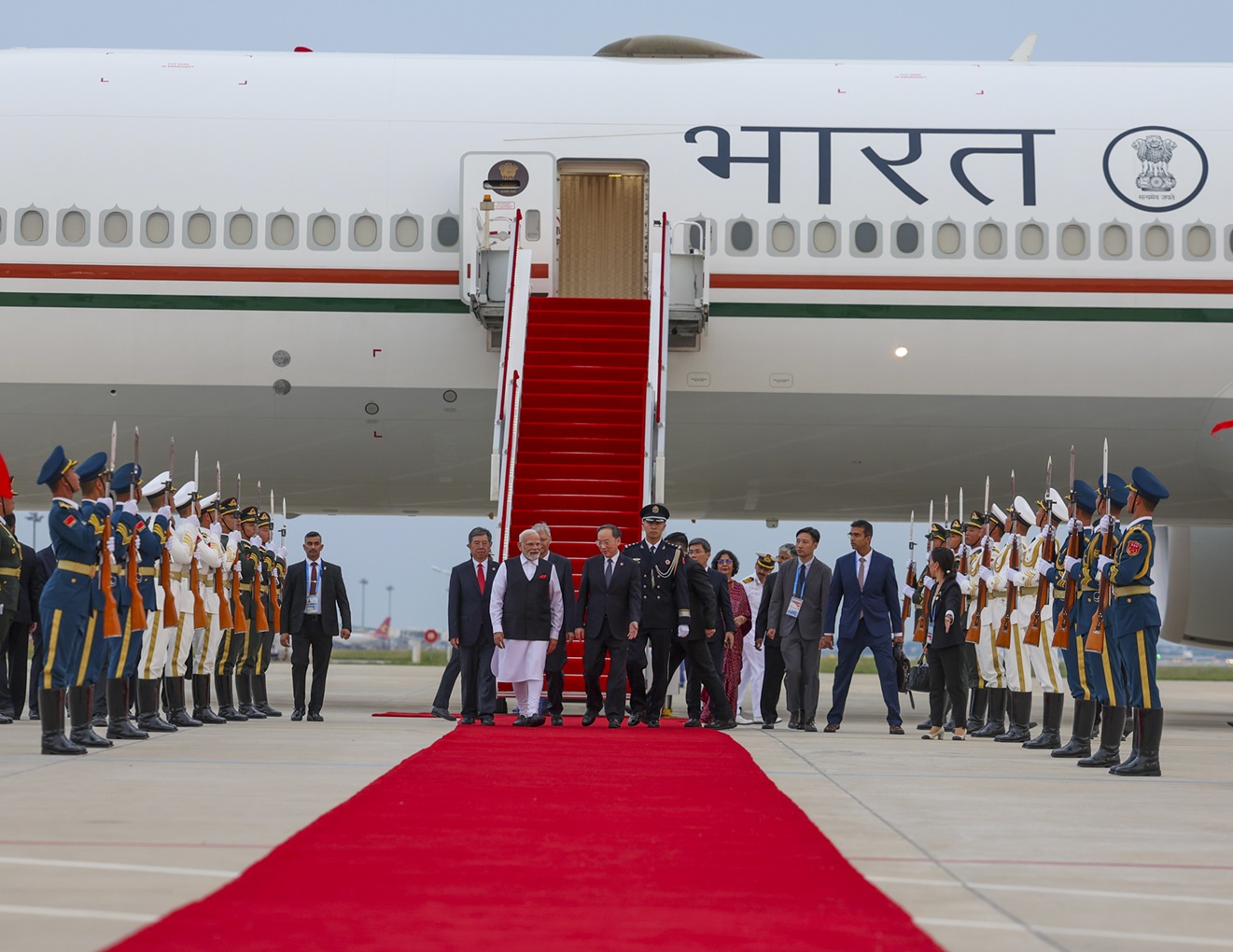
Tianjin (PTI): After a gap of over seven years, Prime Minister Narendra Modi landed in China on Saturday on a keenly watched visit that assumed greater significance in view of sudden downturn in India-US ties triggered by Washington's policies on tariff.
Modi is in China primarily to attend the annual summit of the Shanghai Cooperation Organisation (SCO) on August 31 and September 1.
However, his scheduled meeting with Chinese President Xi Jinping on Sunday has assumed greater significance in the face of Washington's tariff tussle that has impacted almost all leading economies across the world.
In the talks, Modi and Xi are expected to take stock of India-China economic ties and deliberate on steps to further normalise relations that came under severe strain following the eastern Ladakh border row.
The prime minister arrived in this Chinese city from Japan in the second and final leg of his two-nation.
Modi is also expected to hold bilateral talks Russian President Vladimir Putin and a number of other leaders on the margins of the summit.
Ahead of his trip to Tianjin, Modi said it is important for India and China to work together to bring stability to the world economic order.
In an interview with Japan's The Yomiuri Shimbun, Modi said a stable, predictable, and amicable bilateral relations between India and China can have a positive impact on regional and global peace and prosperity.
"Given the current volatility in world economy, it is also important for India and China, as two major economies, to work together to bring stability to the world economic order," Modi said in the interview published on Friday.
Modi's trip to China comes less than a fortnight after Chinese Foreign Minister Wang Yi visited India.
Following Wang's wide-ranging talks with External Affairs Minister S Jaishankar and National Security Advisor Ajit Doval, the two sides unveiled a series of measures for a "stable, cooperative and forward-looking" relationship between the two sides.
The measures included joint maintenance of peace along the contested frontier, reopening border trade and resuming direct flight services at the earliest.
In the last few months, both sides have initiated a series of measures to reset their ties that came under severe strain following the deadly clashes between Indian and Chinese troops in Galwan Valley in June 2020.
The prime minister last visited China in June, 2018, to attend the SCO summit. Chinese President Xi visited India in October 2019 for the second "informal summit".
The eastern Ladakh face-off effectively ended following completion of the disengagement process from the last two friction points of Demchok and Depsang under an agreement finalised on October 21 last year.
Let the Truth be known. If you read VB and like VB, please be a VB Supporter and Help us deliver the Truth to one and all.
BJP will form govt in Bengal with thumping majority: Nabin
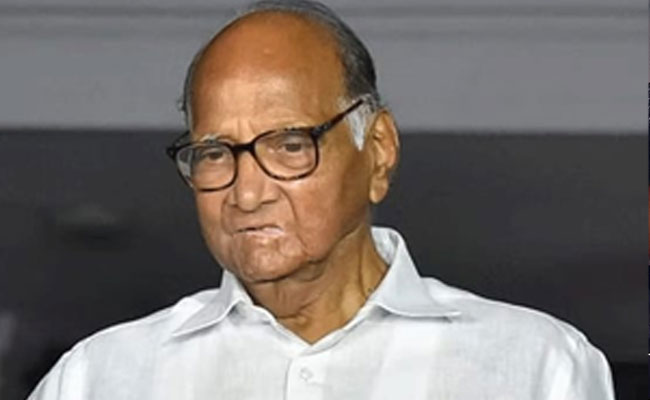
Mirzapur (UP) (PTI): BJP president Nitin Nabin on Wednesday voiced confidence that his party will form the government in West Bengal with a "thumping majority".
Polling is underway for 142 constituencies in the second and final phase of the West Bengal assembly elections, covering key districts, including Kolkata, Howrah and North and South 24 Parganas.
The high-stakes contest is being seen as decisive for the ruling TMC's bid for a fourth consecutive term and the BJP's push to form its first government in the state. The first phase held on April 23 recorded a high voter turnout of over 93 per cent, reflecting intense electoral engagement.
Speaking to reporters in Mirzapur, Nabin said, "The BJP will form the government in Bengal. We are winning the elections with a massive majority."
Earlier in the day, the BJP chief visited the Vindhyavasini temple and offered prayers. The rituals were conducted by his priest Acharya Agastya Kumar Dwivedi.
On his first visit to the district after assuming office, Nabin was welcomed by party workers at several places. At the temple, he was received by city MLA Ratnakar Mishra and District Magistrate Pawan Kumar Gangwar, who felicitated him with a traditional 'angvastram'.
After offering prayers for about 10 minutes amid Vedic chants, Nabin held a meeting at a hotel with local MLAs, including Mishra, Majhwan MLA Suchismita Maurya and Madihan MLA Ramashankar Patel.
Patel said Nabin emphasised strengthening the organisation and asked public representatives to focus on serving people in their respective constituencies.
Several party leaders, including district president Lal Bahadur Saroj, district vice-president Gaurav Umar, municipal chairperson Shyam Sundar Kesari, women workers and senior officials, were present on the occasion.
Elaborate security arrangements were put in place by the district administration for the visit, with multiple officers of circle officer rank deployed, officials said.