PM Modi only interested in 'tareef' not tariffs, must stand up to US threats: Jairam Ramesh
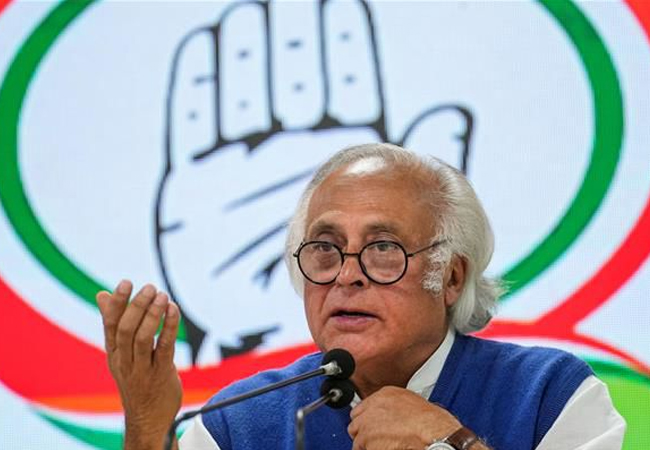
New Delhi (PTI): Prime Minister Narendra Modi is only interested in 'tareef' and not concerned with tariffs, Congress general secretary Jairam Ramesh said on Friday and wondered where is the PM's "56 inch chest" in dealing with US threats on the reciprocal tariff issue.
In an interview with PTI, Ramesh said the Congress will raise the issue of US President Donald Trump's reciprocal tariff threats during the upcoming second half of the Budget session and called for a bipartisan collective resolve to deal with the threats.
The Congress leader also alleged that External Affairs Minister S Jaishankar has been speaking like an American envoy and a spokesperson for that country.
"Our prime minister wants to hear only 'tareef (praise)', he is not concerned about tariffs. 'Tareef kum, aur tariff pe baat kijiye (talk about the tariffs issue and less about your praise)," Ramesh said.
He said Trump is redoing the entire rules of international trade and asserted that the US President's whole idea of reciprocal tariffs is "bizarre".
"We have negotiated a tariff schedule. About 170 countries have negotiated a trade agreement which became the World Trade Organisation in 1995. It took about 10 years to negotiate. Now, Mr Trump comes up with his own bizarre notion of what constitutes international trade," Ramesh said.
"'You tariff, I tariff', that is not the way international trade functions. These rules have been negotiated. The WTO is World Trade Organisation not World Trump Organisation," he said.
Hitting out at the government over the manner in which illegal Indian immigrants were deported from the US, Ramesh said even small countries are raising their voice but the prime minister stays mum.
"He should speak frankly...Trump is threatening a country like India. The prime minister talks about having a '56-inch chest', where is his '56-inch chest' now. Remember what Indira Gandhi had told President (Richard) Nixon in November 1971. President Nixon and Henry Kissinger had tried to defame India but Indira Gandhi stood up and said 'I will do what is in the interest of India'," Ramesh recalled.
"It is a question of India's interest. But our PM is doing 'Namaste Trump', 'my good friend Trump', he is busy hugging him. So this question (on tariffs) will be raised (in Parliament). We have raised the issue of Indian citizens," he said.
The manner in which President Trump is targeting India it is a "serious issue" and a matter of our sovereignty, Ramesh asserted.
He further claimed that the prime minister doesn't break his silence in Parliament and sends External Affairs minister "who is like a spokesperson of the US".
"The US does not have an ambassador and the external affairs minister talks like a US envoy," Ramesh said.
He asserted that there is a need to show a collective resolve to the US threats on reciprocal tariffs.
Slamming the government, the Congress leader said it never calls an all-party meeting and when it does, the external affairs minister and home minister just give a sermon.
"In the first half of the Budget session, we raised the issue of the humiliating and demeaning manner in which the Indian citizens were deported from the US, handcuffed and chained," Ramesh said.
"Many of these migrants were from Punjab, Haryana and Gujarat and even the migrants from Gujarat were asked to land in Amritsar, to score a political point. We raised the issue of the manner of deportation very forcefully," he said.
The first half of the Budget Session was held from January 31 to February 13. The second half starts on Monday and will conclude on April 4.
Trump has repeatedly talked about India’s tariffs recently. In his address to the joint session of Congress on Tuesday, the first of his second term in the White House, Trump criticised the high tariffs charged by India and other countries and termed them as "very unfair".
Addressing lawmakers from the US Capitol, Trump had announced that reciprocal tariffs will kick in next month.
Trump had said that the US trade deficit with India is almost USD 100 billion, and he and Modi agreed that "we'll begin negotiations to address the long-running disparities that should have been taken care of over the last four years - but they didn’t do that - in the US-India trading relationship, with the goal of signing an agreement."
Commerce Minister Piyush Goyal is in Washington for trade talks with his US counterpart Howard Lutnick.
As per US estimates, the US' total goods trade with India was an estimated USD 129.2 billion in 2024. US goods exports to India in 2024 were USD 41.8 billion, up 3.4 percent (USD 1.4 billion) from 2023. US goods imports from India totalled USD 87.4 billion in 2024, up 4.5 percent (USD 3.7 billion) from 2023.
The US goods trade deficit with India was USD 45.7 billion in 2024, a 5.4 percent increase (USD 2.4 billion) over 2023.
Let the Truth be known. If you read VB and like VB, please be a VB Supporter and Help us deliver the Truth to one and all.
Sujit Nair raises concerns over speculation of DMK-AIADMK understanding to block TVK
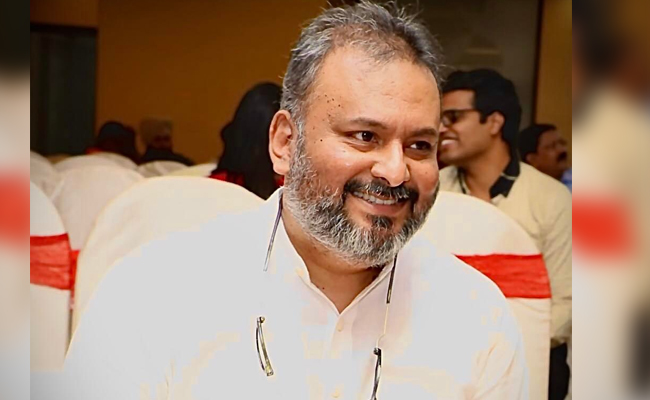
Chennai: Journalist and political commentator Sujit Nair has expressed concern over speculation that the Dravida Munnetra Kazhagam and the All India Anna Dravida Munnetra Kazhagam could explore a post-poll understanding to prevent Vijay-led Tamilaga Vettri Kazhagam from forming the government in Tamil Nadu.
In a social media post, Sujit Nair said the election verdict in Tamil Nadu reflected a clear public demand for political change and argued that the mandate should be respected irrespective of political preferences.
Referring to reports and political discussions surrounding a possible understanding between the DMK and AIADMK, he said he hoped such developments remained only speculative conversations and did not turn into reality.
Nair stated that if such an alliance were to take shape, it would raise serious questions about ideological politics in the country. He said TVK had emerged through a democratic electoral process and that the legitimacy to govern in a parliamentary democracy comes from the people’s verdict.
According to him, attempts to prevent an electoral winner from forming the government through unexpected political arrangements may be constitutionally valid, but many people could view them as politically opportunistic.
He further said that such a move could particularly affect the political image of the DMK, which has historically projected itself around ideology, social justice and opposition politics. Nair said that in ideological terms, the DMK appeared closer to TVK than to the AIADMK, and joining hands with its long-time political rival only to remain in power could weaken its broader political narrative.
He added that the same questions would apply to the AIADMK as well, as the party had spent decades positioning itself against the DMK and such an arrangement could create discomfort among its cadre and supporters.
Drawing a comparison with Maharashtra politics in 2019, Nair said he had expressed similar views when the Shiv Sena formed an alliance with the Indian National Congress and the Nationalist Congress Party after the Assembly elections.
He said post-poll alliances between long-standing political rivals often create a public perception that ideology and electoral mandates become secondary when political power equations come into play.
Nair also said such developments increase public cynicism towards politics and reinforce the belief among voters that ideology is often sidelined after elections.
He maintained that the Tamil Nadu verdict was emphatic and said respecting both the spirit and substance of the mandate was important for the credibility of democratic politics.