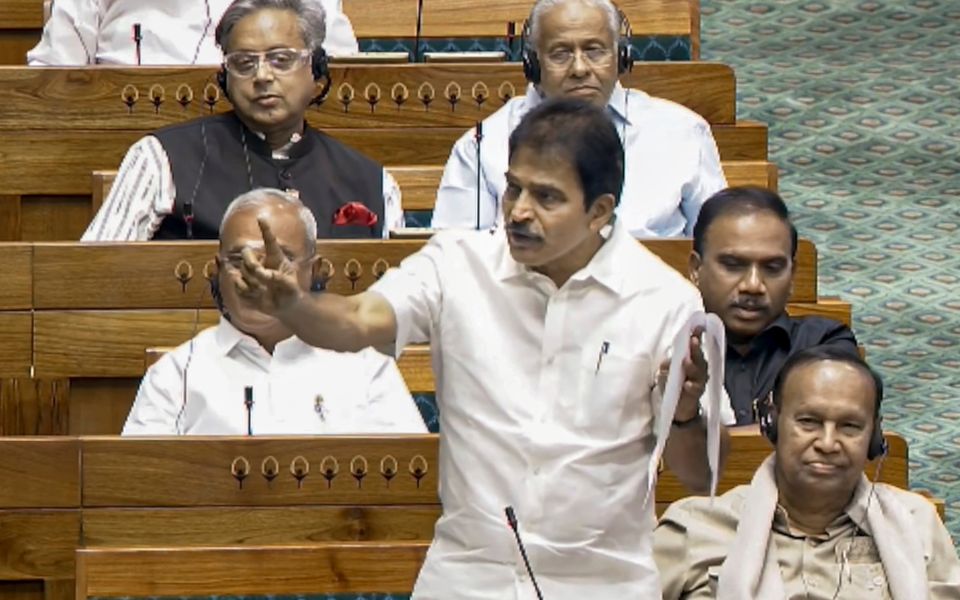
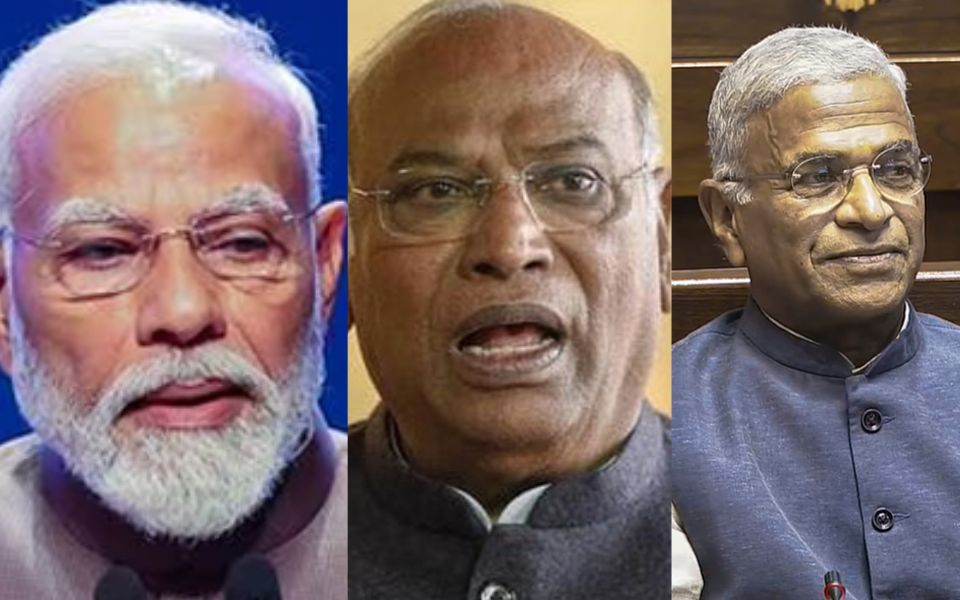
PM Modi shifts to 'Bankim babu' as TMC objects to 'Bankim da' reference
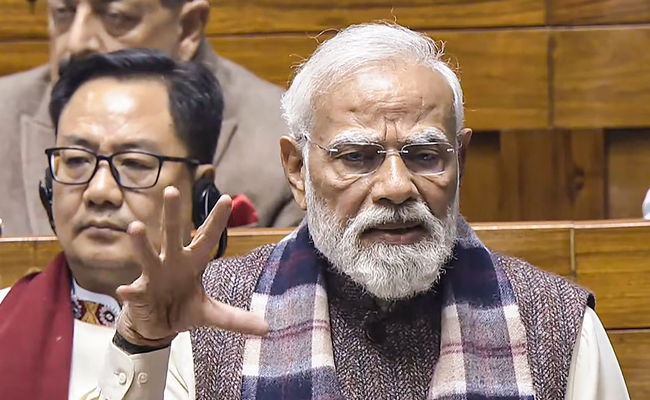
New Delhi (PTI): Prime Minister Narendra Modi's reference to Bankim Chandra Chatterjee, the author of Vande Mataram, as 'Bankim da' was objected to by the Trinamool Congress on Monday, prompting him to add the more respectful suffix 'babu' to the legendary poet's name.
Trinamool Congress member Saugata Roy, during the debate on 150 years of national song Vande Mataram in the Lok Sabha, asked the prime minister to use the suffix 'babu' while referring to Chatterjee.
"I will say Bankim Babu. Thank you, I respect your sentiments," the prime minister said.
ALSO READ: Cong hits back at PM Modi, calls him 'master distorian'
In a lighter vein, Modi quickly asked whether he could still refer to Roy as 'dada'.
"I can call you dada, right? Or you have an objection to that, too," the prime minister said.
Earlier, the prime minister had asked about Roy's well-being when the Trinamool Congress member had made some remarks at the start of the debate.
Roy is the fifth term Lok Sabha member from Dum Dum constituency in West Bengal.
Let the Truth be known. If you read VB and like VB, please be a VB Supporter and Help us deliver the Truth to one and all.
Trekking without nature guide won't be allowed; Karnataka forest minister releases SOP
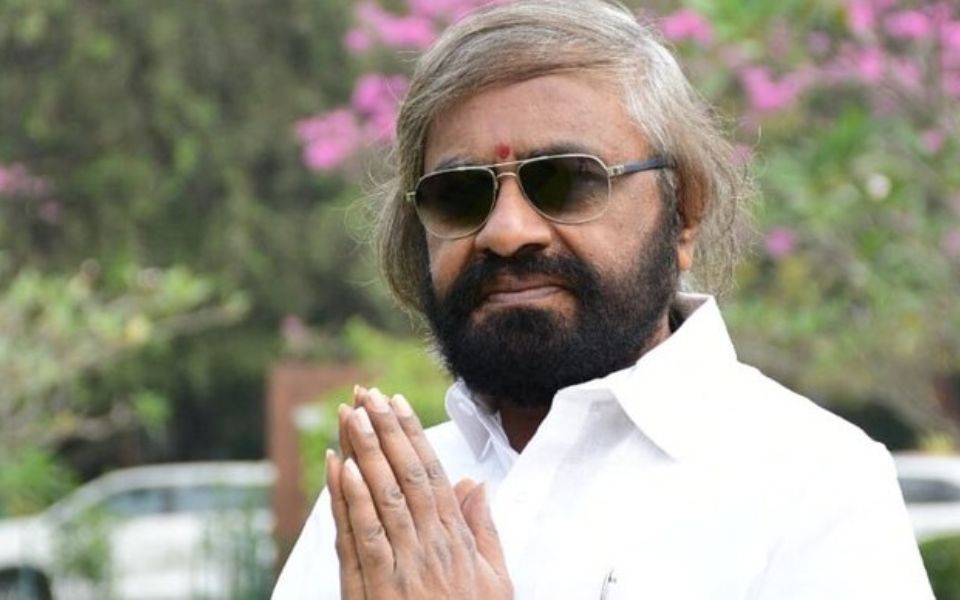
Bengaluru (PTI): Karnataka Forest Minister Eshwar Khandre on Friday said that trekking will no longer be permitted on any approved trekking routes under the forest department, without a certified nature guide equipped with GPS-enabled walkie-talkies.
Speaking after releasing the Standard Operating Procedure (SOP) formulated for the safety of trekkers, he said that there will be one local nature guide for every 10 trekkers. A maximum of 150 trekkers will be allowed per batch on any trekking route.
According to him, online registration for trekking is mandatory. Even if a single individual registers for a particular day, a guide will still be provided, and trekking without a guide will not be allowed.
He said the SOP was introduced following recent incidents, including a woman from Kerala who went missing for three days in the forests during a trek at Tadiandamol hill in Kodagu, and a minor girl who went missing and was later found dead near Manikyadhara in Chikkamagaluru, which is outside forest jurisdiction.
In a statement, the Khandre's office said that nature guides will be mandatorily equipped with GPS-enabled walkie-talkies on all trekking routes. "Additionally, a mobile app containing trekking route maps will be installed on trekkers' phones. This will help locate trekkers if they lose their way", it said.
As per the SOP, before the trek begins, trekkers will be briefed about the distance, duration, and local conditions.
"Instructions on how to respond if wildlife is encountered will also be provided. Loud devices, sharp metal objects, weapons, and campfires are strictly prohibited on trekking routes," it said.
The SOP further stated that separate toilets for men and women and drinking water facilities will be provided at base camps.
Directional arrow markings will guide trekkers along the route, and rest points will be created along the way, it said.
Citing the SOP, the statement said that nature guides must ensure that no trekker moves ahead of them or is left behind. Headcounts must be conducted at base camps and rest points.
"Guides must communicate with the base camp via walkie-talkie every 30 minutes. If there is no communication within an hour of the trek starting, base camp staff will contact the guide to confirm safety," it said.
The SOP states that minors must carry a consent letter from their parents or guardians, and senior citizens must provide a fitness certificate confirming their physical capability to undertake trekking. To be able to respond to unexpected health issues, trekkers and guides must carry a first aid kit.
However, flash photography, single-use plastics, and carry bags are prohibited and trekkers must bring back their waste and dispose of it only at base camps, as per SOP.
It further said that all trekking routes under the forest department will be integrated into the official website (https://aranyavihaara.karnataka.gov.in/) to enable advance booking of tickets.