PM Modi to inaugurate new Noida International Airport on Saturday
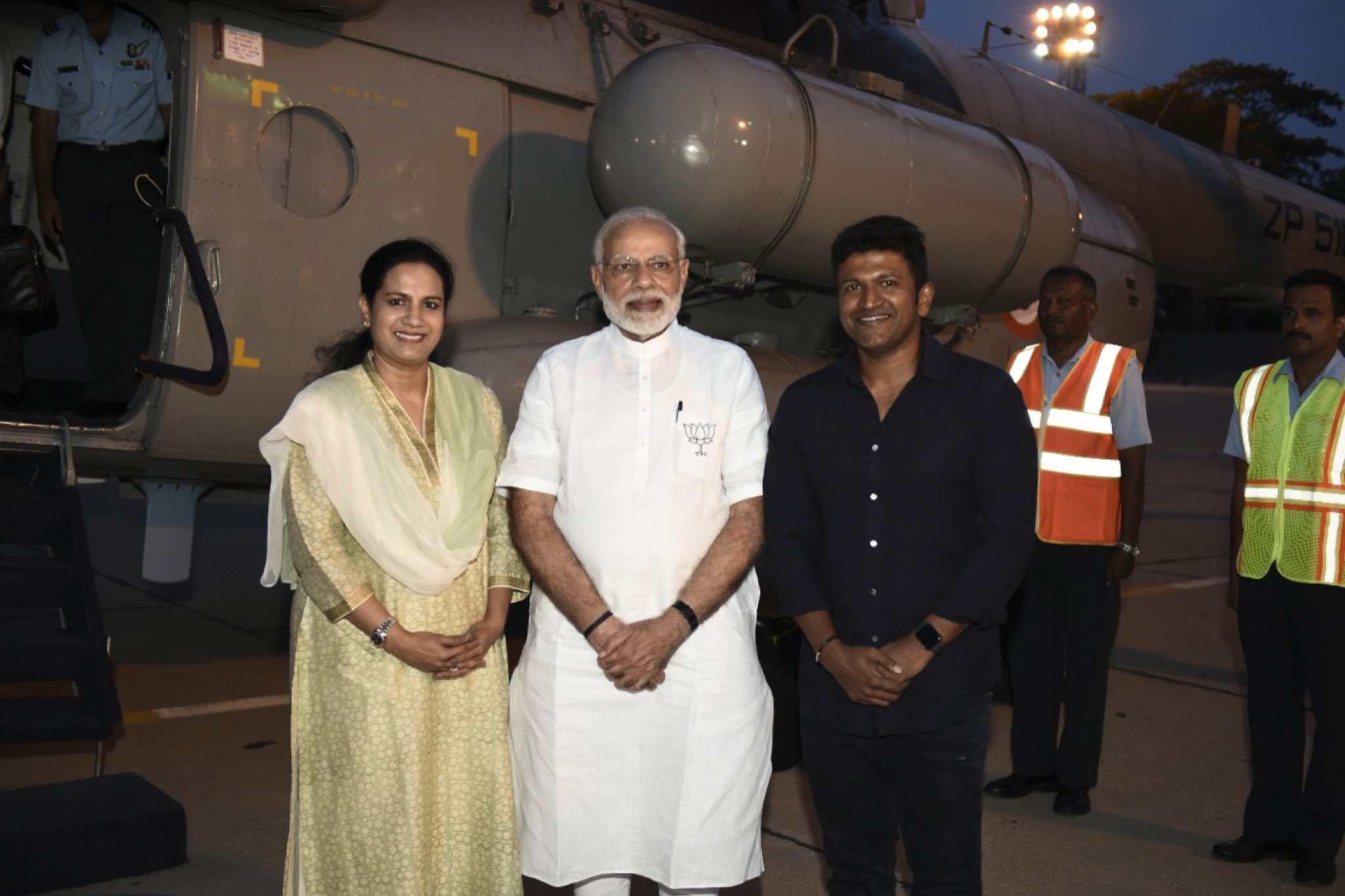
New Delhi (PTI): Prime Minister Narendra Modi will inaugurate the newly constructed Noida International Airport, envisioned as a major international gateway for the National Capital Region, on Saturday.
The Noida airport has been developed as the second international airport for the Delhi-NCR region, complementing Delhi's Indira Gandhi International Airport.
Its inauguration marks a significant milestone in India's journey towards becoming a global aviation hub, an official statement said.
"Prime Minister Narendra Modi will visit Uttar Pradesh on March 28, 2026. At around 11.30 am, he will undertake a walkthrough of the terminal building of the Noida International Airport at Jewar, Gautam Buddha Nagar. Thereafter, at around 12 noon, the prime minister will inaugurate Phase-I of Noida International Airport and address a public gathering on the occasion," the statement said.
The Noida airport is one among the largest greenfield airport projects in India.
Together, the Delhi and Noida airports will function as an integrated aviation system, easing congestion, expanding passenger capacity, and positioning Delhi-NCR among the leading global aviation hubs, the statement said.
ALSO READ: Teen stabbed to death near home in Delhi's Dayalpur, 3 minors held
Phase-I of the Noida International Airport has been developed with an outlay of Rs 11,200 crore under a Public-Private-Partnership (PPP) model.
The airport will initially have a passenger handling capacity of 12 million passengers per annum. Once fully developed, this could be scaled up to 70 million passengers per annum.
The features include a 3,900-metre runway capable of handling wide-body aircraft; modern navigation systems, such as the Instrument Landing System; and advanced airfield lighting to support efficient, all-weather, round-the-clock operations.
The airport also incorporates a robust cargo ecosystem. It includes a multi-modal cargo hub, featuring an integrated cargo terminal and logistics zones.
The cargo facility is designed to handle over 2.5 lakh metric tonnes annually, expandable up to 18 lakh metric tonnes, and includes a dedicated 40-acre MRO (maintenance, repair and overhaul) facility.
Designed as a sustainable and future-ready infrastructure project, the Noida International Airport aims to operate as a net-zero emissions facility, integrating energy-efficient systems and environmentally responsible practices.
Its architectural design draws inspiration from Indian heritage, incorporating elements reminiscent of traditional ghats and havelis, thereby blending cultural aesthetics with modern infrastructure.
Strategically located along the Yamuna Expressway, the Noida International Airport is planned as a multi-modal transport hub with seamless integration across road, rail, metro, and regional transit systems, ensuring efficient connectivity for passengers and cargo, the statement said.
Let the Truth be known. If you read VB and like VB, please be a VB Supporter and Help us deliver the Truth to one and all.
Siddaramaiah stresses need to establish Supreme Court bench in South India
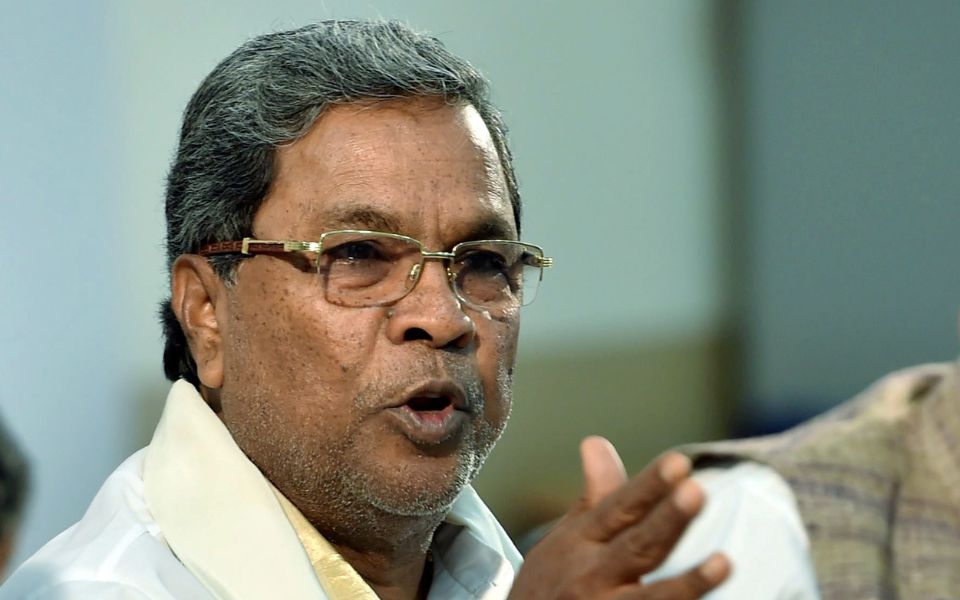
Bengaluru (PTI): Karnataka Chief Minister Siddaramaiah on Saturday stressed the need to improve accessibility to the highest court of the land, asserting that establishing a Supreme Court bench in South India would go a long way in ensuring justice.
Speaking at the 22nd Biennial State Level Conference of Judicial Officers with a theme 'Reimagining the Judiciary in the era of Artificial Intelligence', he said, the authority of a judge must never be overshadowed by the authority of an algorithm.
"Even as we explore these new frontiers, we must remain mindful of the enduring challenges facing our judiciary," the chief minister said.
"Pendency of cases continues to be a serious concern that affects the timely delivery of justice. While technology can provide tools to address this, it must be complemented by systemic reforms through strengthening infrastructure, increasing judicial capacity, and modernising court processes," Siddaramaiah said.
"There is also a strong and compelling need to improve accessibility to the highest court of the land. The establishment of a Supreme Court bench in South India would go a long way in ensuring justice," he said.
Chief Justice of India, Surya Kant, Supreme Court Judges B V Nagarathna and Aravind Kumar and Chief Justice of High Court of Karnataka Vibhu Bakhru were among those present.
The CM said, "We stand today at a defining juncture where law and technology are no longer separate domains, but interconnected forces shaping governance, rights, and the very nature of justice itself."
"Artificial Intelligence is emerging as a transformative force that challenges how we interpret evidence, how we understand facts, and how decisions are arrived at. It offers immense promise, aiding faster legal research, improved case management, and the possibility of reducing pendency through intelligent systems," he said.
"Yet, it also raises profound concerns. Algorithmic bias can undermine the guarantee of equality before law. Opaque systems may weaken the doctrine of reasoned decisions, which lies at the heart of our judicial process," he added.
Siddaramaiah said, Judicial independence, which is the cornerstone of our democracy, must be preserved not only from external pressures but also from subtle technological dependence.
"The authority of a judge must never be overshadowed by the authority of an algorithm," he said.
Pointing out that the emergence of AI-generated evidence presents new challenges for our legal system, the CM said, Deepfakes, synthetic data, and machine-generated content compel us to revisit established doctrines relating to admissibility, burden of proof, and authenticity.
"The courts will increasingly be called upon to determine what constitutes reliable evidence in a digital age. In doing so, we must ensure that truth remains grounded in verifiability and integrity, not merely in technological sophistication," he said.
Hoping that the judiciary will play a defining role in shaping the regulatory framework for artificial intelligence in India, he further said, "through well-established constitutional doctrines such as due process, proportionality, and the right to privacy, our courts will determine the contours within which AI must operate."
"The judiciary, therefore, is not only a user of technology but also the ethical compass that will guide its deployment in society," he added.
Noting that technology also offers meaningful opportunities to strengthen judicial processes, Siddaramaiah said, AI-assisted legal research may democratise access to precedents and reduce disparities in legal knowledge.
Siddaramaiah also said that blockchain technology holds promise in ensuring secure, tamper-proof judicial records. Stating that the intelligent case management systems can streamline court functioning and reduce delays, he said, "However, these innovations must be adopted with care, ensuring that efficiency does not come at the cost of fairness."
"In this transformation, the capacity of our judicial institutions becomes critical. Judges of the future must be equipped not only with legal acumen but also with a clear understanding of technological systems," he added.
Stating that the question is how artificial intelligence intersects with the fundamental principles of equality and social justice, the CM said, if not carefully designed and regulated, AI systems can replicate and even amplify existing social inequalities.
No algorithm can replace the human capacity for empathy, the wisdom that comes from lived experience, or the moral reasoning that defines judicial decision-making, he said, "Technology can assist, but it cannot replace the human conscience that lies at the heart of justice."
Siddaramaiah said, the Government of Karnataka remains committed to building robust judicial infrastructure, facilitating digital transformation, and creating an ecosystem where innovation and justice can progress together.