PM SHRI: CPI(M) state secy admits 'lapse' in not discussing MoU in Cabinet, LDF
_vb_14.jpeg)
Thiruvananthapuram (PTI): CPI(M) state secretary M V Govindan on Sunday admitted there was a "lapse" in not discussing the PM SHRI scheme in the state Cabinet or within the LDF before signing the memorandum with the Centre.
The state government had recently decided to freeze the Memorandum of Understanding (MoU) signed with the Centre under the Prime Minister's Schools for Rising India scheme, following criticism from the CPI, a key ally in the LDF.
Addressing reporters here, Govindan said, "Only one thing we admit—it is true that the Cabinet and the LDF did not discuss it and take a decision. It was a lapse. I have admitted it."
Govindan said he, Chief Minister Pinarayi Vijayan, and the party’s national leaders had intervened to resolve the issue.
"I have been saying from the beginning that the LDF will discuss all matters, take a decision, and move forward together. That has now proved true," he said.
The CPI(M) leader said the party secretariat and state committee had met earlier in the day. "All preparations for the upcoming elections are complete. The LDF will make gains in all civic bodies in the upcoming polls," he said.
Govindan also hit out at Leader of Opposition V D Satheesan for calling the state government’s claim of eradicating extreme poverty "bogus."
He said the project to identify people living in extreme poverty had begun in 2021, when he was minister for Local Self-Governments.
"There are several civic bodies in Kerala governed by opposition parties. Can he say that those local bodies are making fake claims," Govindan asked.
He urged Satheesan to travel across the state to identify individuals still living in extreme poverty.
"If they find anyone, we will include them in our programme and work to improve their situation," he said.
Govindan said Kerala had achieved this milestone due to the efforts of successive governments since the state’s formation. "In 2021, only 0.5 per cent of the population was found to be living in extreme poverty. States with higher poverty levels may find it difficult to achieve such a feat," he added.
"We can confidently say that Kerala is the first state in the world to eradicate extreme poverty. The only other to do so is China," Govindan claimed.
He also highlighted various welfare measures recently announced by the government, which he said would benefit over one crore people, including women, youth, and senior citizens.
Without any central assistance, the state had increased the monthly welfare pension for 62 lakh beneficiaries from Rs 1,600 to Rs 2,000, he said.
"The election manifesto had promised to raise the monthly pension to Rs 2,500. If the Centre releases the Rs 2 lakh crore withheld from Kerala, we will even raise it to Rs 3,000. Whatever we have promised, we have delivered," he said.
Govindan added that the government plans to provide employment to one lakh people. "How can the Leader of the Opposition (V D Satheesan) acknowledge these achievements? That is why he walked out of the Assembly, calling it a fraud," he said.
Let the Truth be known. If you read VB and like VB, please be a VB Supporter and Help us deliver the Truth to one and all.
Questioning religious practices will break religion, civilisation: SC in Dawoodi Bohras case
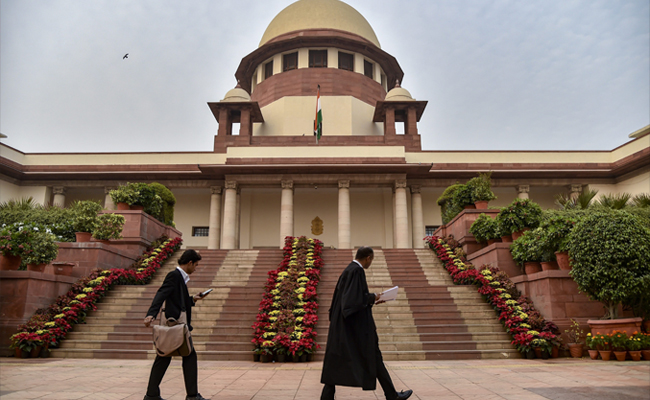
New Delhi (PTI): The Supreme Court on Thursday remarked that if individuals start questioning certain religious practices or matters of religion before a constitutional court then there will be hundreds of petitions questioning different rituals, leading to the breaking of religions and the civilisation.
The nine-judge Constitution bench is hearing petitions related to discrimination against women at religious places, including the Sabarimala temple in Kerala, and on the ambit and scope of the religious freedom practised by multiple faiths, including Dawoodi Bohras.
The bench comprises Chief Justice of India (CJI) Surya Kant and Justices B V Nagarathna, M M Sundresh, Ahsanuddin Amanullah, Aravind Kumar, Augustine George Masih, Prasanna B Varale, R Mahadevan and Joymalya Bagchi.
The Central Board of Dawoodi Bohra Community filed a PIL in 1986 seeking the setting aside of a 1962 judgment, which had struck down the Bombay Prevention of Excommunication Act, 1949 -- this law made excommunication of any community member illegal.
The 1962 Constitution bench judgment said, "It is evident from the religious faith and tenets of the Dawoodi Bohra community that the exercise of the power of excommunication by its religious head on religious grounds formed part of the management of its affairs in matters of religion and the 1949 Act in making even such excommunication invalid, infringed the right of the community under Article 26(b) of the Constitution."
Senior advocate Raju Ramachandran, representing a group of reformist Dawoodi Bohras, submitted that a practice which is conducted in response to secular and social actions of an individual cannot be the subject of Constitutional protection under Article 25 of the Constitution and consequently cannot be a ‘matter of religion’ under Article 26 of the Constitution.
Ramachandran told the court that a practice which may have a religious aspect but also significantly and adversely impacts fundamental rights is not immune to restriction under Article 25 of the Constitution or Article 26 of the Constitution.
Responding to the submission, Justice Nagarathna said that if everybody starts questioning certain religious practices or matters of religion before a constitutional court, then "what happens to this civilisation where religion is so intimately connected with the Indian society".
"There will be hundreds of petitions questioning this right that right, opening of the temple, and the closure of the temple. We are conscious of this," she said.
Adding to the response, Justice Sundresh said, "Every religion will break and every constitutional court will have to be closed.
"If the dispute between two entities are allowed then everybody will question everything. In your case there may be a civil wrong committed to you but in another case, another member will say I don't agree. It is regressive. To what extent can we go in a country like ours which is progressive and on the move is the question," he said.
Justice Nagarathna went on that what sets apart India from any other region is that "we are a civilisation" despite having so many pluralities and diversities?
Asserting that diversity is the country's strength, she added, "One of the constants in our Indian society is the relationship of human beings -- man, woman and child -- with the religion."
"Now, how a religious practice or a matter of religion is questioned, where it is questioned, whether it can be questioned, whether it has to be a question within a denomination for a reform or whether the state will have to do or you want the court to adjudicate upon all these aspects. This is troubling us.
"What we lay down, is for a civilisation that is India. India must progress despite all its economy, everything there is a constant in us. We can’t break that constant. That is what is troubling us ," she said.
Ramachandran replied that India is a civilisation under the Constitution and therefore nothing which goes against the grain of constitution can be continued in a civilised society.
He said that's where court's task come in and "it can't throw hands" and say there will be so many petitions.