PM yet to acknowledge 'epic failure' of demonetisation move: Mallikarjun Kharge
_vb_06.gif)
New Delhi (PTI): Congress president Mallikarjun Kharge attacked Prime Minister Narendra Modi on Monday over his government's 2016 demonetisation move, saying the PM is yet to acknowledge this "epic failure" that led to the "fall of the economy".
Kharge's remarks, a day before demonetisation's sixth anniversary, came over a media report which said that the currency with the public has jumped to a new high of Rs 30.88 lakh crore as of October 21.
"Demonetisation was promised to free the country of black money. But it destroyed businesses and ruined jobs. 6 years after the 'masterstroke' the cash available in public is 72% higher than that in 2016," Kharge said in a tweet.
"PM is yet to acknowledge this epic failure that led to fall of economy," the Congress president said.
According to the fortnightly data on money supply released by the RBI on Friday, the currency with the public increased to Rs 30.88 lakh crore as on October 21. The central bank data for Reserve Money had put the currency in circulation at Rs 17.7 lakh crore on November 4, 2016.
Currency with the public refers to notes and coins used by people to transact, settle trades, and for buying goods and services. The figure is arrived at after deducting cash with banks from the currency in circulation.
On November 8, 2016, Prime Minister Modi had announced the decision to withdraw Rs 500 and Rs 1,000 denomination notes with the ultimate aim of reducing corruption and black money in the economy.
Demonetization was promised to free the country of black money. But it destroyed businesses and ruined jobs.
— Mallikarjun Kharge (@kharge) November 7, 2022
6 years after the ‘masterstroke’ the cash available in public is 72% higher than that in 2016.
PM is yet to acknowledge this epic failure that led to fall of economy. pic.twitter.com/wsd1j062EF
Let the Truth be known. If you read VB and like VB, please be a VB Supporter and Help us deliver the Truth to one and all.
Bengaluru airport introduces AI-based system to enhance safety at vehicle-aircraft intersections
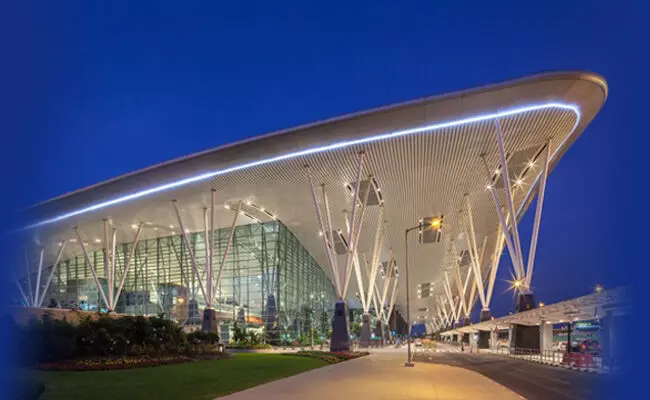
Bengaluru: Bangalore International Airport Limited (BIAL) has introduced an integrated smart airside safety system at Kempegowda International Airport to improve operational safety at key intersection zones.
According to The Hindu, the system has been designed to enhance safety at Cross Service Roads (CSRs), where aircraft and ground vehicle movements intersect.
According to BIAL, the system integrates AI-based computer vision, automation, and centralised monitoring to manage right-of-way movements and reduce the risk of human error.
“CRSs are among the most sensitive areas within airport operations, requiring precise and seamless coordination between aircraft and ground vehicles. Traditionally, right of way protection at these intersections relied on manual or semi-manual inset light activation, creating dependencies on human intervention, increasing the risk of delays and limiting operational visibility,” TH quoted BIAL as saying.
The new system uses real-time detection of vehicle movement, risk assessment, and automated signalling. AI-enabled cameras identify potential conflicts and trigger automated inset light signals to ensure aircraft priority. Normal operations resume once the area is confirmed clear.
“Based on these detections, the system triggers automated inset light activation to protect aircraft right‑of‑way and restores normal signalling once the intersection is confirmed clear. A centralised monitoring and analytics platform digitally logs all events, strengthening governance, compliance, and operational control,” BIAL said.
By embedding technology into operations, the system creates a data-driven separation layer between aircraft and ground vehicles, significantly reducing human error, especially during night and low-visibility conditions.
“Precision-led signal activation improves traffic flow, minimises unnecessary stoppage and enhances turnaround efficiency. It also establishes a scalable foundation for predictive safety analytics, enabling trend analysis, peak-hour optimisation, compliance mapping and risk forecasting to support continuous improvement and stronger airside governance,” BIAL said.