PMO pressurised officers to cancel ration cards: Kejriwal
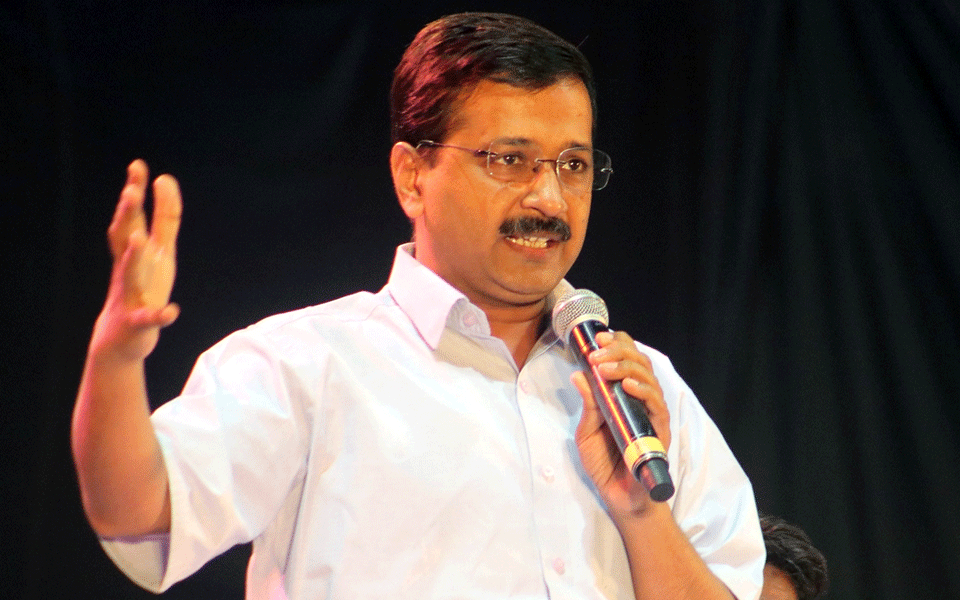
New Delhi, Aug 23 : Delhi Chief Minister Arvind Kejriwal on Thursday alleged that the Prime Minister's Office has "pressurised" its officers to cancel around 3 lakh ration cards in the national capital because of which poor are struggling for food.
On his Twitter account, Kejriwal shared a video report by AajTak news channel, which showed families, whose names were struck off the ration list.
In the video, Harjeet Kaur, who has been living in South Delhi's Savitri Nagar village with her family for the past eight years said on many occasions, the children in her house had to sleep hungry because they had no food in their home.
"I have been taking ration for many months now but ever since the fingerprint scanner system came in, I have not been able to avail my share of ration. Now, suddenly, they (the central government) sent me a notice that my ration card has been cancelled," she said.
On Twitter, Kejriwal wrote: "Despite strong objections by the Delhi government, the Prime Minister's office (PMO) created pressure on the officers to cancel ration cards. Now, look how the poor are suffering. The PMO should not have cancelled the ration cards."
Earlier, Aam Aadmi Party (AAP) Chief spokesperson Saurabh Bharadwaj had flayed the BJP government for "defending officers responsible for large-scale corruption in ration distribution system in Delhi."
"It was the responsibility of Food Commissioner's officials to conduct a door-to-door survey to ensure genuine ration card beneficiaries were not denied their right," he said.
Let the Truth be known. If you read VB and like VB, please be a VB Supporter and Help us deliver the Truth to one and all.
Suvendu defeats Mamata in Bhabanipur by over 15,000 votes
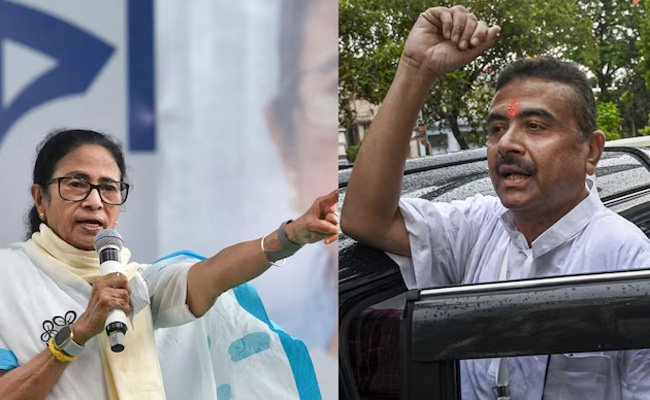
Kolkata (PTI): BJP’s Suvendu Adhikari defeated West Bengal Chief Minister Mamata Banerjee in the prestigious Bhabanipur seat by a margin of 15,105 votes on Monday, the EC said.
While Adhikari bagged 73,917 votes, Banerjee secured 58,812 votes.
The result marks a virtual “action replay” of the 2021 Nandigram battle, where Adhikari had unseated Banerjee in a fiercely fought contest that redefined Bengal’s political narrative.