PM's Pune visit: People made to remove black masks, socks, clothing at MIT College venue
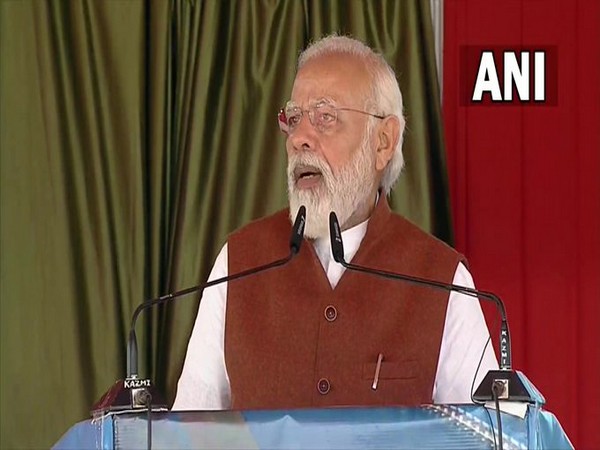
Pune, Mar 6: People entering the MIT College venue in Pune, where Prime Minister Narendra Modi inaugurated several developmental projects, were asked to remove their masks, socks and in some cases even shirts if they were black, possibly to prevent any protest.
Speaking on the issue, Pune police commissioner Amitabh Gupta said instructions had been issued to not allow black flags.
"There must be some confusion as the instruction was about black flags and black pieces of cloth, not about clothing (itself)," Gupta said.
Journalist Mangesh Phalle, who covered the event, said he was asked to remove his black-coloured mask by those on security detail at the venue.
The prime minister was in the city on a one-day visit during which he inaugurated a stretch of the metro rail, a statue of Chhatrapati Shivaji Maharaj, a gallery dedicated to legendary cartoonist RK Laxman and the golden jubilee celebrations of Symbiosis University.
Before the prime minister arrived in Pune this morning, Congress and NCP activists staged protests alleging that Modi had "insulted" Maharashtra by suggesting that the state had encouraged the spread of COVID-19 to other states.
The protesters came out on roads carrying black flags and placards, with 'Go Back Modi' written on them, near Alka Talkies chowk and in other areas in the city.
Wearing black mask and black clothes are not allowed at Prime Minister Narendra Modi's program scheduled at MIT College in Pune. Police have recovered black masks from people and have thrown it at the entrance. pic.twitter.com/66bVUIgCGQ
— Pune Mirror (@ThePuneMirror) March 6, 2022
Let the Truth be known. If you read VB and like VB, please be a VB Supporter and Help us deliver the Truth to one and all.
Congress using hijab issue to pacify minority anger, alleges Karnataka LoP R Ashoka
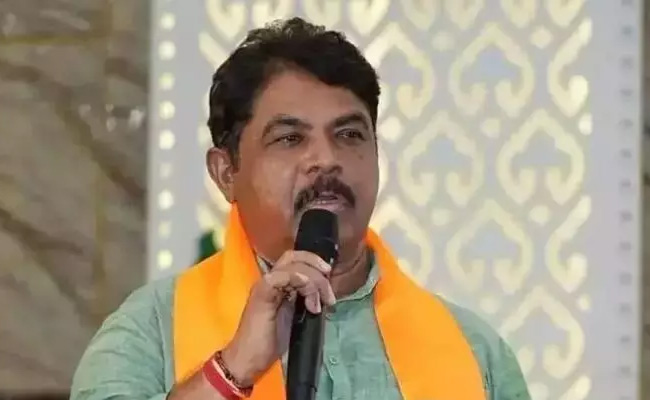
Bengaluru: Leader of Opposition in the Assembly R. Ashoka has accused the Congress government of using the hijab issue to placate what he described as discontent among minority voters after the Davanagere by-election.
In a post on X on Wednesday, Ashoka alleged that the state government, instead of addressing issues such as price rise, corruption, farmers’ distress and law and order, was attempting to retain its minority vote base by reviving the hijab issue.
Referring to the 2022 dress code introduced by the BJP government, which prohibited hijab in schools and colleges, Ashoka said the Karnataka High Court had upheld the policy and emphasised the importance of discipline in educational institutions.
He questioned the Congress government’s move to revisit the issue and asked whether setting aside the court-backed policy to benefit one community could be described as secularism.
Ashoka further alleged that while the government was willing to permit hijab, it continued to prohibit saffron shawls.
He accused the government of dividing students on religious lines rather than treating schools and colleges as spaces of equality.
Drawing a comparison with Mamata Banerjee’s government in West Bengal, Ashoka claimed that excessive appeasement politics had harmed the state and warned that the Congress in Karnataka could face a similar political response.
He said voters in Karnataka would teach the Congress a lesson for what he termed “vote-bank politics” and for compromising constitutional and judicial principles.