PM's silence on atrocities in Gaza 'total betrayal' of what India has stood for: Cong
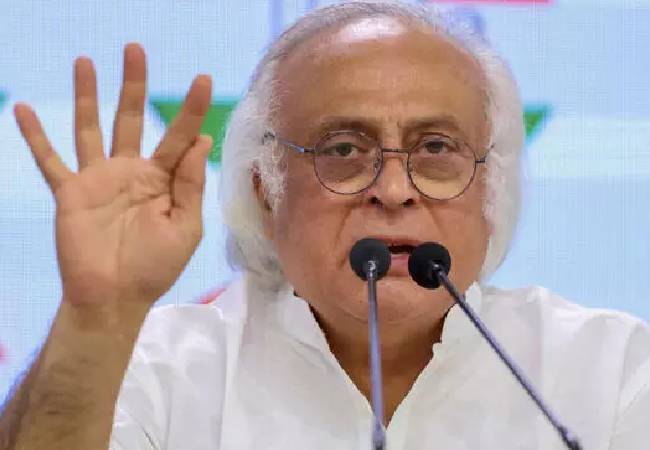
New Delhi (PTI): The Congress on Wednesday alleged that Prime Minister Narendra Modi is maintaining a complete silence on the "horrific atrocities" in Gaza and this is "moral cowardice" and "total betrayal" of all that India has stood for.
In a post on X, Congress general secretary Jairam Ramesh wrote, "To appease his good friend President Trump and in solidarity with his other good friend Bibi Netanyahu, Prime Minister Modi has welcomed President Trump's new 20-point plan for Gaza."
But fundamental and disturbing questions on the plan remain, he said.
"Where are the people of Gaza themselves in the system of governance proposed? Where is the roadmap for a full-fledged Palestinian state to come into being," the Congress leader asked.
He also asked how much longer will the US and Israel continue to ignore Palestinian statehood - which has already been recognised by 157 member-countries of the UN with India having led the way in November 1988.
"Where is the accountability for the genocide that has been carried out in Gaza over the past twenty months?" he wrote.
"The PM has maintained a complete silence on the horrific atrocities that have led to the killing of tens of thousands of civilians in Gaza. This is extreme moral cowardice and a total betrayal of all that India has stood for," Ramesh said.
Congress leader Pawan Khera also said any attempt to undermine the genocide that people of Palestine have endured deserves contempt and condemnation.
"Any plan that undermines the agency of the long-oppressed Palestinian people and fails to ensure accountability for the genocide they have endured since 2023 is deserving of contempt and condemnation.True justice can be restored only through the establishment of the Palestinian state. Everything else is a mere smokescreen to perpetuate the occupation," Khera said in a post on X.
The Congress has been questioning the silence of the Modi government on "atrocities" in Gaza.
The Congress Working Committee (CWC) last week also expressed "profound distress" over the ongoing "genocide" of innocent civilians in Gaza, and said India has always been a beacon of moral conscience but "has now shamefully been reduced to a silent spectator".
"India has always been a beacon of moral conscience and the champion of the post-colonial world, it has now shamefully been reduced to a silent spectator. Our foreign policy has now acquired a moral taint," the CWC resolution said.
Modi on Tuesday welcomed US President Donald Trump's plan to end the Gaza conflict, saying that it provides a viable path to long-term peace, security and development for the Palestinian and Israeli people, as well as the larger West Asian region.
In an X post after Trump announced the plan in the presence of Israeli Prime Minister Benjamin Netanyahu, Modi expressed hope that "all concerned will come together behind President Trump's initiative and support this effort to end conflict and secure peace."
Trump and Netanyahu said on Monday that they have agreed on a plan to end the war in Gaza.
Trump had laid out the 20-point plan to end the Israel-Hamas war and establish a temporary governing board in the war-battered Palestinian territory, which would be headed by Trump and include former British prime minister Tony Blair.
Let the Truth be known. If you read VB and like VB, please be a VB Supporter and Help us deliver the Truth to one and all.
BJP urges Bengaluru Police Commissioner to cancel event supporting Umar Khalid
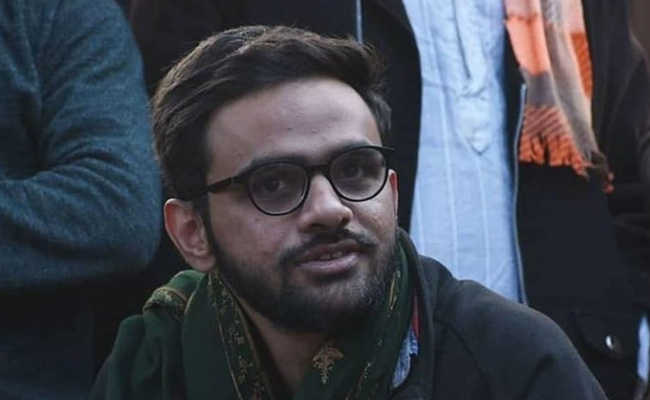
Bengaluru (PTI): Karnataka BJP on Monday petitioned Bengaluru Police Commissioner Seemant Kumar Singh to cancel an event supporting activist Umar Khalid.
A delegation of BJP leaders led by Bengaluru Central MP P C Mohan met the Commissioner and submitted a memorandum in this regard.
According to sources, the editors of the book "Umar Khalid and His World" will read excerpts from the book on April 28 in Bengaluru, followed by a discussion in which some "historians and intellectuals" are likely to participate.
Khalid is in jail in connection with allegations of conspiracy behind the 2020 Delhi riots.
ALSO READ: Karnataka: Woman delivers baby on train after emergency halt in Dakshina Kannada
"In Bengaluru city, an event has been organised under the platform "Umar Khalid Prapancha" to express support for Khalid, who is currently under arrest under anti-terrorism laws," the BJP said in its memorandum.
"Across the country, the Central Government has taken strict action against Naxalites. However, urban Naxal elements are still active and are indirectly supporting anti-national activities," it alleged.
Further stating that Khalid is facing very serious charges, the memorandum said, the fact that courts have denied him bail for the past three years stands as an indication of his alleged criminal activities.
"Glorifying such an individual would amount to encouraging criminal elements. It is shocking that such an event is being held in our city. It is also a matter of serious concern that pro Umar Khalid slogans and wall writings have already appeared across the city, indicating the spread of such networks," it said.
"In the interest of maintaining peace in the city, we request that the permission granted for this event be withdrawn. If the event proceeds and any law and order situation arises, the BJP will not be responsible for it. We urge you to consider our request in the interest of the city and cancel the event," it added.
The Supreme Court on April 20 dismissed activist Khalid's plea seeking a review of a verdict denying him bail, while observing that there are reasonable grounds to believe the allegations levelled against him in connection with a conspiracy behind the 2020 Delhi riots.
There was a prima-facie case against Khalid and Sharjeel Imam (another accused) under the Unlawful Activities (Prevention) Act (UAPA), the top court had earlier said, noting that prosecution material suggests that they were involved in the "planning, mobilisation and strategic direction" of the riots.
The February 2020 riots in northeast Delhi broke out during protests against the Citizenship (Amendment) Act (CAA) and the National Register of Citizens (NRC), leaving 53 people dead and more than 700 injured.