PNB fraud: Choksi denies any truth in allegations
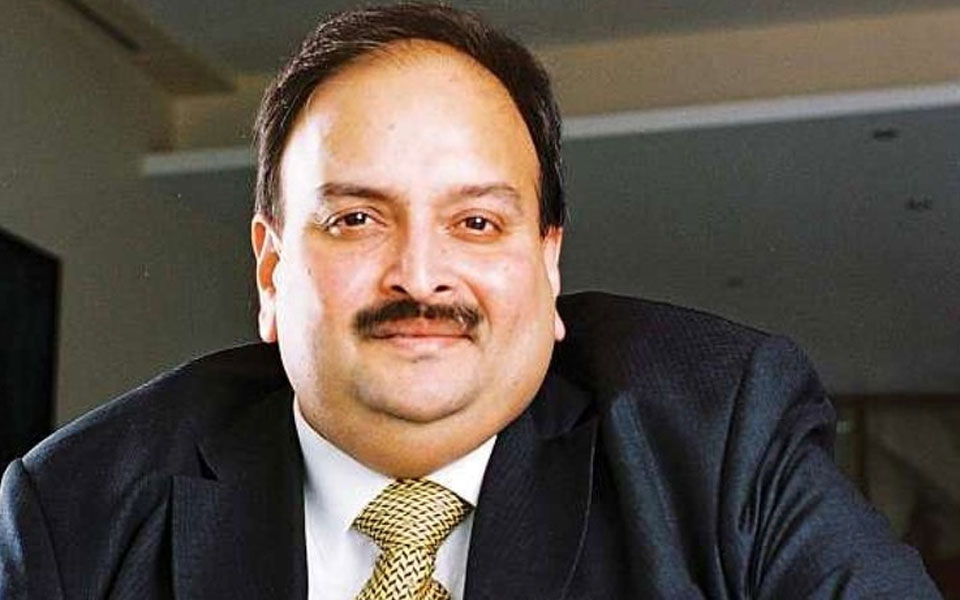
New Delhi, July 27 : Fugitive diamond jeweller Mehul Choksi, who is wanted by Indian investigative agencies in the Rs 13,500 crore Punjab National Bank (PNB) fraud case, has denied "any truth in the allegations".
In a statement issued to a Caribbean newspaper 'Antigua Observer', Choksi through his attorney David Dorsett said: "I can say categorically, that there is no truth in those allegations."
On or about July 24, the Citizenship by Investment Unit (CIU) issued a press statement in response to an online story from an Indian media outlet reporting on certain allegations made against Choksi by the Indian authorities and the media.
According to this CIU statement on Wednesday, Choksi was granted citizenship by registration in November 2017 and he swore the Oath of Allegiance in Antigua on January 15, 2018.
The CIU also said that Choksi's application was granted "after robust due diligence and international investigation by reputable agencies, including the International Criminal Police Organization (Interpol) and the CARICOM Implementing Agency for Crime and Security (IMPACS)".
The CIU also said that "the 2017 investigation revealed no derogatory information about Choksi".
The owner of the Gitanjali group firms further said that in January 2018, "I had need to visit the US to receive medical treatment. Having received treatment I am still in a state convalescence."
"That being the case, I have decided to reside in Antigua and Barbuda, the country of my citizenship, and to abide by the laws of the country," he said.
His remarks came three days after the Central Bureau of Investigation (CBI) said it had written to the Antiguan authorities seeking details of Choksi's whereabouts in connection with the PNB fraud case.
On Tuesday it was revealed that Choksi had moved to Antigua from the US several weeks ago using an Antiguan passport. The revelation came from Antiguan authorities in response to a CBI diffusion notice circulated to foreign countries through Interpol.
The CBI came to know of it last week and shared the information with the Enforcement Directorate (ED). Both the CBI and the ED have been probing the multi-crore fraud allegedly committed between 2011-2017 by Choksi and his nephew Nirav Modi.
Choksi also said that "I can, however, state that I lawfully applied to be registered as a citizen of Antigua and Barbuda under the Citizenship by Investment Program.
"During the course of my application I did all that was lawfully required of me to do," he claimed, adding, "My application for citizenship was in due course approved."
Choksi also claimed that his application was motivated by his desire to expand his business interest in the Caribbean and to obtain visa free travel access to 130 countries.
"That remains my reason for choosing to become a citizen of Antigua and Barbuda," he said.
The red corner notice (RCN) request from the CBI to the Interpol against Choksi is still pending.
Earlier in July, the Interpol issued the RCN against fugitive diamond jeweller Nirav Modi, his brother, a Belgian national, Nishal Modi and an executive of his firm Subhash Parab.
Let the Truth be known. If you read VB and like VB, please be a VB Supporter and Help us deliver the Truth to one and all.
4 workers die after being buried under coal slurry in Jharkhand's Dhanbad
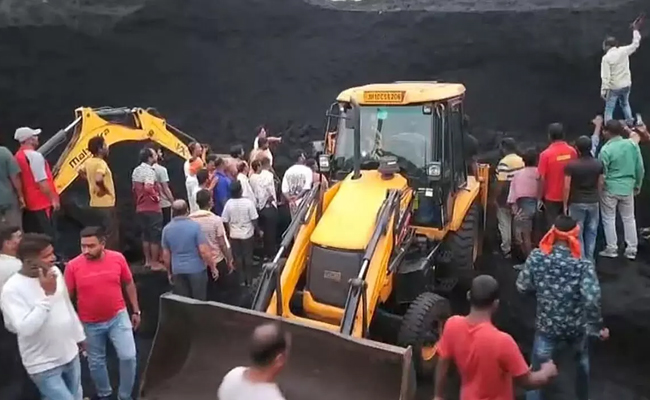
Dhanbad (Jharkhand) (PTI): At least four workers died after being buried under coal slurry in Jharkhand's Dhanbad district on Saturday, a police official said.
The incident took place at Moonidih coal washery in the command area of Bharat Coking Coal Limited (BCCL).
"Bodies of all four workers were dug out of debris during a rescue operation," Putki police station in-charge Waqar Hussain told PTI.
The incident took place when coal slurry was being loaded into trucks by workers, during which a large chunk of slurry fell and trapped several workers underneath, officials said.
The deceased have been identified as Manik Bauri, Dinesh Bauri, Deepak Bauri, and Hemlal Gope.
Meanwhile, the family members of the deceased and local villagers placed the bodies in front of the washery gate and began a protest.
They demanded compensation, jobs for dependents and action against those responsible for the incident.
Police and administration officials are trying to pacify the protesters, an official said.