PNB fraud: Mehul Choksi seeks cancellation of NBW over threat to life on TV
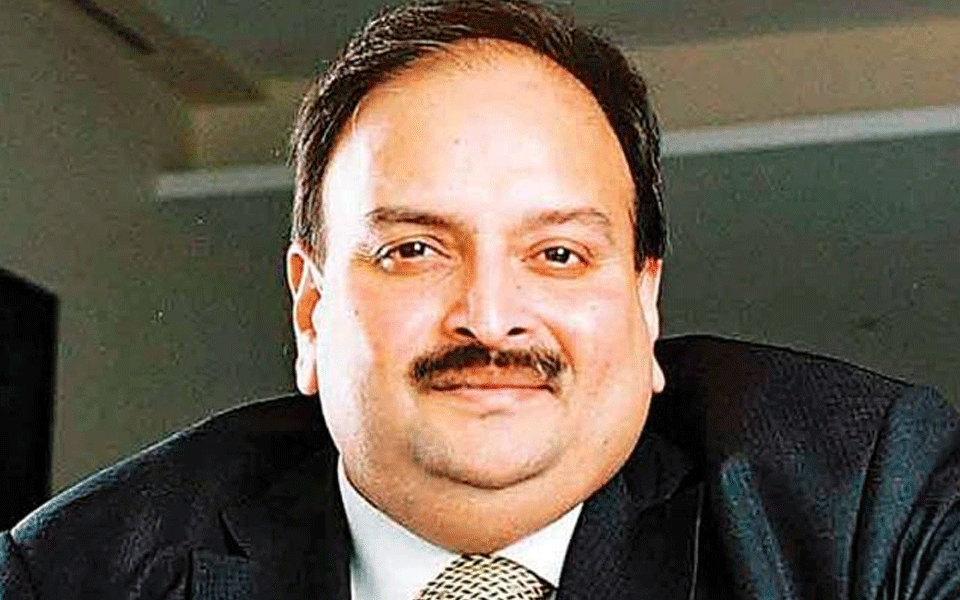
Mumbai, Sep 21 : Gitanjali Group owner Mehul Choksi, wanted in Rs 13,500 crore Punjab National Bank (PNB) fraud case, on Friday moved a special CBI court claiming danger to his life after his return to India and sought cancellation of a non-bailable warrant issued against him.
In an application filed through his lawyer Sanjay Abbott, Choksi said his "apprehensions over his safety are based upon what transpired during a recent television debate on the fraud".
In his application, Choksi informed the court that he was shocked to watch a TV debate on July 27, 2018 in which two callers on live television suggested that a special team consisting of special agents should be formed and suggested that the team should track the whereabouts of the present applicant and he (Choksi) should be "shot down".
Choksi further said that the anchor also did not criticise the comment made by the caller and tactily agreed to it without any retaliation or without condemning the comment, "he laughingly said ok".
Choksi said the caller also declared that the applicant (Choksi) is guilty and said that "killing of one person will set an example".
"The above facts make it clear that the present applicant (Choksi) has serious threat to life on his return as if a person is having the audacity to suggest to shoot the applicant on national television, then one can easily imaging the threat that the applicant (Choksi) is facing if he returns to India," it said.
Choksi, who had acquired Antiguan citizenship ealier this year, through his lawyer also sent some audio and video CDs claiming that they contained the cited footage from the news channel debate.
He has urged the court to make his submission a part of the court records and, in light of the same, to cancel the non bailable warrant issued against him.
On May 22 this year, the court had issued the NBW against Choksi after taking cognisance of the second charge sheet filed in the PNB fraud case by the CBI.
Choksi's lawyer speaking to IANS said, "The court has directed the CBI to file reply on the submissions made by Choksi by October 3 which is the next date of hearing."
Earlier in June this year, Choksi had filed a plea claiming that he had been advised bed rest on account of his ill health following a "heart operation".
In his plea Choksi also said that he feared that once in India, the probe agencies would not help him secure the kind of medical treatment and supervision he required.
He had also raised the issue of "trend of mob lynching" in the country, and he feared that he might become a victim of such lynching.
Choksi and Nirav Modi are under probe by both the CBI and ED. The ED had on May 24 and 26 filed the chargesheets against both. The court took cognisance and issued non-bailable warrants against them.
Nirav Modi left India along with his family in the first week of January, weeks before the scam was reported to the CBI. His wife Ami, a US citizen, left on January 6 and Choksi on January 4.
Let the Truth be known. If you read VB and like VB, please be a VB Supporter and Help us deliver the Truth to one and all.
Akeal Hosein bosses powerplay overs with 'skill and mental fortitude'
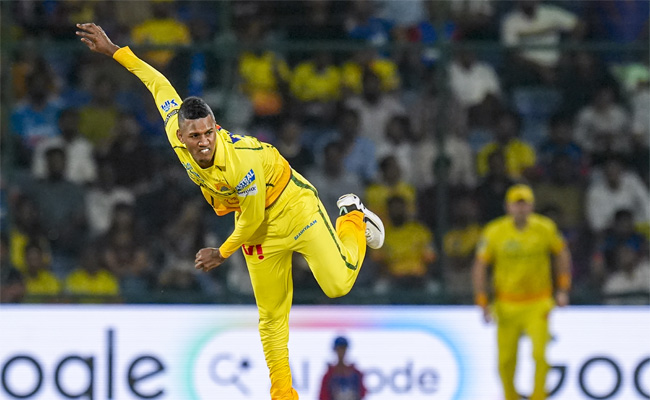
New Delhi (PTI): For a spinner who bowls majority of his overs in the powerplay, Chennai Super Kings' West Indian import Akeal Hosein relies as much on mental fortitude as his skills to excel in the most unforgiving phase of the game.
With just two fielders in the deep in the first six overs, the margin for error is miniscule and the pressure is sky high.
However, Hosein thrives in that tense environment. The left-arm spinner returned with frugal figures of 3-0-15-1 in the powerplay to play a crucial role in his team's eight-wicket win over Delhi Capitals in an IPL match here on Tuesday.
"You need both of them (skill and mental toughness). Especially when you come upon pitches that aren't conducive to spin and it's just about being disciplined as well," he said.
"Having two fielders out in the power play. It's not a job that you can go searching for wickets or you can be too greedy. It's just about sticking to the plan," he explained.
Hosein got the all-important wicket of an in-form K L Rahul, who was foxed by the West Indian as he stepped out to smash him for an inside out six.
Hosein's inclusion in the playing eleven after not being picked in the initial phase of the tournament has allowed CSK to win more games. On Tuesday, the pitch offered him a bit of help and he ended up dominating the batters.
After the win over DC, Hosein was asked about his recipe for success in the powerplay.
"...it's a bit scripted because you only have two guys out so it's just about being disciplined and trying to do the job for the team. At the end of the day if you don't get wickets and you bowl economically in the power play, that's a damn good job you've done for the team," said Hosein.
He has taken seven wickets in five games at an impressive economy rate of 7.25.
Fully aware that the batter is a mere couple of hits away from putting the pressure back on him, Hosein says practising for high-pressure situations helps him stay in the present.
"I think homework is very important. You want to have that head-start when you come up against whichever batter you're going to face. And like I say it's just about making assessments as quickly as possible.
"You might come up on a pitch that is spinning. You might come up against one that isn't spinning. Thankfully I can spin the ball. So it's just about picking which deliveries will give you the most success on a particular day and against a particular batter," said Hosein.
He got rid of Rahul first ball from the other end, something that was decided by captain Ruturaj Gaikwad. Post powerplay, Noor Ahmad took over the mantle from Hosein and maintained the pressure on DC batters.
"Getting the opportunity to bowl first for me is just about again making that assessment as quickly as possible and then passing on that information to Noor or even to the seamers as well if it was a bit of spin or if it's gripping or whatever the case is.
"So conversations with myself and Noor have been fantastic. Really happy for him that he's getting some success," he added.