Police action against freelance journalist Rajeev Sharma 'high-handed': Press Club of India
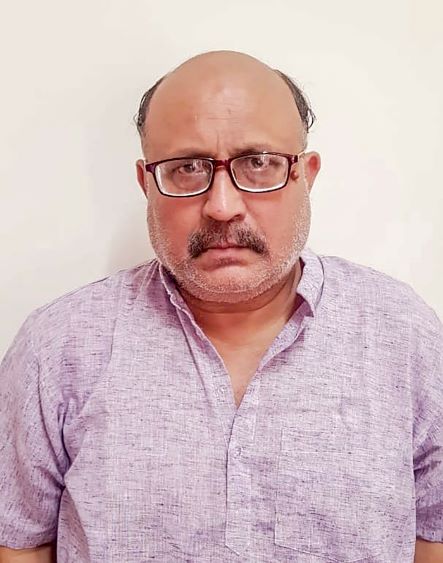
The Delhi Police on Saturday said Sharma was allegedly passing sensitive information about India's border strategy and Army deployment and procurement to Chinese intelligence agencies.
Sharma was arrested September 14.
In a statement, the PCI demanded that in all cases of arrests of journalists anywhere in the country, "the police must be required to inform the Press Council of India as well as the self-regulatory body of the broadcast media on an immediate basis".
It also said that the police should provide pertinent details "so that a defence may be possible to construct".
The PCI said it is "astounded to hear of the arrest of Rajeev Sharma, a well-known independent journalist of long standing and a member of the club".
"This is on account of the dubious track record of the Special Cell. More generally also, the record of Delhi Police is hardly a shining one," it said.
"On the basis of the statement of the police released to the media, we have no hesitation in saying that the police action is high-handed, and may be inspired by obscure or questionable considerations," the PCI alleged.
The PCI also cited the instance of Iftikhar Gilani, a senior journalist with Kashmir Times, who was arrested in 2002 "on the trumped up charge of tracking the Army's movements in Kashmir and keeping his so-called pay masters informed".
Subsequently, a Delhi journalist, who wrote for Iran's official news agency, was also arrested for playing in the hands of the Iranian secret service, the PCI said.
"His family also was made to run from pillar to post -- all to no avail. Eventually it became clear that the whole case was bogus and the journalist was freed," it said.
The PCI statement also said that the arrests of Jawaharlal Nehru University (JNU) and Jamia Millia Islamia scholars such as Kanhaiya Kumar, Umar Khalid and others were done "acting on a political bias".
"Of late, Delhi Police, including its Special Cell, have made preposterous arrests under the lawless law called UAPA (Unlawful Activities (Prevention) Act) in which the word of the government is enough to keep an innocent person behind bars for long periods. These have happened in matters relating to anti-CAA (Citizenship Amendment Act) protests and the carefully designed communal killings in the so-called February 2020 riots in northeast Delhi," the PCI said.
The statement said Sharma wrote on strategic affairs and "may well have accessed routinely over-classified information on the Internet that is in the public domain".
Let the Truth be known. If you read VB and like VB, please be a VB Supporter and Help us deliver the Truth to one and all.
AIITA welcomes Karnataka’s ban on obscene songs in school events
Bhatkal: The Karnataka unit of the All India Ideal Teachers Association (AIITA) has welcomed the Karnataka government’s decision to strictly ban school children from dancing to obscene songs during educational and cultural programmes in government, aided, and private schools across the state.
AIITA Karnataka State President M. R. Manvi congratulated the government for taking what he termed an important step to preserve the sanctity of education.
“Such decisions to safeguard the dignity of school children and uphold the values of education are the need of the hour. This rule should not be limited to government schools alone but must be strictly implemented in all private educational institutions as well,” he said.
He further urged the government to address other concerns within school programmes.
“The government should not only prohibit obscene dances in the name of school anniversaries, but also ensure that plays and dialogues that incite religious hatred are avoided. Schools should be centres of harmony, not platforms for spreading hatred,” he added.
According to a recent circular issued by the Department of School Education and Literacy, obscene dances are adversely affecting the mental health and moral values of students.
In this regard, schools have been advised to use songs that promote nationalism, positive thinking, the greatness of Kannada culture, and value-based traditions instead of inappropriate content during programmes.
The circular also emphasises that students should be dressed in decent attire.
AIITA also backed the department’s warning that disciplinary action would be taken against head teachers if such guidelines are violated. The association has further demanded that district Deputy Directors of Public Instruction strictly monitor the implementation of these rules.