Police restricting people from meeting family members of those killed in Haldwani violence: Report
Locals claim only few members were allowed to take deceased to graveyard
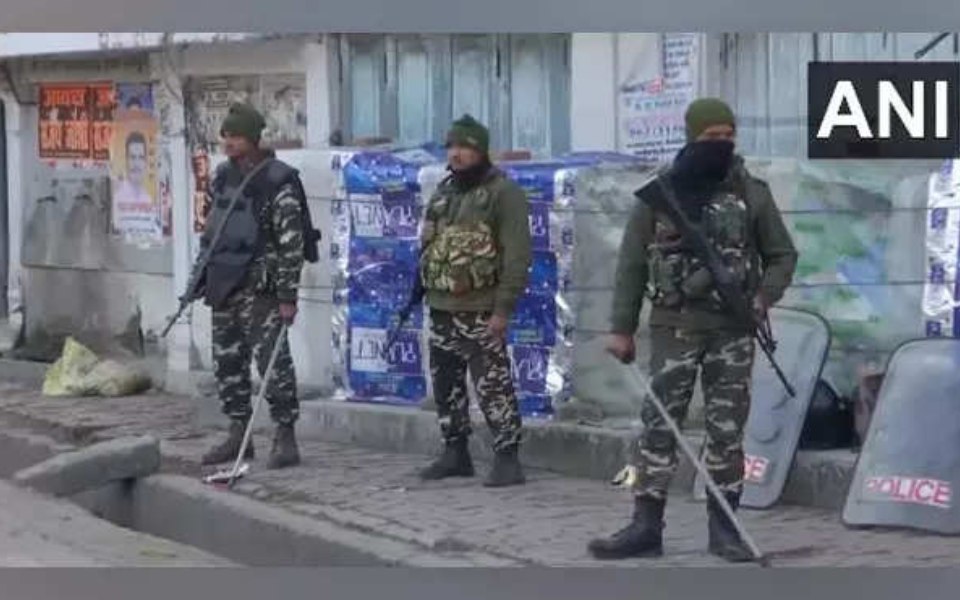
Haldwani: Haldwani, located in Uttarakhand's Dehradun district, continues to be under stringent police and paramilitary control, observing a fourth consecutive day of curfew and internet suspension following communal tensions sparked by the demolition of a mosque and madrasa. Despite the matter being sub judice, with the next hearing scheduled for February 14, the town grappled with violence resulting in at least five deaths, although the exact toll remains unconfirmed.
While certain areas of the town showed signs of returning to normalcy on Sunday, with shops reopening for essential supplies, the Banbhoolpura area, the epicenter of the violence, remains heavily restricted. Internet services, briefly restored in some sections, were later suspended again in the evening.
In response to the unrest, Radha Raturi, Uttarakhand Chief Secretary, wrote to the Home Minister requesting additional Paramilitary Forces, citing the "disruption of law and order by anarchist elements during the demolition."
Residents faced challenges with curfew-related shortages, reporting instances where households ran out of cooking gas, leaving some without food. Although curfew restrictions were eased in some areas, Banbhoolpura remained under tight security.
Five individuals, including former councillors and members of the Samajwadi Party, were apprehended, with local media designating one as the 'mastermind' behind the unrest. In a subsequent 'search operation,' 30 more arrests were made, bringing the total to 90.
The aftermath of the violence has left residents grappling with fear and travel restrictions, with state-run buses to Haldwani suspended, and trains not halting at the station. Some residents were unable to return home, and others chose to leave to avoid potential police actions.
Amid heavy surveillance, entrances to Banbhoolpura remain barricaded, and police control extends to the homes of those who lost their lives, limiting access for family members. Only a few individuals were permitted to take the deceased to the graveyard, with the entire burial process closely guarded by the police, sources have revealed.
Let the Truth be known. If you read VB and like VB, please be a VB Supporter and Help us deliver the Truth to one and all.
Iran foreign minister Araghchi meets Pakistan Army chief Munir
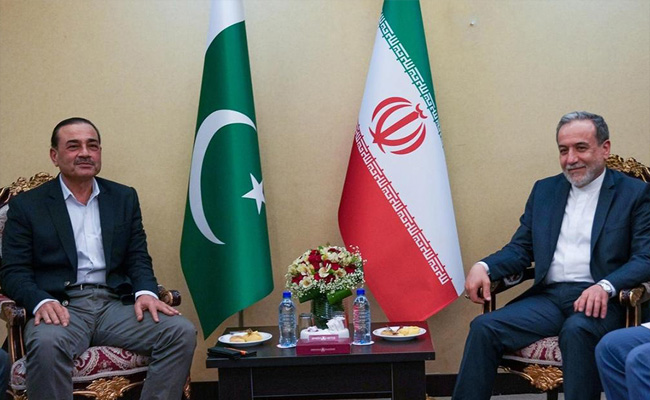
Islamabad (PTI): Iranian Foreign Minister Abbas Araghchi on Saturday met Pakistan Army chief Field Marshal Asim Munir here, as Islamabad continued its efforts to facilitate engagement between the US and Iran.
The meeting, according to a short video posted by the Iranian embassy on social media, was also attended by Iranian foreign ministry spokesperson Esmaeil Baghaei, and Iran's ambassador Reza Amiri Moghadam.
Araghchi calls on Munir, the embassy said in the video caption.
It did not provide further details about the discussions.
Araghchi arrived here late Friday for engagements with the Pakistani leadership. He was received by senior officials, including Munir, foreign minister Ishaq Dar and interior minister Mohsin Naqvi.
ALSO READ: Fire engulfs over 100 jhuggies in Delhi's Shakur Basti; no casualties
However, there is no clarity on whether direct talks between Washington and Tehran will take place during the visit.
"No meeting is planned to take place between Iran and the US. Iran's observations would be conveyed to Pakistan," Baqaei said in a social media post on Saturday.
Araghchi, before leaving for Islamabad, said that he was embarking on a timely tour of Islamabad, Muscat, and Moscow, and the purpose of his visits is to "closely coordinate with our partners on bilateral matters and consult on regional developments".
"Our neighbours are our priority," he said.
As the Iranian team landed in Islamabad, White House Press Secretary Karoline Leavitt said that US Special Envoy on the Middle East Steve Witkoff and President Donald Trump's adviser Jared Kushner would be leaving for Pakistan on Saturday "to engage in direct talks" with representatives of the Iranian delegation.
However, the US team has not yet arrived.
Meanwhile, Pakistan's Deputy Prime Minister and Foreign Minister Dar, in a social media post, expressed hope for "meaningful engagements" between the two warring parties to promote regional peace and stability.
The first round of US-Iran talks held on April 11 and 12 failed to produce a breakthrough, prompting a flurry of diplomatic efforts by host Pakistan to cool tensions and revive hopes for another round of dialogue.
On Tuesday, Trump extended the two-week ceasefire with Iran indefinitely to give Tehran more time to prepare a unified proposal to end the war, just hours before the truce was set to expire.
The Iran war began on February 28 with US-Israeli strikes.
_vb_19.jpeg)