Police suspend 3 personnel in student leader Anish Khan's death case
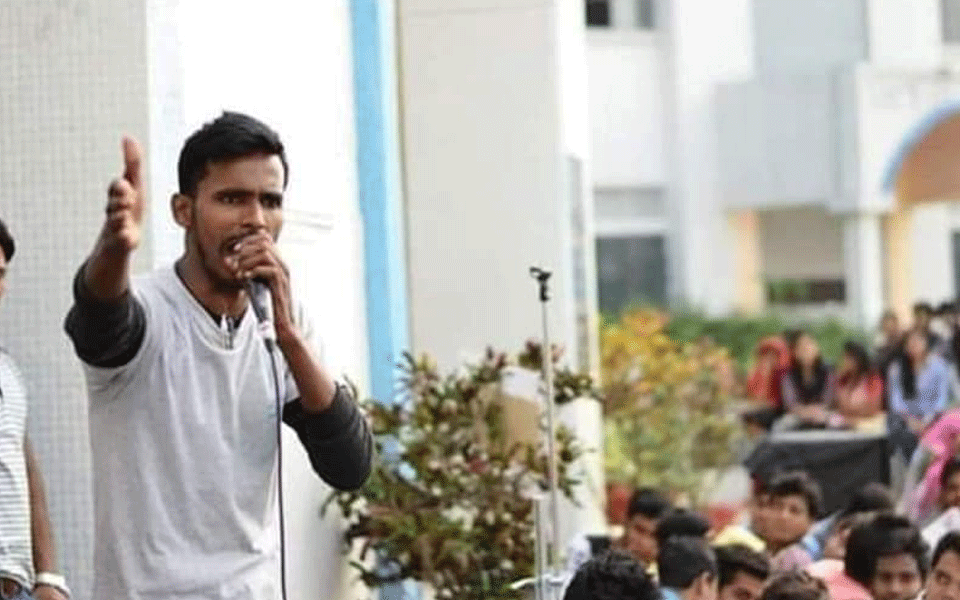
Kolkata/Howrah (PTI): Two policemen and a civic volunteer were suspended on Tuesday in connection with the investigation into the death case of student activist Anish Khan, officials said.
The three personnel were suspended a day after the West Bengal government formed a special investigation team (SIT) to probe the "mysterious" death, which has sparked widespread protests across the state.
"An Assistant Sub-Inspector, a Constable and a civic volunteer of Amata police station have been suspended. This is related to the ongoing investigation in the Anish Khan case," a senior police officer said.
Four people in uniforms of police and civic volunteers had allegedly pushed off Khan from the third floor of his house in Howrah district's Amta in the dead of the night on February 18, according to his family.
During the incident, the men in uniform had allegedly held Khan's father at gunpoint after barging into the house, citing an ongoing investigation against him, the family said.
The police had earlier claimed that no personnel went to Khan's house that night.
The SIT, which has been tasked to submit its report to the government within 15 days, visited the Amta police station on Monday night and inspected the duty roster of February 18, official sources said.
Khan's family has demanded a CBI inquiry, stating that they "don't have faith in the state police".
The death of Khan, a vocal critic of the Mamata Banerjee government who was at the forefront of many protests, rocked the state with students of different colleges and universities hitting the streets, questioning that why no arrests could be made even after three days of the incident.
Khan, who was earlier with the CPI(M)-backed SFI, was a prominent face of the protests in Kolkata against the Citizenship Amendment Act (CAA). He later joined the Indian Secular Front (ISF) of Abbas Siddiqui.
Let the Truth be known. If you read VB and like VB, please be a VB Supporter and Help us deliver the Truth to one and all.
Congress using hijab issue to pacify minority anger, alleges Karnataka LoP R Ashoka
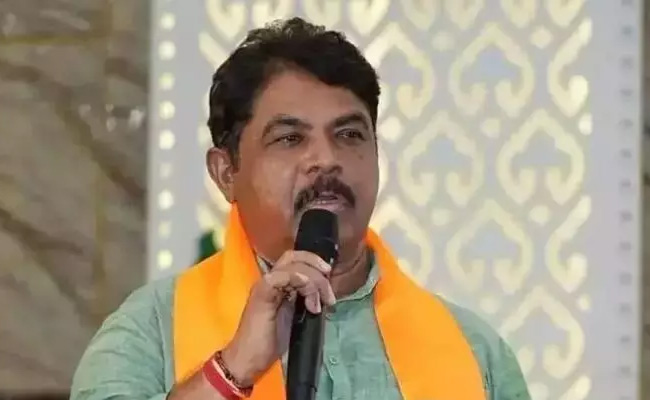
Bengaluru: Leader of Opposition in the Assembly R. Ashoka has accused the Congress government of using the hijab issue to placate what he described as discontent among minority voters after the Davanagere by-election.
In a post on X on Wednesday, Ashoka alleged that the state government, instead of addressing issues such as price rise, corruption, farmers’ distress and law and order, was attempting to retain its minority vote base by reviving the hijab issue.
Referring to the 2022 dress code introduced by the BJP government, which prohibited hijab in schools and colleges, Ashoka said the Karnataka High Court had upheld the policy and emphasised the importance of discipline in educational institutions.
He questioned the Congress government’s move to revisit the issue and asked whether setting aside the court-backed policy to benefit one community could be described as secularism.
Ashoka further alleged that while the government was willing to permit hijab, it continued to prohibit saffron shawls.
He accused the government of dividing students on religious lines rather than treating schools and colleges as spaces of equality.
Drawing a comparison with Mamata Banerjee’s government in West Bengal, Ashoka claimed that excessive appeasement politics had harmed the state and warned that the Congress in Karnataka could face a similar political response.
He said voters in Karnataka would teach the Congress a lesson for what he termed “vote-bank politics” and for compromising constitutional and judicial principles.