Policy makers must have 'ears on ground', SC says on mandatory registration on CoWIN
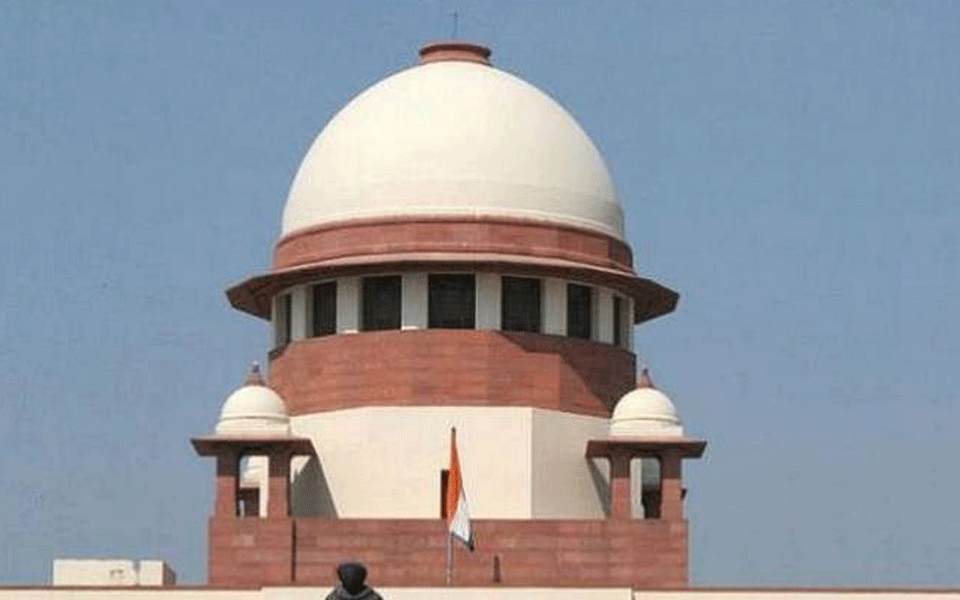
New Delhi: The Supreme Court Monday posed searching questions to the Centre on the COVID-19 vaccine procurement policy and need for mandatory registration on the CoWIN app for people to get vaccinated without keeping in mind the real 'digital India' situation, observing that the policy makers must have an ear to the ground.
A special bench of Justices D Y Chandrachud, L N Rao and S Ravindrabhat said that since the Centre has made CoWIN registration mandatory for vaccination, how is it going to address the issue of digital divide facing the country.
You keep on saying the situation is dynamic but policy makers must have their ears on ground. You keep on saying digital India, digital India but the situation is actually different in rural areas. How will an illiterate labourer, from Jharkhand get registered in Rajasthan? Tell us how you will address this digital divide, the bench sought to know from Solicitor General Tushar Mehta.
It said, You must smell the coffee and see what is happening across the country. You must know the ground situation and change the policy accordingly. If we had to do it, we would have done it 15-20 days back .
Mehta replied that registration is mandatory as a person needs to be traced for a second dose and as far as rural areas there are community centres where a person can get registered for vaccination.
The bench questioned Mehta whether the government thinks that this process is viable and asked him to place the policy document on record.
The top court was hearing a suo motu case on management of COVID situation in the country.
At the outset, it asked the Centre about the vaccine procurement policy of the Centre by referring to the fact that states like Punjab and Delhi are in the process of issuing global tenders to procure foreign vaccines for COVID-19.
The bench said that even Municipal Corporation like Brihanmumbai Municipal Corporation (BMC) has received bids.
Is this the policy of the central government that the state or municipal corporation can procure the vaccine or the Union Government is going to procure for them like a nodal agency? We want clarity on this and rationale behind this policy, the bench said.
In the meantime, the Centre said the entire eligible population would be vaccinated by the end of 2021 and moreover, the government is in talks with companies like Pfizer and if it succeeds then timeline for completing the vaccination would change, the law officer said.
The hearing in the matter is continuing.
Earlier, the top court had constituted a 12-member National Task Force to formulate a methodology for the scientific allocation of Oxygen to states and UTs for saving lives of COVID patients and to facilitate a public health response to the pandemic.
Let the Truth be known. If you read VB and like VB, please be a VB Supporter and Help us deliver the Truth to one and all.
Sujit Nair raises concerns over speculation of DMK-AIADMK understanding to block TVK
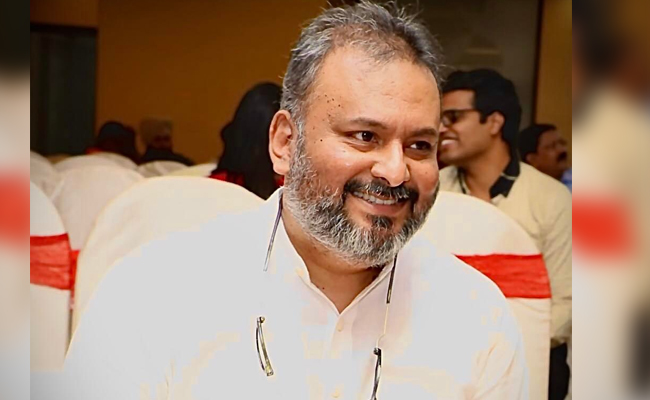
Chennai: Journalist and political commentator Sujit Nair has expressed concern over speculation that the Dravida Munnetra Kazhagam and the All India Anna Dravida Munnetra Kazhagam could explore a post-poll understanding to prevent Vijay-led Tamilaga Vettri Kazhagam from forming the government in Tamil Nadu.
In a social media post, Sujit Nair said the election verdict in Tamil Nadu reflected a clear public demand for political change and argued that the mandate should be respected irrespective of political preferences.
Referring to reports and political discussions surrounding a possible understanding between the DMK and AIADMK, he said he hoped such developments remained only speculative conversations and did not turn into reality.
Nair stated that if such an alliance were to take shape, it would raise serious questions about ideological politics in the country. He said TVK had emerged through a democratic electoral process and that the legitimacy to govern in a parliamentary democracy comes from the people’s verdict.
According to him, attempts to prevent an electoral winner from forming the government through unexpected political arrangements may be constitutionally valid, but many people could view them as politically opportunistic.
He further said that such a move could particularly affect the political image of the DMK, which has historically projected itself around ideology, social justice and opposition politics. Nair said that in ideological terms, the DMK appeared closer to TVK than to the AIADMK, and joining hands with its long-time political rival only to remain in power could weaken its broader political narrative.
He added that the same questions would apply to the AIADMK as well, as the party had spent decades positioning itself against the DMK and such an arrangement could create discomfort among its cadre and supporters.
Drawing a comparison with Maharashtra politics in 2019, Nair said he had expressed similar views when the Shiv Sena formed an alliance with the Indian National Congress and the Nationalist Congress Party after the Assembly elections.
He said post-poll alliances between long-standing political rivals often create a public perception that ideology and electoral mandates become secondary when political power equations come into play.
Nair also said such developments increase public cynicism towards politics and reinforce the belief among voters that ideology is often sidelined after elections.
He maintained that the Tamil Nadu verdict was emphatic and said respecting both the spirit and substance of the mandate was important for the credibility of democratic politics.