Politicians shouldn't make irresponsible remarks: HC; denies bail to four Lakhimpur accused
Lucknow, May 9: The Allahabad High Court on Monday said political people holding high positions shouldn't make "irresponsible statements" and need to conduct themselves in a manner befitting their status and the dignity of their office.
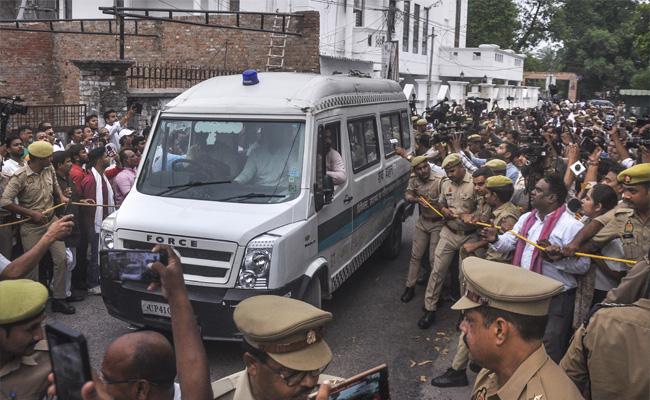
The Lucknow Bench of the High Court made the observation at a hearing during which it rejected the bail pleas of four of the accused in the Lakhimpur Kheri violence case.
The court will hear on May 25 the bail plea of Union minister Ajay Mishra's son Ashish, whose bail was earlier cancelled by the Supreme Court.
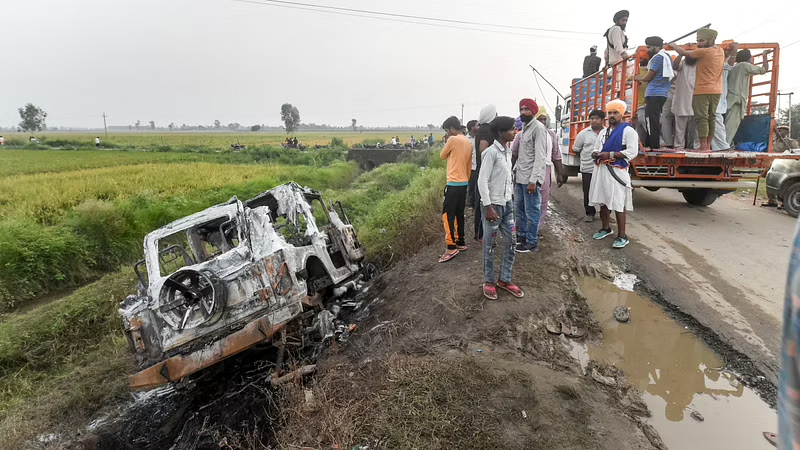
Four farmers and a journalist were mowed down by vehicles allegedly carrying BJP workers in Lakhimpur Kheri on October 3 last year during a protest over UP Deputy Chief Minister Keshav Prasad Maurya's visit to the area.
In the violence that followed, three people, including two BJP workers, were lynched by an angry crowd.
During the hearing on Monday, the court referred to a special investigation team's conclusion in the charge sheet that had the union minister not made utterances against farmers a few days before the incident, the violence would not have taken place.
"Political persons holding high offices should make public utterances in a decent language considering its repercussions in society. They should not make irresponsible statements as they are required to conduct themselves befitting their status and dignity of high office which they hold," the court of Justice Dinesh Kumar Singh observed.
The Bench also reacted strongly to the fact that the administration did not cancel the wrestling competition in the Union minister's village on the day of the violence even as Section 144 of the CrPC was imposed in the area.
"This court cannot believe that it would not have been within the knowledge of the deputy chief minister of the state that provisions of the Section 144 CrPC were clamped and any assembly or gathering was prohibited," the court said.
"Despite this, the wrestling competition was organised and the Union minister of state for home and the deputy chief minister decided to be present as chief guest etc. in the event," The Bench said.
Rejecting the bail pleas of Lavkush, Ankit Das, Sumit Jaiswal and Shishupal and apparently referring to the charge sheet, the court observed that all four accused were "actively involved" in the planning and participation of the heinous offence committed in a "cruel, diabolic and inhuman manner" and did not deserve bail.
"These four accused and the main accused, Ashish Mishra, belong to very influential political families as said and apprehension of the prosecution that they would interfere with the course of justice, tamper with the evidence and influence the witnesses cannot be ruled out at this stage," the Bench said.
The bail plea of Ashish Mishra was listed before Justice Krishan Pahal and the hearing on it was deferred till May 25 to enable the state government to place its response properly.
On April 18, the Supreme Court cancelled the bail granted to Ashish Mishra and asked him to surrender in a week, saying the victims were denied a fair and effective hearing in the Allahabad High Court, which adopted a "myopic view of the evidence".
The apex court had held that the High Court took into account irrelevant considerations and gave extra weightage to the contents of the FIR.
The High Court had on February 10 granted bail to Mishra who had spent four months in custody.
Let the Truth be known. If you read VB and like VB, please be a VB Supporter and Help us deliver the Truth to one and all.
Congress using hijab issue to pacify minority anger, alleges Karnataka LoP R Ashoka
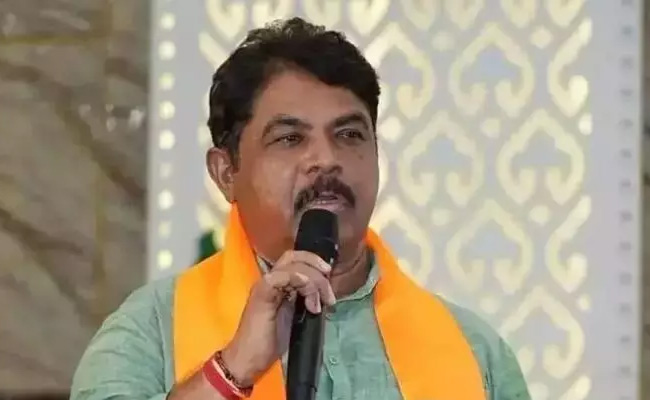
Bengaluru: Leader of Opposition in the Assembly R. Ashoka has accused the Congress government of using the hijab issue to placate what he described as discontent among minority voters after the Davanagere by-election.
In a post on X on Wednesday, Ashoka alleged that the state government, instead of addressing issues such as price rise, corruption, farmers’ distress and law and order, was attempting to retain its minority vote base by reviving the hijab issue.
Referring to the 2022 dress code introduced by the BJP government, which prohibited hijab in schools and colleges, Ashoka said the Karnataka High Court had upheld the policy and emphasised the importance of discipline in educational institutions.
He questioned the Congress government’s move to revisit the issue and asked whether setting aside the court-backed policy to benefit one community could be described as secularism.
Ashoka further alleged that while the government was willing to permit hijab, it continued to prohibit saffron shawls.
He accused the government of dividing students on religious lines rather than treating schools and colleges as spaces of equality.
Drawing a comparison with Mamata Banerjee’s government in West Bengal, Ashoka claimed that excessive appeasement politics had harmed the state and warned that the Congress in Karnataka could face a similar political response.
He said voters in Karnataka would teach the Congress a lesson for what he termed “vote-bank politics” and for compromising constitutional and judicial principles.