Polling begins in west Uttar Pradesh
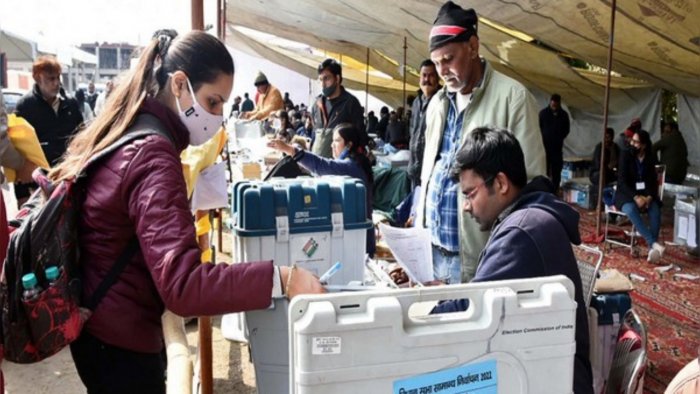
Lucknow, Feb 10: The battle for Uttar Pradesh began on Thursday with polling at 58 assembly seats spread across 11 districts in the western part of the state.
Polling started at 7.00 AM and will continue till 6.00 PM, officials of the state election commission said here.
Campaigning in the constituencies going to vote in the first round of the seven-phase election in the politically crucial state ended on Tuesday evening.
Ministers whose fate would be decided in the first phase include Shrikant Sharma, Suresh Rana, Sandeep Singh, Kapil Dev Agarwal, Atul Garg and Chowdhury Lakshmi Narain.
As many as 623 candidates, including 73 women are in the fray in the first phase and around 2.28 core voters, including 1.24 crore men and 1.04 crore women are eligible to caste their francise, election officials said.
The canvassing for the first phase remained confined to the virtual medium due to a ban on road shows and physical rallies in the wake of the coronavirus pandemic.
Leading the campaign for the BJP, Prime Minister Narendra Modi pitched for a "double-engine" government for fast-paced development while attacking the Samajwadi Party-Rashtriya Lok Dal (SP-RLD) combine.
While Union Home Minister Amit Shah and UP Chief Minister Yogi Adityanath tried to put the spotlight back on alleged "exodus" of Hindus from Kairana before 2017, SP president Akhilesh Yadav claimed that people have made up their mind to vote out the BJP from power.
The SP-RLD alliance has centred their electioneering on farmers' issues and has attacked Adityanath over poll promises.
BSP chief Mayawati, who started campaigning late, reminded people of her government's track record on law and order in the past.
The Congress under the leadership of its general secretary Priyanka Gandhi Vadra has generated interest as seen in door-to-door campaigns.
The districts where the elections will be held are Shamli, Hapur, Gautam Buddh Nagar, Muzaffarnagar, Meerut, Baghpat, Ghaziabad, Bulandshahr, Aligarh, Mathura and Agra.
The first phase will cover the Jat-dominated belt of western UP from where farmers had participated actively in the stir against the Centre's three farm laws in the national capital.
In 2017, the BJP bagged 53 of the 58 seats, while the SP and the BSP had got two seats each. One seat had gone to the RLD.
Let the Truth be known. If you read VB and like VB, please be a VB Supporter and Help us deliver the Truth to one and all.
Congress using hijab issue to pacify minority anger, alleges Karnataka LoP R Ashoka
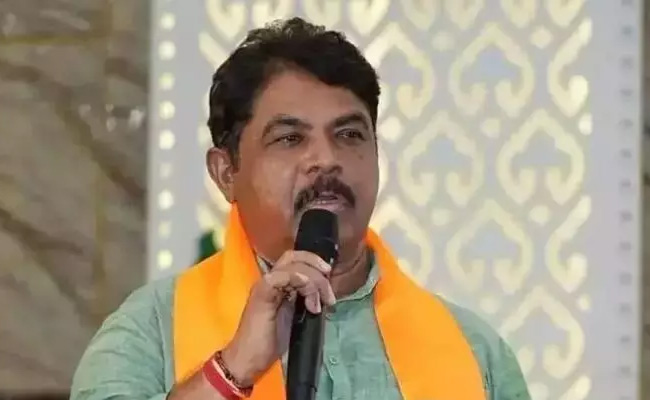
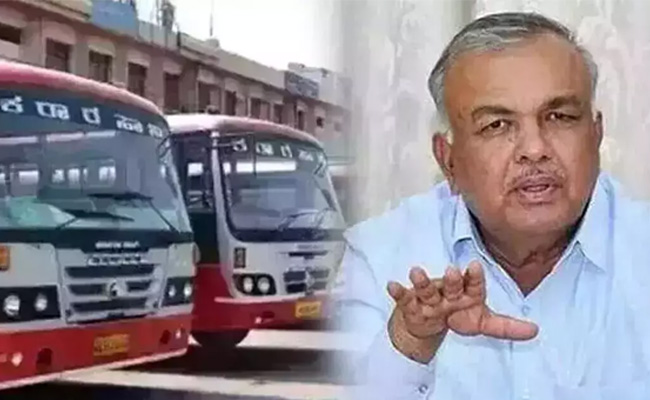
Bengaluru: Leader of Opposition in the Assembly R. Ashoka has accused the Congress government of using the hijab issue to placate what he described as discontent among minority voters after the Davanagere by-election.
In a post on X on Wednesday, Ashoka alleged that the state government, instead of addressing issues such as price rise, corruption, farmers’ distress and law and order, was attempting to retain its minority vote base by reviving the hijab issue.
Referring to the 2022 dress code introduced by the BJP government, which prohibited hijab in schools and colleges, Ashoka said the Karnataka High Court had upheld the policy and emphasised the importance of discipline in educational institutions.
He questioned the Congress government’s move to revisit the issue and asked whether setting aside the court-backed policy to benefit one community could be described as secularism.
Ashoka further alleged that while the government was willing to permit hijab, it continued to prohibit saffron shawls.
He accused the government of dividing students on religious lines rather than treating schools and colleges as spaces of equality.
Drawing a comparison with Mamata Banerjee’s government in West Bengal, Ashoka claimed that excessive appeasement politics had harmed the state and warned that the Congress in Karnataka could face a similar political response.
He said voters in Karnataka would teach the Congress a lesson for what he termed “vote-bank politics” and for compromising constitutional and judicial principles.