Post TMC-Cong break up, BJP bets on Ram Mandir, CAA for 35 LS seats in Bengal
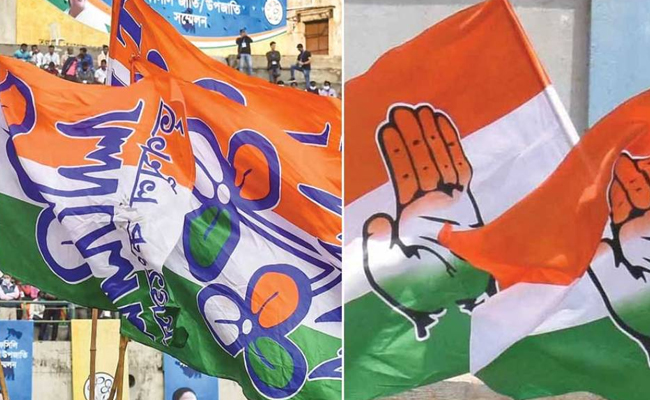
Kolkata (PTI): Struggling to gain political traction on issues of corruption, the West Bengal BJP is shifting its focus to emotive topics such as the Ram Temple in Ayodhya and the Citizenship Amendment Act (CAA) in a bid to achieve its target of securing 35 out of the 42 Lok Sabha seats from the state.
The BJP's strategy is buoyed by the decision of the Trinamool Congress to contest alone in the upcoming Lok Sabha elections in West Bengal, breaking away from the INDIA bloc in the state.
This move has raised hopes within the saffron camp of consolidating anti-TMC votes, a trend evident in the party's surge from a 17% vote share in 2014 to 40% in 2019, resulting in 18 Lok Sabha seats.
Despite facing internal strife and electoral setbacks since its defeat in the 2021 assembly polls, the BJP's attempts to capitalise on corruption allegations against the Mamata Banerjee government have fallen short. With a target of winning 35 out of the 42 Lok Sabha seats, the BJP is now banking on emotive issues like the Ram Temple and CAA.
"Both inauguration of Ram Temple and implementation of CAA are core issues of the party," Agnimitra Paul, BJP state general secretary told PTI.
She emphasised the party's resonance with voters in Bengal by saying, "Both the issues are emotive, and people can connect with it."
An idol of the new Ram Lalla was consecrated at the Ayodhya temple on January 22, the event coming just months ahead of the Lok Sabha elections and 34 years after BJP veteran LK Advani's iconic 'Mandir Wahin Banayenge' speech during his Rath yatra that shaped Ram Mandir politics.
Echoing this sentiment, BJP MP and former state president Dilip Ghosh underscored the emotive appeal of these issues, asserting their historical significance in uniting Hindu voters and addressing refugee concerns, particularly among the Matua community.
"The promise of implementing the CAA has played a significant role in BJP's electoral successes," said Ghosh.
"The Ram temple issue has benefitted the BJP in the past, and this time too, it will help us to unite the Hindus across the country, including Bengal," the BJP leader said during whose tenure as state president from 2015 to 2021 the party had witnessed a meteoric rise in the state.
The Matuas, a significant portion of the state's Scheduled Caste population, have been migrating to West Bengal since the 1950s, fleeing religious persecution in East Pakistan, now Bangladesh.
Their cohesive voting behaviour makes them a valuable voting bloc, particularly in alignment with the BJP's stance on the CAA.
Riding on the promises of the Citizenship Amendment Act (CAA) and the National Register of Citizens (NRC), the Matua community in 2019 voted en masse for the saffron camp in the state.
The CAA, enacted by the BJP-led central government in 2019, seeks to grant Indian citizenship to persecuted non-Muslim migrants, including Hindus, Sikhs, Jains, Buddhists, Parsis, and Christians, from Bangladesh, Pakistan, and Afghanistan who entered India before December 31, 2014.
Union Minister and Matua leader Shantanu Thakur had recently said the CAA will be implemented soon, amidst reports that rules of the legislation would be framed before the Lok Sabha polls.
While the BJP aims for over 35 seats, insiders indicate a more pragmatic goal of 24.
Speaking on the issue of BJP resorting back to Ram Mandir and CAA to win the election in the state, party leaders said it reflects an "acknowledgement of organisational challenges and a desire to counter the Trinamool's narrative of Bengali sub-nationalism".
"Organisationally, we are not in a very good situation where we can claim that we will win 35 seats in the state. Second, as this is the Lok Sabha election, the TMC's pitch of Bengali sub-nationalism won't blunt our narrative, unlike the assembly polls," a senior state BJP leader said.
The TMC has fanned the 'Bengali pride' and had created a poll narrative of sub-nationalism to counter BJP's identity politics in the 2021 assembly polls.
The party also pointed out that the break-up of the INDIA bloc in Bengal with TMC deciding to fight alone will further help in consolidation of the anti-TMC votes in BJP's account.
"After the Left and Congress alliance fell apart in West Bengal in 2019, it had led to a four-cornered contest with BJP bagging the entire chunk of the anti-TMC votes in the state. This time too, we are hopeful that despite the Left-Congress alliance, we will gain the most," a BJP leader said.
Responding to the BJP's strategy, the Trinamool Congress remains confident in its appeal to voters, dismissing BJP's communal politics as ineffective.
TMC spokesperson Kunal Ghosh said "voters will support Mamata Banerjee to thwart BJP's divisive tactics in Bengal."
Political analyst Maidul Islam suggested that the BJP's reliance on emotive issues stems from its organisational weaknesses.
"Issues like the Ram Temple, Uniform Civil Code (UCC), and CAA will dominate the narrative in upcoming Lok Sabha polls in Bengal, with polarisation and counter-polarisation at play," he said.
Let the Truth be known. If you read VB and like VB, please be a VB Supporter and Help us deliver the Truth to one and all.
Noida International Airport appoints Nitu Samra as interim CEO
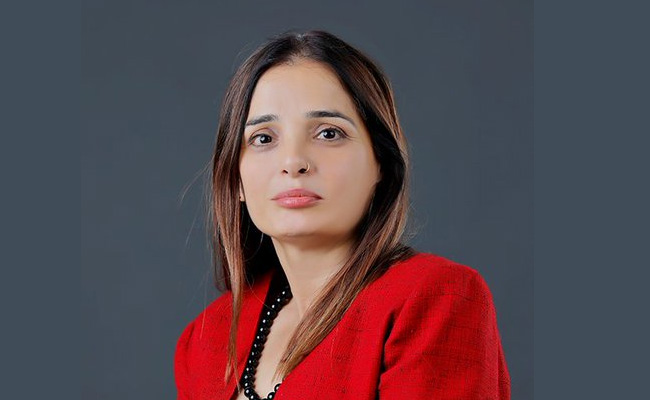
New Delhi (PTI): Noida International Airport on Friday announced the appointment of its Chief Financial Officer Nitu Samra as the interim Chief Executive Officer after authorities denied permission for foreign national Christoph Schnellmann to be at the helm.
"This change follows directions issued by the Bureau of Civil Aviation Security (BCAS) that the Chief Executive Officer of an airport in India is required to be an Indian national," NIA said in a statement.
Samra will replace Schnellmann, a Swiss national who has led Noida International Airport (NIA) as the CEO since August 2020.
The regulatory issue related to the requirement of having an Indian national as CEO has been delaying the start of commercial operations of the airport, which was inaugurated by Prime Minister Narendra Modi on March 28.
Schnellmann will join the airport's Board of Directors as Executive Vice Chairman. In this role, he will continue to support the project and its transition to operations, the statement said.
With immediate effect, NIA said Samra has been appointed as the CEO on an interim basis until the Board of Directors can conclude a formal selection process.
Samra has been serving as the CFO since October 2021 and was closely involved in the airport’s development journey, overseeing financial stewardship, governance, and strategic planning during a key phase of the project, the statement added.
NIA will be operated by Yamuna International Airport Pvt Ltd (YIAPL), a subsidiary of Zurich Airport International AG, under a public-private partnership.
Originally scheduled to commence passenger services in September 2024, NIA is being developed in four phases, along with a dedicated cargo terminal. It received an aerodrome license from the aviation regulator Directorate General of Civil Aviation (DGCA) in March.
YIAPL Chairman Daniel Bircher said that since the inauguration of the airport by the Prime Minister, the goal was to enable the start of operations as early as possible.
"This management change brings the airport into compliance with Bureau of Civil Aviation Security requirements while maintaining continuity in the airport’s leadership team. The newly structured team will support a smooth transition into operations, guided by clear and transparent governance and a strong corporate culture," he said.
On March 28, Civil Aviation Minister K Rammohan Naidu said commercial flight operations from the airport would start in the next 45 to 60 days.
Among the largest greenfield airport projects in the country, NIA will initially have a capacity to handle 12 million passengers per annum.
Once fully developed, the airport will have a total passenger handling capacity of 70 million.
The first phase of NIA has been developed at an investment of around Rs 11,200 crore. 'DXN' is the code for the airport.
The airport features a 3,900-metre runway capable of handling wide-body aircraft, along with modern navigation systems, including Instrument Landing System (ILS) and advanced airfield lighting.
The peak handling capacity in the first phase will be 30 flights per hour.
In the first phase, there will be 28 aircraft stands, and the projected cargo capacity is around 2.5 lakh tonnes.
Terminal 1 of the airport is spread across 1,37,985 square metres with 48 check-in counters. Over 40 acres of land have been earmarked for developing MRO (Maintenance, Repair and Overhaul) facilities at the airport.