President Murmu rejects mercy plea of Pak terrorist convicted in Red Fort attack case
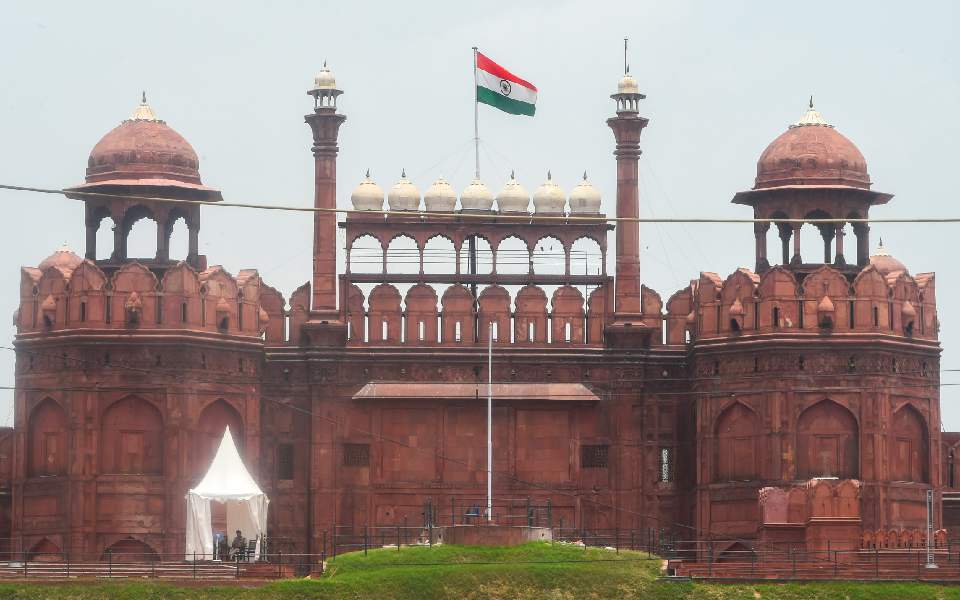
New Delhi, Jun 12: The mercy petition of Pakistani terrorist Mohammed Arif alias Ashfaq convicted in the nearly 24-year-old Red Fort attack case has been rejected by President Droupadi Murmu, officials said on Wednesday.
This is the second mercy plea rejected by the President after assuming office on July 25, 2022.
The Supreme Court had dismissed a review petition by Arif on November 3, 2022, affirming the death penalty awarded to him in the case.
However, a death row convict can still knock on the doors of the top court seeking commutation of his sentence on the ground of prolonged delay under Article 32 of the Constitution, feel experts.
The mercy petition from Arif, received on May 15, was turned down on May 27, the officials said, quoting the President's secretariat order of May 29.
The Supreme Court, while upholding the death sentence, noted that there were no mitigating circumstances in Arif's favour and emphasised that the attack on the Red Fort posed a direct threat to country's unity, integrity, and sovereignty.
The attack, which took place on December 22, 2000, saw intruders opening fire at the 7 Rajputana Rifles unit stationed within the Red Fort premises, resulting in the deaths of three Army personnel.
Arif, a Pakistani national and a member of banned Lashkar-e-Taiba (LeT), was arrested by Delhi Police four days after the attack.
"Appellant-accused Mohd. Arif alias Ashfaq was a Pakistani national and had entered the Indian territory illegally," the top court's order of 2022 had said.
Arif was found guilty of conspiring with other militants to carry out the attack, with the trial court sentencing him to death in October 2005. The Delhi High Court and the Supreme Court upheld the decision in subsequent appeals.
The trial court had said that the conspiracy to attack the Red Fort was hatched at the house of two conspirators in Srinagar, where Arif had illegally entered in 1999 along with three other LeT militants.
The three militants -- Abu Shaad, Abu Bilal and Abu Haider -- who had also entered the monument, were killed in separate encounters.
Despite multiple legal challenges, including review and curative petitions, Arif's plea for mercy was rejected, highlighting the severity of the crime and the threat it posed to national security.
The Delhi High Court had confirmed the trial court's decision in September 2007. Arif then approached the Supreme Court challenging the high court's verdict. The top court had in August 2011 also sided with the order of awarding the death sentence awarded to him.
Later, his review petition came up before a two-judge bench of the apex court which dismissed it in August 2012. A curative petition was also rejected in January 2014.
Thereafter, Arif had filed a petition submitting that review petitions in matters arising out of award of death sentence be heard by a bench of three judges and in open court.
A constitution bench of the apex court had in its September 2014 judgement concluded that in all cases in which death sentence was awarded by the high court, such matters be listed before a bench of three judges.
Before the September 2014 verdict, the review and curative petitions of death row convicts were not heard in open courts but were decided in chamber proceedings by circulation.
In January 2016, a constitution bench had directed that Arif shall be entitled to seek re-opening of the dismissal of the review petitions for an open court hearing within one month.
The apex court had rejected the review petition in its verdict delivered on November 3, 2022.
This decision comes after President Murmu rejected another mercy petition last year in a separate case, demonstrating a firm stance on cases of heinous crimes.
Let the Truth be known. If you read VB and like VB, please be a VB Supporter and Help us deliver the Truth to one and all.
Mamata visits Bhabanipur EVM strong room, warns against counting irregularities
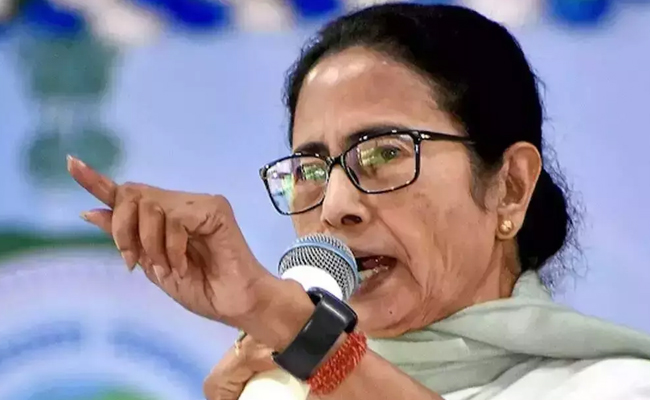
Kolkata (PTI): West Bengal Chief Minister and TMC supremo Mamata Banerjee early Friday warned against any attempt to tamper with the counting process, hours after she visited an EVM strong room in Bhabanipur, alleging possible malpractice.
Banerjee, who emerged around 12:07 am after spending nearly four hours at the counting centre for her Bhabanipur constituency housed in Sakhawat Memorial School in south Kolkata, said only one person would be allowed inside the designated counting area.
"Either the candidate or one agent can stay upstairs. I have also suggested installation of a CCTV camera for the media," she told reporters.
Stressing the need for transparency, she said, "It is essential to maintain transparency. People’s votes must be protected. I rushed here after receiving complaints. The central forces initially did not allow me to enter."
Sounding a stern note ahead of the May 4 counting, she added, "If there is any plan to tamper with the counting process, it will not be tolerated."
On Thursday evening, Banerjee had reached the Bhabanipur Assembly segment counting centre, which houses the strong room for EVMs used in the April 29 polling, citing suspicion of tampering with the machines.
She entered the premises along with her election agent and remained inside for hours, even as Kolkata Mayor and TMC candidate from the Kolkata Port segment Firhad Hakim reached the spot but could not meet her.
"I reached here upon learning that the chief minister has arrived. But I couldn’t meet her since she was already inside the premises, exercising her right as a candidate to visit strong rooms. I wasn’t allowed there. I will not be able to confirm what exactly is transpiring inside," Hakim said.
The development coincided with protests by TMC candidates Kunal Ghosh and Shashi Panja outside the Khudiram Anushilan Kendra in north Kolkata, where they staged a sit-in alleging irregularities and possible tampering of EVMs stored in strong rooms, leading to face-offs between TMC and BJP supporters.
Earlier in a video message, Banerjee had urged party leaders, workers and polling agents to maintain a 24-hour vigil on EVM strong rooms, alleging that the BJP could attempt to tamper with the machines before counting begins.
Her remarks come amid heightened political tension in the state following a fiercely contested Assembly election, with parties closely monitoring arrangements and raising concerns over transparency.