Pressing, touching minor's lips without sexual advances not POCSO offence: Delhi HC
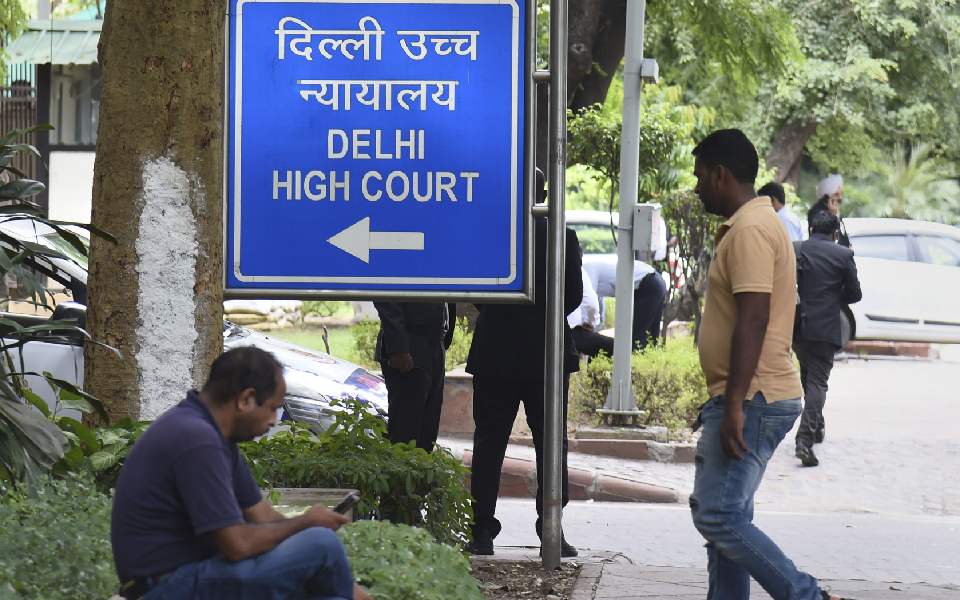
New Delhi, Mar 7 (PTI): The Delhi High Court has said in the absence of sexually motivated advances, touching and pressing minor girl's lips and sleeping next to her cannot attract prosecution for "aggravated sexual assault' under POCSO Act.
Justice Swarana Kanta Sharma observed the acts might violate her dignity and outrage her modesty but without "overt or inferred sexual intent" would fall short of meeting the legal threshold required to sustain a charge under section 10 of Protection of Children from Sexual Offences Act (POCSO Act).
The judge, however, ruled that there was a clear prima facie case under Section 354 of IPC for ''assault or criminal force to woman with intent to outrage her modesty".
The court passed the judgement on February 24 while deciding the plea of the uncle of a 12-year-old minor girl against framing of charges under Section 354 IPC and Section 10 of POCSO Act against him.
The court sustained the charge under Section 354 but discharged him under section 10 of POCSO Act.
"Essential ingredients of an offence under Section 354 of the IPC are squarely met. This provision criminalises the use of criminal force or assault against a woman with the intent to outrage her modesty or with the knowledge that such an act is likely to do so," the court said.
Referring to Supreme Court's rulings, the court said the apex court has repeatedly said modesty, in the context of Section 354 of IPC, must be interpreted in light of the dignity and bodily autonomy of a woman, or a minor girl.
"(However) the victim has not alleged any act of an overtly sexual nature, nor has she suggested in any of her recorded statements – whether before the magistrate, the police or CWC – that she was subjected to sexual assault or that there was even an attempt to commit such an offence... the absence of even the slightest indication of a sexually motivated advance in the statements of the victim negates the foundational requirement of 'sexual intent', which is an essential element of an offence under Section 10 of POCSO Act," it added.
The minor girl, the verdict said, was abandoned by her mother at a young age and lived at a child care institution. She was visiting her family at the time of the incident, it noted.
The verdict observed in a scenario when the child was seeking familial warmth and security, any inappropriate physical contact by a family member in a position of trust was far more than just discomforting – a clear violation of her dignity, bodily autonomy, and modesty.
Even a minimal physical contact, when done with an intent or with the knowledge that it was likely to outrage modesty, was sufficient to invoke Section 354 of IPC, it said.
The court also deprecated the practice of passing "cryptic, non-speaking, proforma orders" by trial courts underlining no reasoning -- even in the present case -- whatsoever to justify the framing of charges.
"The practice by some sessions courts of passing four line orders on charge – devoid of facts, arguments and analysis thereof and the reason to reach a conclusion as to why charge under a particular section is being ordered to be framed – is not appreciable," it said.
The court said when a person was at a risk of incarceration for a significant period, judicial orders should not be passed in a mechanical manner and trial courts were expected to provide at least some reasoning to demonstrate application of mind to the facts and arguments placed before them.
Let the Truth be known. If you read VB and like VB, please be a VB Supporter and Help us deliver the Truth to one and all.
Sujit Nair raises concerns over speculation of DMK-AIADMK understanding to block TVK
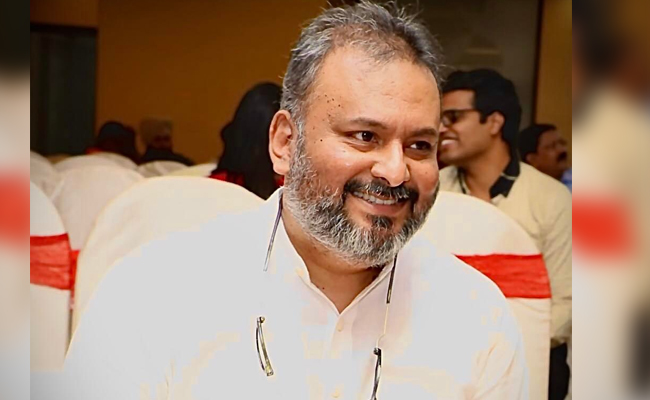
Chennai: Journalist and political commentator Sujit Nair has expressed concern over speculation that the Dravida Munnetra Kazhagam and the All India Anna Dravida Munnetra Kazhagam could explore a post-poll understanding to prevent Vijay-led Tamilaga Vettri Kazhagam from forming the government in Tamil Nadu.
In a social media post, Sujit Nair said the election verdict in Tamil Nadu reflected a clear public demand for political change and argued that the mandate should be respected irrespective of political preferences.
Referring to reports and political discussions surrounding a possible understanding between the DMK and AIADMK, he said he hoped such developments remained only speculative conversations and did not turn into reality.
Nair stated that if such an alliance were to take shape, it would raise serious questions about ideological politics in the country. He said TVK had emerged through a democratic electoral process and that the legitimacy to govern in a parliamentary democracy comes from the people’s verdict.
According to him, attempts to prevent an electoral winner from forming the government through unexpected political arrangements may be constitutionally valid, but many people could view them as politically opportunistic.
He further said that such a move could particularly affect the political image of the DMK, which has historically projected itself around ideology, social justice and opposition politics. Nair said that in ideological terms, the DMK appeared closer to TVK than to the AIADMK, and joining hands with its long-time political rival only to remain in power could weaken its broader political narrative.
He added that the same questions would apply to the AIADMK as well, as the party had spent decades positioning itself against the DMK and such an arrangement could create discomfort among its cadre and supporters.
Drawing a comparison with Maharashtra politics in 2019, Nair said he had expressed similar views when the Shiv Sena formed an alliance with the Indian National Congress and the Nationalist Congress Party after the Assembly elections.
He said post-poll alliances between long-standing political rivals often create a public perception that ideology and electoral mandates become secondary when political power equations come into play.
Nair also said such developments increase public cynicism towards politics and reinforce the belief among voters that ideology is often sidelined after elections.
He maintained that the Tamil Nadu verdict was emphatic and said respecting both the spirit and substance of the mandate was important for the credibility of democratic politics.