Prez nod for FIR against AAP's Manish Sisodia, Satyendar Jain in Rs 2,000-cr classroom 'scam'
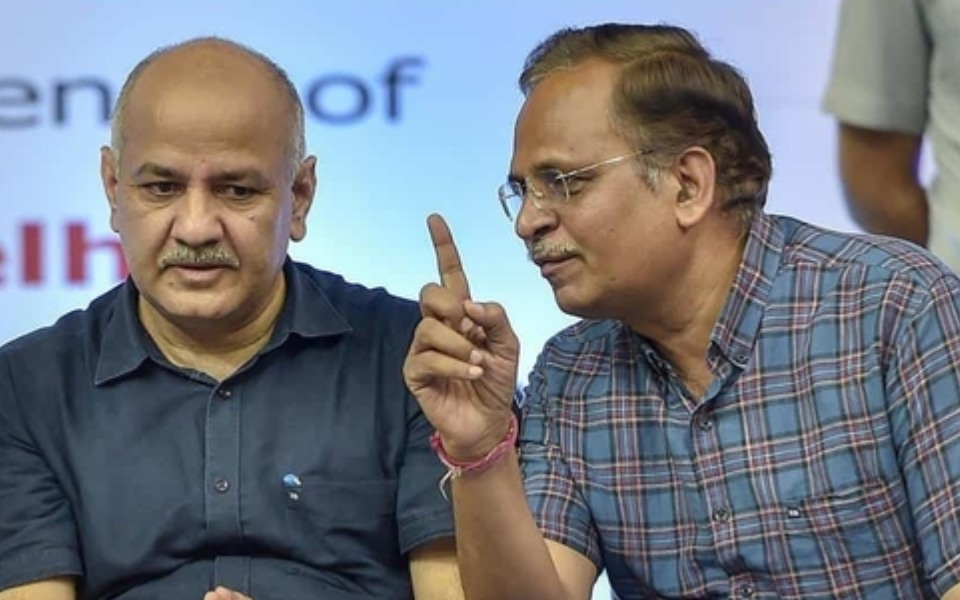
New Delhi, Mar 13 (PTI): President Droupadi Murmu has given her approval for the registration of an FIR against AAP leaders Manish Sisodia and Satyendar Jain in an alleged scam of Rs 2,000 crore in the construction of classrooms in Delhi government schools, sources said.
In 2022, the Delhi government's vigilance directorate recommended a probe into the alleged scam and submitted a report to the chief secretary.
The President has given her approval for registering the FIR against Sisodia and Jain in connection with the alleged scam during their tenures as ministers in the Arvind Kejriwal-led Delhi government, the sources said.
The Central Vigilance Commission (CVC), in a report dated February 17, 2020, highlighted "glaring irregularities" in the construction of classrooms in Delhi government schools by the Public Works Department (PWD).
The President's approval came under Section 17A of the Prevention of Corruption Act that pertains to "enquiry or inquiry or investigation of offences relatable to recommendations made or decision taken by public servant in discharge of official functions or duties".
Reacting to the development, senior AAP leader Saurabh Bharadwaj accused the BJP of carrying out a witch-hunt against its political rivals.
The BJP has no interest or intention to fulfil the promises it made to the people of Delhi. Its only agenda is to carry out a witch-hunt against its political rivals to stifle the voice of people, the former minister said in a statement.
The BJP-led central government has already decided to prosecute every political adversary of the party and grant approvals to move the case forward but it should wait for the judicial process to begin, he said.
In July 2019, BJP leader Harish Khurana and then AAP rebel MLA Kapil Mishra, now a minister in the Delhi government, lodged a police complaint about the alleged scam.
According to a report prepared by the Anti-Corruption Bureau (ACB) of the Delhi government, the complainants alleged that there was a scam worth over Rs 2,000 crore in the construction of classrooms and school buildings in Delhi. The work was done at a highly inflated cost by the Delhi government.
The alleged scam involves the construction of around 12,748 classrooms.
The ACB report said the total expenditure incurred for constructing the classrooms and school buildings was around Rs 2,892.65 crore. They were allegedly constructed at the rate of Rs 8,800 per square feet, whereas it was common knowledge that the average construction cost (even for a builder of flats) was around Rs 1,500 per square feet.
The total cost for constructing a classroom and school building, according to the tender awarded, was allegedly around Rs 24.86 lakh per room, whereas such rooms are easily constructed in Delhi at around Rs 5 lakh per room, it said.
The prices were increased almost five times to defraud the taxpayer by siphoning off money from the public exchequer in the garb of construction cost, the report said.
Even for a 5-star hotel, top ultra-luxury quality construction is around Rs 5,000 to Rs 5,500 per square feet, it said.
The complainants submitted a copy of documents in which information received under the RTI Act in respect of the construction of 18 classrooms in the Govt Girls Senior Secondary School, Nathupura, Burari (school ID:-1207111) revealed that they were constructed at a cost of Rs 12 crore, the ACB report said.
Let the Truth be known. If you read VB and like VB, please be a VB Supporter and Help us deliver the Truth to one and all.
Sujit Nair raises concerns over speculation of DMK-AIADMK understanding to block TVK
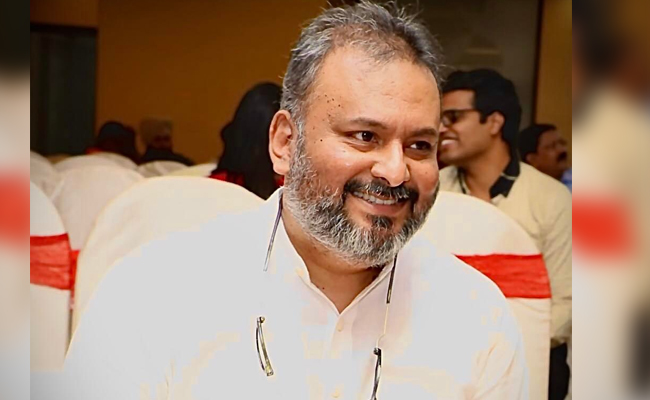
Chennai: Journalist and political commentator Sujit Nair has expressed concern over speculation that the Dravida Munnetra Kazhagam and the All India Anna Dravida Munnetra Kazhagam could explore a post-poll understanding to prevent Vijay-led Tamilaga Vettri Kazhagam from forming the government in Tamil Nadu.
In a social media post, Sujit Nair said the election verdict in Tamil Nadu reflected a clear public demand for political change and argued that the mandate should be respected irrespective of political preferences.
Referring to reports and political discussions surrounding a possible understanding between the DMK and AIADMK, he said he hoped such developments remained only speculative conversations and did not turn into reality.
Nair stated that if such an alliance were to take shape, it would raise serious questions about ideological politics in the country. He said TVK had emerged through a democratic electoral process and that the legitimacy to govern in a parliamentary democracy comes from the people’s verdict.
According to him, attempts to prevent an electoral winner from forming the government through unexpected political arrangements may be constitutionally valid, but many people could view them as politically opportunistic.
He further said that such a move could particularly affect the political image of the DMK, which has historically projected itself around ideology, social justice and opposition politics. Nair said that in ideological terms, the DMK appeared closer to TVK than to the AIADMK, and joining hands with its long-time political rival only to remain in power could weaken its broader political narrative.
He added that the same questions would apply to the AIADMK as well, as the party had spent decades positioning itself against the DMK and such an arrangement could create discomfort among its cadre and supporters.
Drawing a comparison with Maharashtra politics in 2019, Nair said he had expressed similar views when the Shiv Sena formed an alliance with the Indian National Congress and the Nationalist Congress Party after the Assembly elections.
He said post-poll alliances between long-standing political rivals often create a public perception that ideology and electoral mandates become secondary when political power equations come into play.
Nair also said such developments increase public cynicism towards politics and reinforce the belief among voters that ideology is often sidelined after elections.
He maintained that the Tamil Nadu verdict was emphatic and said respecting both the spirit and substance of the mandate was important for the credibility of democratic politics.