Prime Minister Narendra Modi to inaugurate Uttarakhand Global Investors Summit on Dec 8
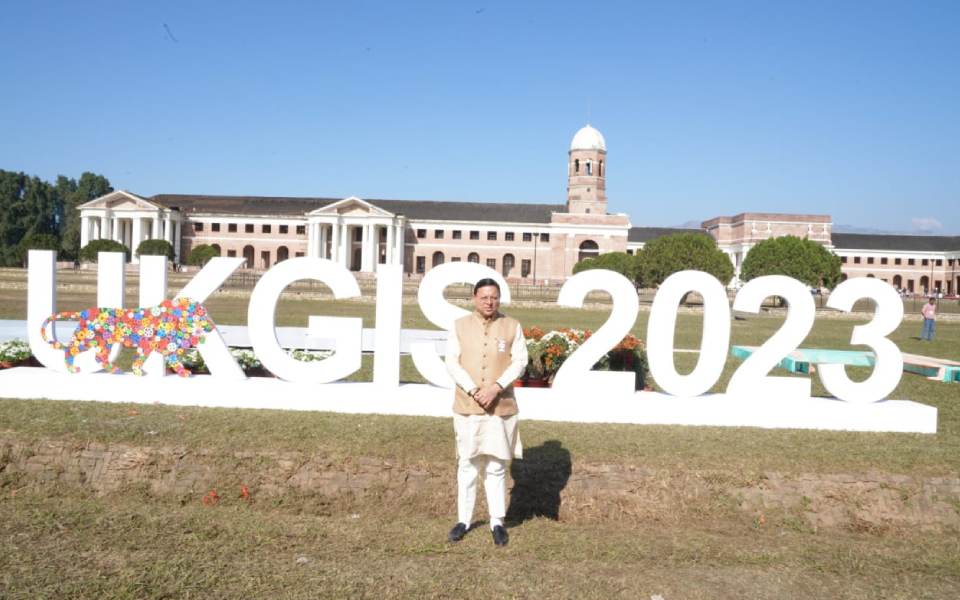
Dehradun is gearing up for the "Uttarakhand Global Investors Summit 2023," scheduled for December 8th and9th, where Prime Minister Narendra Modi will inaugurate the event at the Forest Research Institute.
The summit, themed "Peace to Prosperity," aims to position Uttarakhand as a prime investment destination, attracting over a thousand investors and delegates from around the world.
Chief Minister Pushkar Singh Dhami announced the completion of all preparations for the summit, with the state government setting an initial investment target of Rs 2.5 lakh crore, which has been successfully achieved. The government is engaging with industrial groups, working towards the signing of Memoranda of Understanding (MoUs) to further boost investments.
To promote the summit, the Uttarakhand government organized four international and five domestic road shows in cities like London, Birmingham, Abu Dhabi, Dubai, Delhi, Chennai, Bengaluru, Ahmedabad, and Mumbai. Notably, the Dhami government has already secured investment agreements during road shows in Delhi, Britain, UAE, Chennai, Bengaluru, and Ahmedabad, totaling billions of rupees.
Ahead of the summit, Prime Minister Modi is expected to launch projects worth Rs 44,000 crore, covering sectors such as manufacturing, tourism infrastructure, AYUSH wellness, pharma, food processing, real estate-infra, pumped storage, green and renewable energy, and the automobile industry. This large-scale project grounding on the inaugural day is set to significantly boost Uttarakhand's economic momentum.
The summit's inaugural session will feature key speakers, including three Union Ministers of the Government of India, seven Cabinet Ministers of the State Government, former Chief Ministers, MPs, MLAs, and several other dignitaries. Additionally, eight prominent industrialists from across the country will share their insights during the session.
Noteworthy guests expected to attend include 15 HE Ambassadors/Heads of Mission from Spain, Slovenia, Nepal, Cuba, Greece, Austria, Japan, Saudi Arabia, among others, along with various industrialists. The state government is aiming for 100 percent grounding this year, a step towards achieving the targeted economic growth.
Let the Truth be known. If you read VB and like VB, please be a VB Supporter and Help us deliver the Truth to one and all.
TMC will be voted back to power in Bengal: Tejashwi Yadav
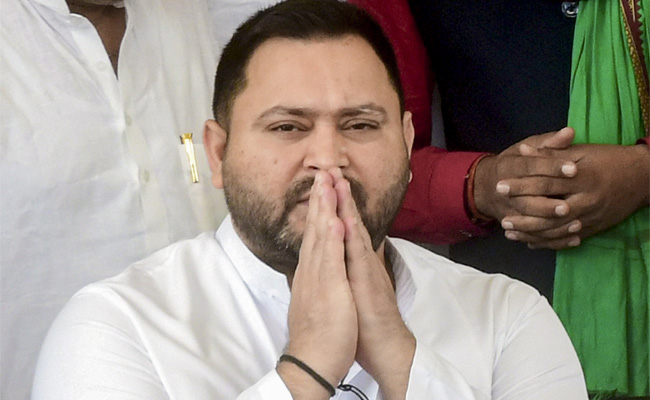
Patna (PTI): Leader of Opposition in Bihar assembly, Tejashwi Yadav, on Tuesday exuded confidence that the Mamata Banerjee-led TMC will again be voted to power in West Bengal.
Yadav returned to Patna after a four-day poll campaign in West Bengal.
“The atmosphere there is euphoric and people want to bring Didi (Mamata Banerjee) back to power. I am fully confident that the TMC will win the election,” he told reporters here.
He said that a large number of people from Bihar living in West Bengal share a lot of love and respect for Mamata Banerjee.
Responding to BJP’s allegations that the TMC had “ruined” West Bengal during its tenure, the RJD leader said the “entire country has been ruined under the Narendra Modi-led government”.
“I want to ask one question to Modi ji – you have been prime minister for more than 11 years, tell me one thing you have done for Bengal,” Yadav said.
The first phase of elections to the 294-member West Bengal assembly was held on April 23, while the second phase will take place on April 29. Votes will be counted on May 4.