Priyanka Gandhi slams 'merciless bombing' of Gaza, says India must stand up for what's right
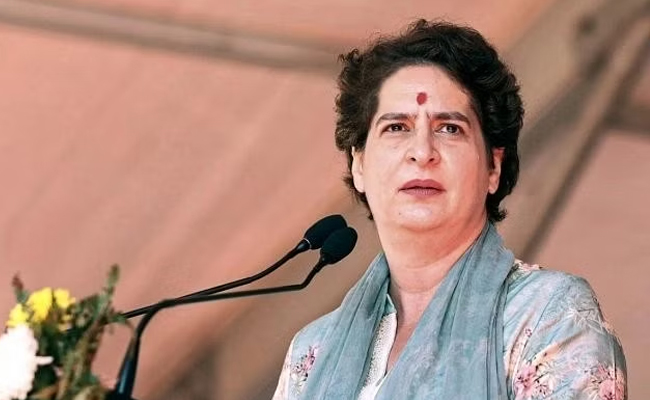
New Delhi (PTI): Noting that the "merciless bombing" of Gaza continues with even more "savagery" than before the truce, Congress leader Priyanka Gandhi Vadra Thursday said it is India's duty as a member of the international community to stand up for what is right and do all it can to ensure a ceasefire at the earliest.
In a post on X, the Congress general secretary said India has always stood up for what is just and supported the Palestinian people from the beginning of their long struggle for freedom.
"The merciless bombing of Gaza continues with even more savagery than before the truce. Food supplies are scarce, medical facilities have been destroyed and basic amenities have been shut down," she said.
An entire nation is being wiped out, Priyanka Gandhi asserted while claiming that 16,000 innocent civilians have been killed, including almost 10,000 children, more than 60 journalists and hundreds of medical workers.
"These are people with dreams and hopes just like the rest of us. They are being ruthlessly thrown to their deaths right before our eyes. Where is our humanity?" she posed.
India has always stood up for what is just on the international stage, the Congress leader asserted.
"We fought for sanctions against the apartheid regime of South Africa. We supported our brothers and sisters in Palestine from the beginning of their long struggle for freedom, and now we stand back and do nothing as a genocide takes place wiping them out from the face of the earth?" Priyanka Gandhi said.
It is India's duty as a member of the international community to stand up for what is right, she asserted. "We must do all we can to ensure a ceasefire at the earliest."
The Health Ministry in Hamas-run Gaza has been quoted by media reports as saying that the death toll in the territory has surpassed 16,200, with more than 42,000 wounded. Israel launched a massive military offensive after the October 7 attacks by Hamas group.
Around 1,200 people have died on the Israeli side, mainly civilians, killed during Hamas' October 7 attack, according to media reports.
The merciless bombing of Gaza continues with even more savagery than before the truce. Food supplies are scarce, medical facilities have been destroyed and basic amenities have been shut down. 16,000 innocent civilians have been killed, including almost 10,000 children, more than…
— Priyanka Gandhi Vadra (@priyankagandhi) December 7, 2023
Let the Truth be known. If you read VB and like VB, please be a VB Supporter and Help us deliver the Truth to one and all.
TMC will be voted back to power in Bengal: Tejashwi Yadav
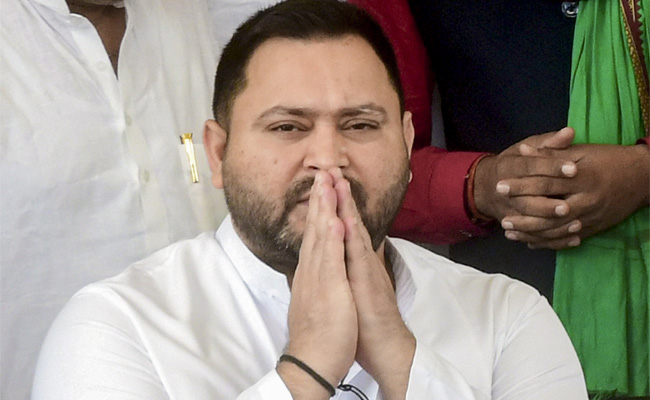
Patna (PTI): Leader of Opposition in Bihar assembly, Tejashwi Yadav, on Tuesday exuded confidence that the Mamata Banerjee-led TMC will again be voted to power in West Bengal.
Yadav returned to Patna after a four-day poll campaign in West Bengal.
“The atmosphere there is euphoric and people want to bring Didi (Mamata Banerjee) back to power. I am fully confident that the TMC will win the election,” he told reporters here.
He said that a large number of people from Bihar living in West Bengal share a lot of love and respect for Mamata Banerjee.
Responding to BJP’s allegations that the TMC had “ruined” West Bengal during its tenure, the RJD leader said the “entire country has been ruined under the Narendra Modi-led government”.
“I want to ask one question to Modi ji – you have been prime minister for more than 11 years, tell me one thing you have done for Bengal,” Yadav said.
The first phase of elections to the 294-member West Bengal assembly was held on April 23, while the second phase will take place on April 29. Votes will be counted on May 4.