Pro-Khalistan slogans appear on walls near Chintpurni Temple in HP's Una; probe begins

Shimla (PTI): Pro-Khalistan slogans were found scrawled on walls near Mata Chintpurni Temple in Himachal Pradesh's Una district on Wednesday with police saying that it has initiated a probe into the matter.
Also, a video of Gurpatwant Singh Pannun, the chief of the banned outfit Sikhs For Justice, surfaced on the Internet in which he was seen showing the graffiti on the walls and saying that Congress leaders allegedly involved in the 1984 Sikh riots would not be spared.
Superintendent of Police of Una Arjit Sen Thakur told PTI that investigations are underway and the miscreants would be nabbed soon.
The police are also analysing the video clip, he said.
This is not the first time that such an incident has been witnessed in the state.
On May 7 last year, pro-Khalistan banners and graffiti were hoisted on the outer boundary of the Himachal Pradesh Assembly in Dharamshala.
A case under sections 153-A and 153-B of IPC and section 3 of the HP Open Places (Prevention of Disfigurement) Act, 1985, has been registered in the matter. Based on the video clip, Pannun was named as a co-accused and main conspirator in this case and booked under the Unlawful Activities Prevention Act (UAPA).
Let the Truth be known. If you read VB and like VB, please be a VB Supporter and Help us deliver the Truth to one and all.
Karnataka School Edu Dept prohibits children from being made to dance to obscene songs
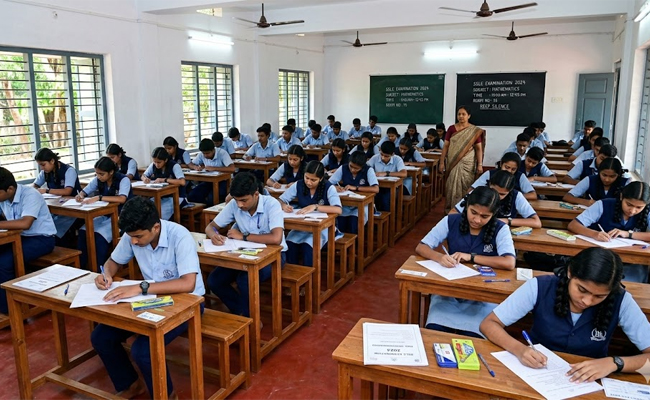
Bengaluru (PTI): The Karnataka School Education Department has issued a circular strictly prohibiting children from being made to dance to obscene songs in educational and cultural programmes.
It stated that such dances would negatively impact students' mental health and moral values. It will create indiscipline and harm the sanctity of education.
"All the Deputy Directors (Administration) of the state's School Education Department have been asked to take strict measures to prevent children or students from dancing to obscene songs in all government, aided and unaided schools in the state," the office of the commissioner of the School Education Department said in a recent circular.
"If it is found that children are being made to dance to obscene songs, appropriate action will be taken against the headmaster or management of such school," it added.
The department also listed certain measures in this regard, which include: strictly prohibiting children from being made to dance to obscene songs during educational and cultural programmes; selecting songs that are inspiring, positive, instilling national pride in children and reflecting the greatness, dignity, values, culture, and morality of the state.
Stating that the school headmaster and management are responsible for selecting songs and dances for cultural programmes, it said, they should also ensure that students wear decent clothes in dance or cultural programmes.