Proportion of unmarried youth rising, finds govt survey
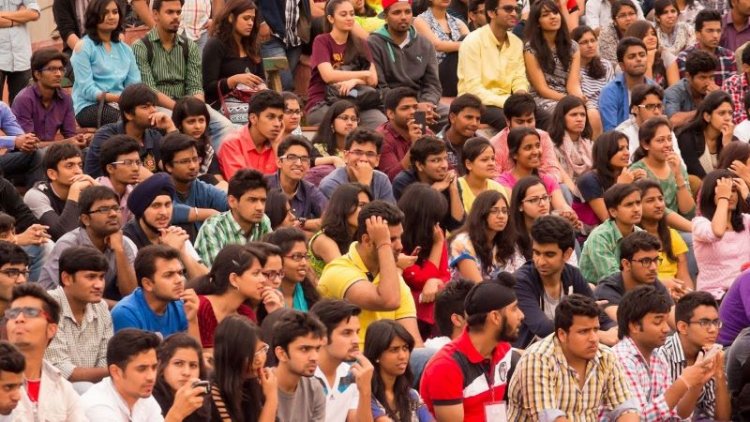
New Delhi, Jul 14: The proportion of unmarried persons within the age bracket of 15-29 years has increased to 23 per cent in 2019 from 17.2 per cent in 2011, according to a government survey.
As per the National Youth Policy 2014, those aged 15 to 29 years are classified as youth.
The latest report of the National Statistical Office stated that the percentage share of the youth population (15-29 years) who are never married has shown an increasing trend in the male population from 20.8 per cent in 2011 to 26.1 per cent in 2019 and similar trend has been observed in case of the female population.
The proportion of unmarried females rose from 13.5 per cent in 2011 to 19.9 per cent.
In 2019, the highest percentage share of youth population who are never married have been observed in the States/UTs of Jammu & Kashmir followed by Uttar Pradesh, Delhi and Punjab and the lowest have been observed in the States/UTs of Kerala, Tamil Nadu, Andhra Pradesh, Himachal Pradesh and Madhya Pradesh, it stated.
However, the report did not attribute any reason for rising in the proportion of unmarried youth.
It stated that early marriage in India has been declining over time.
The data showed that among the adolescent women (15-19 years), 1.7 per cent of women have been first married by the age of 15 years during 2019-21 as compared to 11.9 per cent in 2005-06.
Age at marriage also seems to have increased over the years. A significant reduction has been observed in the level of age at first marriage for women in the 25-29 years age cohort as only 52.8 per cent of women have been first married by the age of 20 years during 2019-2021 as compared to 72.4 per cent in 2005-06, it stated.
Men tend to marry considerably later than women in India since 42.9 per cent of males in the 25-29 years age cohort were first married by the age of 25 years in 2019-21. This percentage was almost double at 83 per cent for females. The percentage of the population who never married also has increased among both males and females in all age groups over the years.
The median age at first marriage increased steadily from 17.4 years in 2005-06 to 19.7 years in 2019-21 for women in the 25-29 age cohort.
A similar trend has also been observed for the median age at first cohabitation in the same age cohort during the same period.
It showed that the more educated the woman is, the higher the median age at first marriage, with the median among women aged 25-29 who have completed 12 or more years of education exceeding the median age among women having no schooling by 5.5 years during 2019-21.
Further, one good thing is the median age at marriage has increased by two years for women with no schooling and by 1.2 years for those who have not even completed their primary education during this period, it stated.
The percentage of women aged 20-24 years married before age 18 years in the country has halved in the last 15 years from 47 per cent in 2005-2006 to 23 per cent in 2019-21. Similarly, teenage pregnancy and motherhood have declined from 16 per cent to 7 per cent during the same period, it stated.
India's population, which reached 1,211 million in 2011 and is projected to reach 1,363 million in 2021 makes India one of the youngest countries in the world, with 27.3 per cent of its population aged 15 29 years, i.e., youth (Report of Technical Group on Population Projections for India and States 2011-2036, Ministry of Health & Family Welfare), it stated.
In terms of absolute numbers, between 2011 and 2036, because of the declining fertility and increasing life expectancy, the population pyramid of the country will undergo a shift, it stated.
While the proportion of the population aged under 15 years is projected to decline, the elderly in the population is expected to increase, it also stated.
However, it stated that the youth population is expected to increase initially but will start to decline in the latter half of the 2011-2036 period.
The total youth population increased from 222.7 Million in 1991 to 333.4 Million in 2011 and is projected to reach 371.4 Million by 2021 and thereafter decrease to 345.5 million by 2036, it said.
Let the Truth be known. If you read VB and like VB, please be a VB Supporter and Help us deliver the Truth to one and all.
Real Madrid fines Valverde and Tchouaméni half a million euros each for altercation

Barcelona (AP): Real Madrid slapped players Federico Valverde and Aurélien Tchouaméni with half-a-million-euro ($588,000) fines on Friday for their altercation during practice.
The massive fines came a day after the midfielders tussled when the team trained. Valverde said in a post on social media on Thursday that no punches were thrown. But Valverde knocked his head on a table and he suffered a small cut that required a brief hospital visit.
On social media, Valverde initially called it a “meaningless fight” with a teammate and said “everything has been blown out of proportion."
His employers, however, considered it a significant enough breach of team discipline to nail both Valverde and Tchouaméni with fines that bite even the bank account of a top soccer player. The half-a-million euro penalties reflect the reputational damage the club was enduring in a chaotic end to a disappointing season.
In a statement, the 15-time European champion said its disciplinary action was concluded after both players expressed to the club “their complete remorse for what happened and apologized to one another.”
Madrid added they also apologized to their teammates, the coaching staff and club supporters, as well as showing their willingness to accept whatever disciplinary action the club deemed “opportune.”
Tchouaméni was back training with Madrid on Friday, two days before they play at Barcelona in a clasico. Madrid has to win otherwise Barcelona will be crowned La Liga champion.
After being notified of the fine, he posted a public apology to the club and its fans on social media.
“What happened this week in training is unacceptable,” Tchouaméni wrote. "I say this while thinking about the example we are expected to set for young people, whether in football or at school.
“Above all, I am sorry for the image we projected of the club.”
Valverde was not at practice due to the head knock.
Both players are set to play in the World Cup next month, with Tchouaméni playing for France and Valverde for Uruguay.
Chaotic end to a poor season
===================
The run-in between the players, who for seasons have played side by side in Madrid's midfield, came after they argued this week in previous training sessions. But tempers boiled over on Thursday. Spanish media was rife with reports that the players previously disagreed over the club's decision to let coach Xabi Alonso go after just months on the job.
It was not the only altercation involving Madrid players during training this week. Álvaro Carreras confirmed he was in a “minor” incident with a teammate. Spanish media said he and fellow defender Antonio Rüdiger got into a scuffle.
Álvaro Arbeloa, the coach who was promoted from Madrid's reserve team when Alonso was fired in January, will face tough questions on what went wrong inside the changing room when he gives a press conference on Saturday ahead of the clasico at Camp Nou.
Madrid is facing a second consecutive campaign without a major trophy amid rumors in the Spanish media that club president Florentino Pérez is considering bringing back Jose Mourinho to straighten out his underperforming team.