Provide court documents in readable format to visually impaired litigants: Delhi HC

New Delhi(PTI): The Delhi High Court has directed the Delhi government to make necessary arrangements to provide court documents to visually impaired litigants in Braille script.
Dealing with a plea of anticipatory bail filed by a visually impaired rape accused, Justice Anoop Kumar Mendiratta said the right to access to justice includes the right to receive documents in a language and means of communication preferred by the parties involved.
He directed that the accused as well as the prosecutrix, both of them visually impaired, be provided court records in Braille script.
The judge noted that the Rights of Persons with Disabilities Act, 2016 casts a positive duty on the government to ensure that all public documents are in accessible formats and to provide necessary facilities and equipment to facilitate recording of testimonies, arguments or opinion given by persons with disabilities in their preferred language and means of communication.
In the present case, the court noted, both the petitioner, who is the accused in the rape case, and the prosecutrix sought the effective enforcement of their rights and are "entitled to be well versed with the proceedings of the litigation".
"The State is directed to make suitable arrangements and provide the prosecutrix as well as the petitioner the copy of the documents to which they are legally entitled in their preferred language and means of communication i.e. Braille script to ensure that they can effectively pursue and protect their legal rights," it ordered.
"The state government is also directed to make necessary arrangements for providing court documents in a readable language to the visually impaired in all such cases wherever the circumstances so warrant and information be suitably disseminated to bring it to notice of all concerned," the court said.
In the rape case, the prosecutrix has alleged that the accused established physical relationship with her on the assurance of solemnisation of marriage.
The court granted pre-arrest bail to the accused on a personal bond of Rs 25,000 with one surety of the like amount, noting that his custodial interrogation or any recovery is not required anymore and that he is differently abled.
At that stage, the prosecutrix prayed that a copy of the order be provided to her in Braille script.
Let the Truth be known. If you read VB and like VB, please be a VB Supporter and Help us deliver the Truth to one and all.
Allahabad HC asks CBI, ED to inquire disproportionate assets allegation against Rahul Gandhi

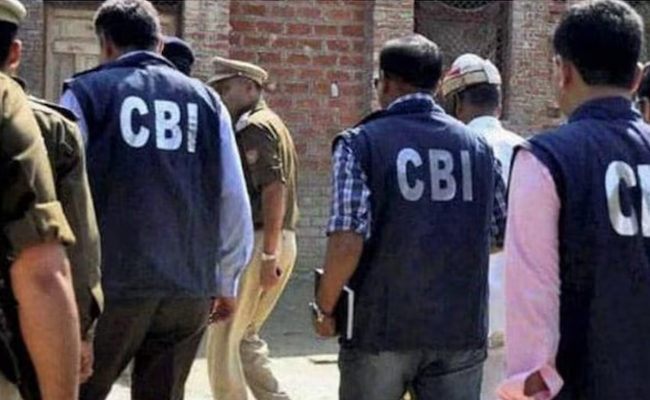
Lucknow (PTI): The Lucknow bench of Allahabad High Court has directed the Central Bureau of Investigation and the Enforcement Directorate to conduct an inquiry into the allegations of amassing of disproportionate assets by Congress MP and Leader of Opposition in Lok Sabha Rahul Gandhi.
The court has asked the agencies to submit the progress of the inquiry on July 20.
A division bench of Justices Rajesh Singh Chauhan and Zafeer Ahmad passed the order while hearing a criminal writ petition moved by a Karnataka BJP worker, S Vignesh Shishir.
The petitioner has alleged accumulation of disproportionate assets by Gandhi and sought direction of an inquiry into the matter.
The bench conducted an in-chamber hearing in the case on May 12.
In its order published on the high court's website on Thursday, the bench observed, "It is expected that if the complaint of the petitioner has been received, the allegations may be verified as per law. It is needless to say that the CBI or ED may take appropriate steps permissible under the law."
Besides the CBI and ED, the bench has also directed the Central government's Department of Personnel and Training, the Department of Revenue, the Ministry of Finance, the Ministry of Corporate Affairs and the Director of Serious Fraud Investigation Office to file their responses on the allegations levelled by the petition within eight weeks.
According to the order, the CBI and the ED have informed the bench that they have received the petitioner's complaint and would file a response before the court.
To a query on whether the petition was maintainable, the bench said that this submission would be tested after receiving the counter-affidavits of the respective parties and the rejoinder affidavits thereof.
The court also ordered its senior registrar to keep the paper-book and the loose documents provided by the petitioner in a sealed cover to be opened on the next hearing.