Provide home-cooked food to kids, not from Swiggy, Zomato: Kerala HC advises parents
Court was hearing case pertaining to pornography
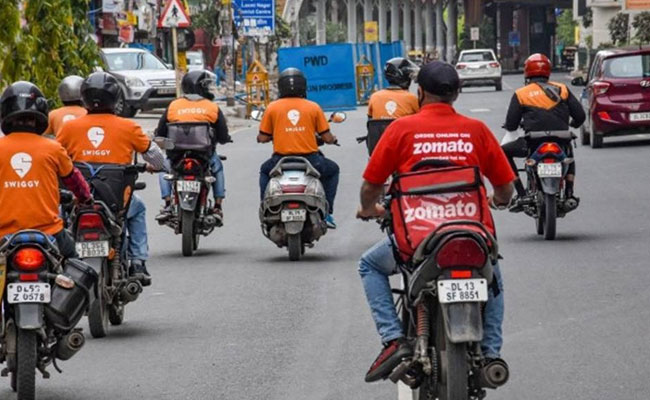
Ernakulam: In a recent case concerning an offense related to pornography, the Kerala High Court underscored the significance of providing home-cooked meals to children. During the proceedings, the court also offered advice to parents, urging them to refrain from ordering food through popular delivery platforms like Swiggy and Zomato.
The case before the high court involved the quashing of criminal charges against an individual arrested for viewing explicit content on his mobile phone while in a private setting. The court ruled that watching obscene photographs or videos in private would not fall under the purview of Section 292 of the Indian Penal Code, which pertains specifically to circulating and publicly exhibiting such material.
Justice PV Kunhikrishnan, in his judgment, took the opportunity to provide guidance to parents. He encouraged parents to promote outdoor play for their children and to prepare and serve delicious homemade meals instead of relying on online food delivery services like Swiggy and Zomato.
The judge expressed concern about parents giving mobile phones with internet access to their minor children as gifts, cautioning them about the potential risks. Justice Kunhikrishnan stressed the importance of parental supervision, suggesting that children should watch informative content and news on their parents' mobile phones under their guidance.
Furthermore, he emphasized that allowing unsupervised mobile phone use among children could expose them to various dangers, including accessing inappropriate and explicit content.
Let the Truth be known. If you read VB and like VB, please be a VB Supporter and Help us deliver the Truth to one and all.
AIITA welcomes Karnataka’s ban on obscene songs in school events
Bhatkal: The Karnataka unit of the All India Ideal Teachers Association (AIITA) has welcomed the Karnataka government’s decision to strictly ban school children from dancing to obscene songs during educational and cultural programmes in government, aided, and private schools across the state.
AIITA Karnataka State President M. R. Manvi congratulated the government for taking what he termed an important step to preserve the sanctity of education.
“Such decisions to safeguard the dignity of school children and uphold the values of education are the need of the hour. This rule should not be limited to government schools alone but must be strictly implemented in all private educational institutions as well,” he said.
He further urged the government to address other concerns within school programmes.
“The government should not only prohibit obscene dances in the name of school anniversaries, but also ensure that plays and dialogues that incite religious hatred are avoided. Schools should be centres of harmony, not platforms for spreading hatred,” he added.
According to a recent circular issued by the Department of School Education and Literacy, obscene dances are adversely affecting the mental health and moral values of students.
In this regard, schools have been advised to use songs that promote nationalism, positive thinking, the greatness of Kannada culture, and value-based traditions instead of inappropriate content during programmes.
The circular also emphasises that students should be dressed in decent attire.
AIITA also backed the department’s warning that disciplinary action would be taken against head teachers if such guidelines are violated. The association has further demanded that district Deputy Directors of Public Instruction strictly monitor the implementation of these rules.