Pulwama attack fallout: Kashmiri students in Delhi fear for their security
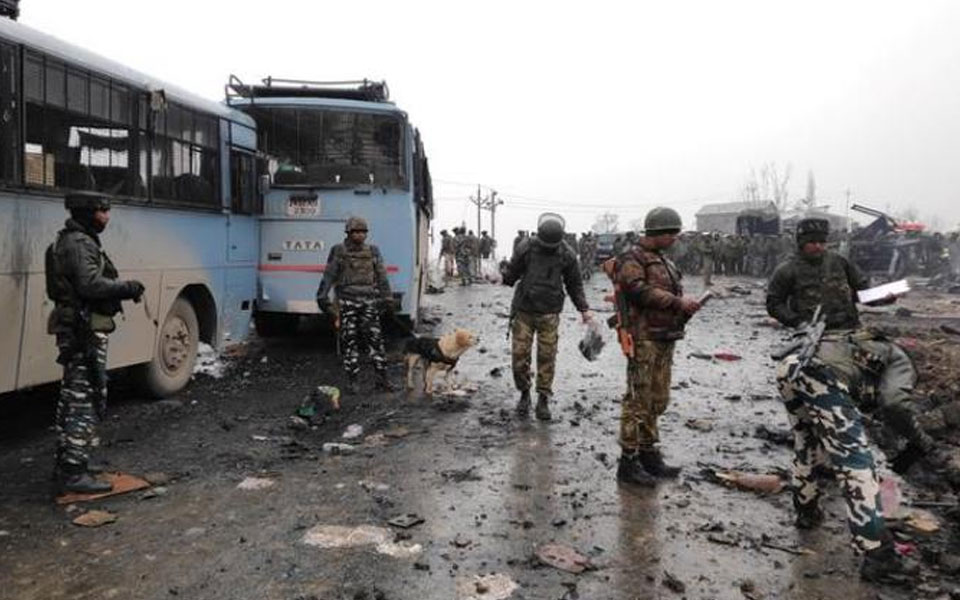
New Delhi : Several Kashmiri students here said they were in a state of fear after reports of alleged harassment of Kashmiris following the Pulwama terror attack, even as police asserted that security had been enhanced in the national capital and they would ensure the safety of all citizens.
According to media reports, several Kashmiris living outside the state claimed they were harassed and attacked after the terrorist attack in Pulwama district in which 40 CRPF men were killed.
A Kashmiri student from Jamia Millia Islamia, who did not wish to be identified, said, "Just the fact that one is a Kashmiri, irrespective of his ideology or leanings, is enough to put one's life to risk. It is happening across the country. Kashmiri students are being harassed and hounded, be it Dehradun, Ambala or Bangalore. We really fear for our security here too."
JNU activist Shehla Rashid, who hails from Kashmir, said, "Throughout India, mobs are attacking Kashmiri students, verbally abusing them, asking for them to be expelled and filing false cases against them. The pretext being given in each case is that they said Pakistan Zindabad and even police is buying into these false claims."
Noting that it was happening in other cities and it could happen in the national capital too, she said there was an intense sense of fear of mob lynching among students.
Anis Ahmed, a Kashmiri student at Delhi University, said, "We are not at all reacting on social media to any abuses which are being hurled at us even if we are being labelled as terrorists. Students who are staying on rented accommodations rather than hostels are even more scared about their safety".
Deputy Commissioner of Police Madhur Verma tweeted that security had been strengthened all across the national capital, including minority dominated areas.
"Visibility of police personnel has been increased. We'll ensure the safety and security of every citizen, including Kashmiri inhabitants and students living in Delhi," he said.
Delhi minister Rajendra Pal Gautam also condemned the alleged attacks on Kashmiris.
"What kind of hatred and frenzy is being spread in the name of religion? The country has not even recovered from the Pulwama attack that reports of ill-treatment of Kashmiris have started pouring in," he tweeted.
Gautam further said the perpetrators of these attacks were not patriots.
The Home Ministry had on Saturday issued an advisory to all states and Union territories to take measures to ensure the safety and security of Kashmiris.
The advisory came hours after Home Minister Rajnath Singh assured an all-party meeting of doing the needful for the protection of the Kashmiri students and people who were allegedly threatened after the terrorist attack.
Some Kashmiri youths studying in Uttarakhand's Dehradun alleged that they were harassed and asked by their landlords to vacate accommodations fearing attacks on their properties in the aftermath of the attack.
A Kashmiri student studying in a Bengaluru college was Saturday arrested for allegedly hailing the Jaish terrorist while another from Dehradun was booked for allegedly sending WhatsApp messages supporting the Pulwama suicide attack.
CRPF Madadgaar, the central force's helpline had on Saturday night tweeted, "Kashmiri students and general public, presently out of Kashmir, can contact @CRPFmadadgaar on 24x7 toll free number 14411 or SMS us at 7082814411 for speedy assistance in case they face any difficulties/harassment".
Let the Truth be known. If you read VB and like VB, please be a VB Supporter and Help us deliver the Truth to one and all.
CPI(M) rebel Kunhikrishnan hopes for 5,000-vote win in Payyanur
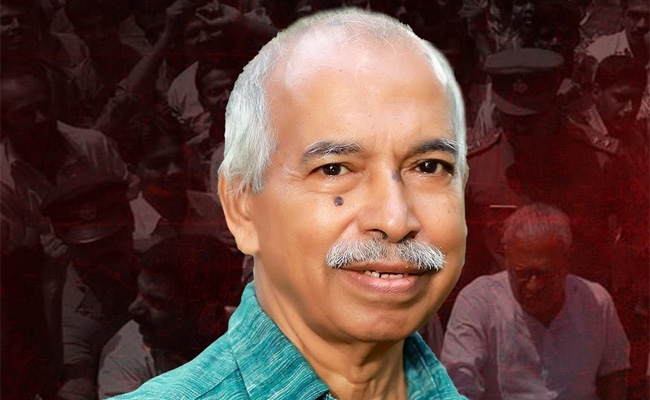
Kannur (Kerala) (PTI): CPI(M) rebel candidate V Kunhikrishnan, who contested as a UDF-backed Independent from Payyanur here, on Saturday said he was hoping to win the Assembly election by a margin of 5,000 votes.
Kunhikrishnan was expelled from the CPI(M) earlier this year after raising allegations of corruption in the party’s martyrs’ fund against sitting MLA T I Madhusoodanan.
Speaking to a TV channel, Kunhikrishnan said he had announced his candidature as a mark of protest and not with expectations of victory.
However, he said the situation had changed drastically, with a strong undercurrent within CPI(M) votes favouring him.
"The undercurrent in CPI(M) votes cannot be measured. Now people are giving a response indicating victory with a margin of at least 5,000 votes," he said.
Payyanur is considered a CPI(M) stronghold, and a defeat for Madhusoodanan there would be a major setback for the party.
On political violence in Payyanur, Kunhikrishnan said he had been facing it since filing his nomination.
"The people leading this violence should think about how long they can continue it. It is the police which has to take the initiative to stop this violence as part of maintaining law and order. But the police are not intervening at the required level," he said.
Regarding his political future, Kunhikrishnan said efforts were underway to strengthen Left groups, and discussions were being held across Kerala in that regard.
"After discussing with others, a decision will be taken," he said.
Kunhikrishnan is among six former CPI(M) leaders who either exited the party or were suspended before contesting for the UDF in the April 9 Assembly elections.
Elections to the 140-seat Kerala Assembly were held on April 9, and the counting of votes will be held on May 4.