Punjab: Cong wins 8 seats, SAD-BJP 4 & AAP leads on 1
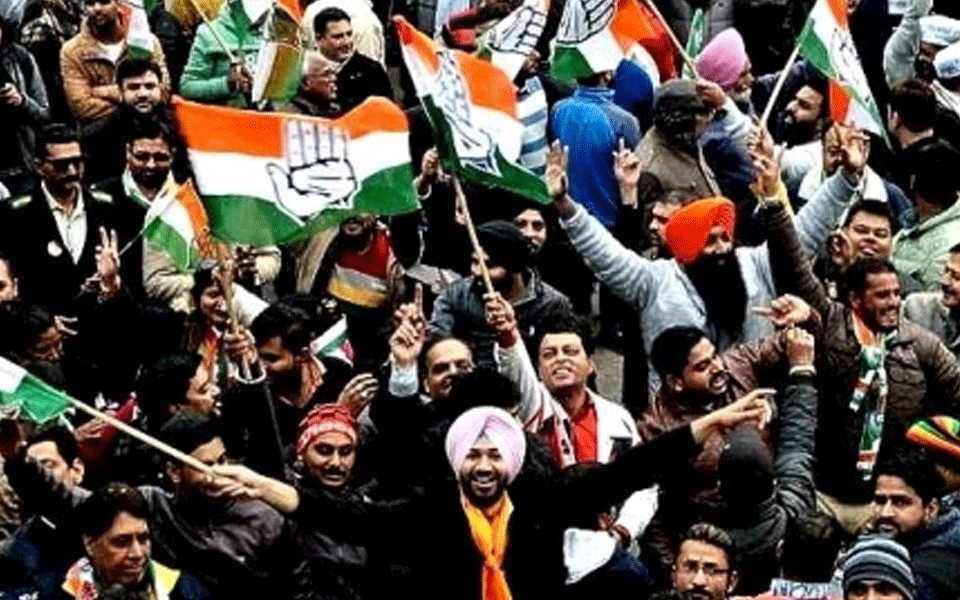
Chandigarh, May 23: Congress has won eight parliamentary seats in Punjab, bucking the pro-Modi trend seen across northern and central India in this general election.
Out of the total 13 seats in the state, Congress romped home to impressive victory on eight seats, surprising both the SAD-BJP combine and the Aam Aadmi Party and improving its tally from three in 2014. It had won Gurdaspur in a bypoll in 2017.
The Akali Dal-BJP alliance won on four seats and the AAP was leading on one.
SAD chief Sukhbir Singh Badal, Bollywood actor Sunny Deol, Union minister Harsimrat Kaur Badal, former Union ministers Manish Tewari and Preneet Kaur, and Ravneet Singh Bittu were among the prominent leaders who won in Punjab.
Major upsets in the poll outcome were Union minister and BJP nominee Hardeep Singh Puri, Punjab Congress chief Sunil Jakhar and SAD candidate Prem Singh Chandumajra.
Akali Dal managed to win only two seats against four it pocketed in last general election.
BJP won Hoshiarpur and Gurdaspur but failed again to break the "jinx" of not winning Amritsar.
AAP appeared routed from Punjab, leading on only one seat out of the 13 it contested. It had surprised many in 2014 Lok Sabha election when it had won four seats in the state.
In 2014 polls, while the SAD-BJP combine had won six seats, AAP and Congress had bagged four and three seats, respectively.
Since the counting of votes began 8 am, Congress continuously maintained lead in the eight constituencies it finally won Amritsar, Faridkot, Anandpur Sahib, Jalandhar, Khadoor Sahib, Ludhiana, Fatehgarh Sahib and Patiala.
Punjab Chief Minister and Congress leader Amarinder Singh's wife and two-time MP Preneet Kaur defeated SAD candidate Surjit Singh Rakhra by 1.62 lakh votes in Patiala.
The party's Manish Tewari won from Anandpur Sahib by trouncing veteran Akali leader Prem Singh Chandumajra by more than 46,000 votes.
Shiromani Akali Dal chief Sukhbir Singh Badal and his wife and Union minister Harsimrat Kaur Badal were the only SAD candidates who won their respective Ferozepur and Bathinda seats, both considered the party's stronghold.
Former deputy chief minister Sukhbir Badal fought against turncoat and Congress candidate Sher Singh Ghubaya and defeated him with a margin of over 1.98 lakh votes.
Harsimrat Kaur was re-elected from Bathinda for the third time, defeating Congress candidate Amrinder Singh Raja Warring with a margin of 21,772 votes.
A major highlight of the poll outcome was BJP candidate Sunny Deol's win. He wrested Gurdaspur seat from Congress heavyweight Sunil Jakhar by over 82,000 votes.
Ravneet Singh Bittu, a two-time MP and grandson of former chief minister Beant Singh, retained his Ludhiana seat by defeating Lok Insaaf Party nominee Simarjeet Singh Bains by over 76,000 votes.
Winning the majority of constituencies in Punjab, despite a "Modi wave", would strengthen the stature of CM Amarinder Singh who almost single handedly rode his party to victory.
The impressive performance by the Congress would also mean voters did not fall for the rival parties' pitch that Amarinder Singh had reneged on his party's poll promises.
The SAD, which was looking to resurrect itself following a backlash over the issue of desecration of religious texts, could manage to win only two seats, out of the 10 it contested.
Despite fielding old warhorses from several constituencies, including Jagir Kaur (Khadoor Sahib), Gulzar Singh Ranike (Faridkot), Charanjit Singh Atwal (Jalandhar), Prem Singh Chandumajra (Anandpur Sahib) and Parminder Singh Dhindsa (Sangrur), SAD contestants were badly trailing.
The AAP, in spite of party chief Arvind Kejriwal's extensive campaigning in Punjab, was set to win only Sangrur constituency, from where party's state unit head Bhagwant Mann is contesting, against his rival Kewal Singh Dhillon of the Congress.
The poll prospects for AAP were not bright from the beginning because of internal bickering and desertions and Bhagwant Mann was the best bet for the party in these polls.
Punjab Democratic Alliance, a conglomeration of several outfits led by Sukhpal Khaira's Punjabi Ekta Party, also failed to offer third front in Punjab's politics as none of its candidate could make a mark except Lok Insaaf Party's (part of PDA) Simarjit Singh Bains finished second after losing to Bittu from Ludhiana. Khaira finished a poor fourth in Bathinda.
However, the poll outcome saw some support to the candidates of the Bahujan Samaj Party (part of the PDA) on Hoshiarpur, Jalandhar and Anandpur Sahib seats as its contestants were at the third position in these constituencies.
A total of 10 sitting parliament members and nine assembly legislators of different political outfits tried their luck during this election.
The vote share of Congress grew to 40.13 per cent while Akali Dal's was 27.45.
AAP's vote share nosedived to 7.38 per cent while BJP and BSP's was 9.63 and 3.49 per cent, respectively, as per the EC data.
In 2014 Lok Sabha polls, Congress party's vote share was 33.10 and SAD's was 26.30 per cent. AAP and BJP's vote share percentage was 24.40 and 8.70.
Let the Truth be known. If you read VB and like VB, please be a VB Supporter and Help us deliver the Truth to one and all.
Bihar: Over 150 children fall ill after consuming 'mid-day meal' in Saharsa
Saharsa (PTI): More than 150 children were taken ill after allegedly consuming food that was part of the mid-day meal in a school in Bihar’s Saharsa district, a senior official said on Thursday.
The incident occurred at a middle school in Baluaha village of the district.
The official said that 115 children were undergoing treatment at the Sadar Hospital, while around 50 students were admitted to Mahishi Public Health Centre.
“We received information that several children fell ill after consuming the mid-day meal in Baluaha. The children were initially treated at the primary health centre, but later, many were referred to the Sadar Hospital,” Saharsa District Magistrate Deepesh Kumar told reporters.
“According to doctors, the health condition of the children has improved, but they will be kept under observation for some time. There is no need to panic. Some kids are having mild fever. They are being treated accordingly,” Kumar said.
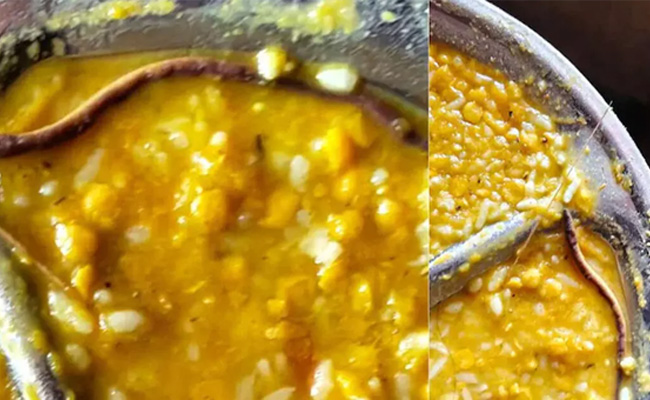
Meanwhile, family members of some children claimed that a snake was found in the container in which cooked pulses was stored at the school.
Of the 545 students present in the school, 200 had already eaten their meals by the time the snake was spotted, and later complained of stomach ache and vomiting, they said.
Regarding the claims, the DM said food samples have been collected from the school.
“We will be able to comment on this only after the results of the tested samples arrive,” he said.