Punjab & Haryana HC orders further probe into Lawrence Bishnoi interview inside police station
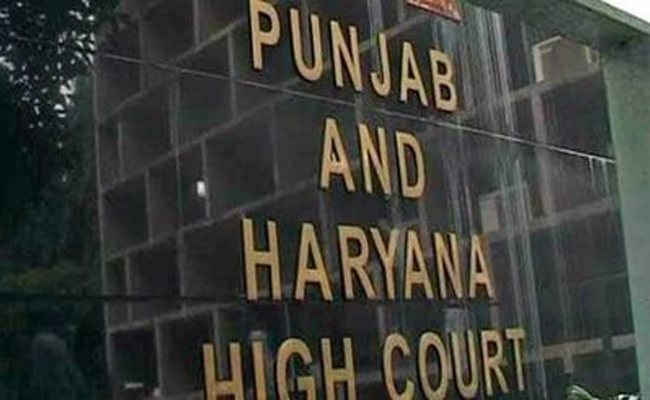
Chandigarh: The Punjab and Haryana High Court has directed a fresh investigation into the circumstances under which gangster Lawrence Bishnoi was provided with a studio-like setting at CIA Staff Kharar police station for an interview aired on ABP News. The suo motu proceedings arose from concerns about inmates’ access to electronic devices and the possibility of glorifying crime through such media appearances.
A Bench comprising Justices Anupinder Singh Grewal and Lapita Banerji expressed serious concerns over senior Punjab police officers allegedly allowing Bishnoi, a suspect in singer Sidhu Moosewala’s murder, to use official facilities for the interview, conducted in March 2023. The Court noted that the interview might have been staged as part of a conspiracy involving police personnel, with possible violations under the Prevention of Corruption Act.
The Court criticised the SIT's decision to file a cancellation report and ordered the formation of a new team led by Prabodh Kumar, Special DGP of the Punjab State Human Rights Commission. This team will investigate potential criminal conspiracy, abetment, forgery, and other offences under the Prevention of Corruption Act and Information Technology Act. The SIT must report back within six weeks.
The Court also highlighted irregularities, including the provision of Wi-Fi at the CIA premises for the interview and the apparent forging of official records, suggesting a cover-up or external influence. It questioned why senior officials had not been held accountable, emphasising that action against higher-ranking officers was necessary.
The DGP has been ordered to submit an affidavit addressing the interview's location and detailing why Bishnoi remained at CIA Staff Kharar for an extended period. Additionally, any online reposts of the interview must be removed immediately.
Advocate Tanu Bedi serves as Amicus Curiae, with representation from various state and Union government counsels in the matter.
Let the Truth be known. If you read VB and like VB, please be a VB Supporter and Help us deliver the Truth to one and all.
Sujit Nair raises concerns over speculation of DMK-AIADMK understanding to block TVK
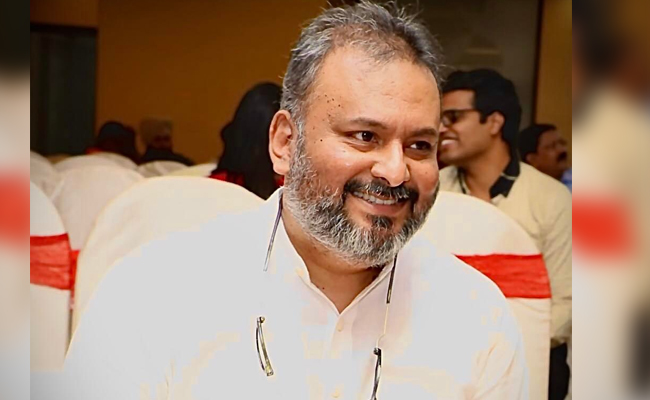
Chennai: Journalist and political commentator Sujit Nair has expressed concern over speculation that the Dravida Munnetra Kazhagam and the All India Anna Dravida Munnetra Kazhagam could explore a post-poll understanding to prevent Vijay-led Tamilaga Vettri Kazhagam from forming the government in Tamil Nadu.
In a social media post, Sujit Nair said the election verdict in Tamil Nadu reflected a clear public demand for political change and argued that the mandate should be respected irrespective of political preferences.
Referring to reports and political discussions surrounding a possible understanding between the DMK and AIADMK, he said he hoped such developments remained only speculative conversations and did not turn into reality.
Nair stated that if such an alliance were to take shape, it would raise serious questions about ideological politics in the country. He said TVK had emerged through a democratic electoral process and that the legitimacy to govern in a parliamentary democracy comes from the people’s verdict.
According to him, attempts to prevent an electoral winner from forming the government through unexpected political arrangements may be constitutionally valid, but many people could view them as politically opportunistic.
He further said that such a move could particularly affect the political image of the DMK, which has historically projected itself around ideology, social justice and opposition politics. Nair said that in ideological terms, the DMK appeared closer to TVK than to the AIADMK, and joining hands with its long-time political rival only to remain in power could weaken its broader political narrative.
He added that the same questions would apply to the AIADMK as well, as the party had spent decades positioning itself against the DMK and such an arrangement could create discomfort among its cadre and supporters.
Drawing a comparison with Maharashtra politics in 2019, Nair said he had expressed similar views when the Shiv Sena formed an alliance with the Indian National Congress and the Nationalist Congress Party after the Assembly elections.
He said post-poll alliances between long-standing political rivals often create a public perception that ideology and electoral mandates become secondary when political power equations come into play.
Nair also said such developments increase public cynicism towards politics and reinforce the belief among voters that ideology is often sidelined after elections.
He maintained that the Tamil Nadu verdict was emphatic and said respecting both the spirit and substance of the mandate was important for the credibility of democratic politics.