Putin arrives this evening; both sides to ink several agreements to boost partnership
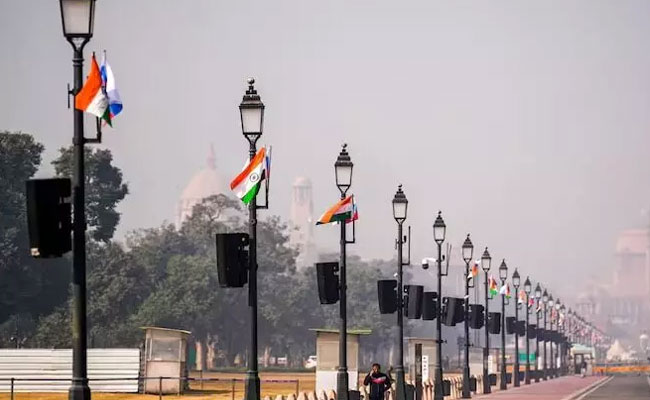
New Delhi (PTI): Prime Minister Narendra Modi will host a private dinner for Russian President Vladimir Putin on Thursday, hours after he lands in New Delhi to further expand a nearly eight-decade partnership that has remained steadfast notwithstanding fractious geopolitical environment and tensions.
Boosting defence ties, insulating India-Russia trade from external pressure and exploring cooperation in small modular reactors are set to be the focus of the summit meeting between Modi and Putin on Friday that is expected to be closely watched by Western capitals.
The Russian leader's nearly 27-hour visit to New Delhi has assumed greater significance as it is taking place against the backdrop of rapid downturn in India-US relations.
Following the 23rd India-Russia summit, the two sides are expected to seal several agreements, including in areas of trade.
As the Russian leader is visiting India amid renewed American push to end the war in Ukraine, the issue is likely to figure prominently at the summit.
The Russian president is likely to arrive in New Delhi at around 6:35 pm on Thursday, and hours later, Modi will host him for a private dinner in reciprocation of a similar gesture extended to the Indian prime minister by the Russian leader during his visit to Moscow in July last year.
On Friday, Putin will be accorded a ceremonial welcome at the Rashtrapati Bhavan before the 23rd India-Russia summit. Modi will also host a working lunch for the Russian leader and his delegation at Hyderabad House, the venue for the summit.
Putin will also visit Rajghat in the morning, according to people familiar with the matter.
After the summit, Putin is set to launch the new India channel of Russian state-run broadcaster, following which he will attend a state banquet to be hosted in his honour by President Droupadi Murmu.
The Russian leader is expected to leave India at around 9 pm on Friday.
In the summit talks, New Delhi is expected to press for addressing the increasing trade deficit caused by India's procurement of large volumes of Russian crude oil.
The Russian president's trip to India is taking place at a time when India-US relations are going through possibly the worst phase in the last two decades after Washington imposed a whopping 50 per cent tariff on Indian goods, including 25 per cent levies for New Delhi's procurement of Russian crude oil.
The impact of American sanctions on India's procurement of Russian crude oil is likely to be discussed at the summit.
Kremlin spokesperson Dmitry Peskov on Tuesday said New Delhi's purchase of crude oil from Russia may decline for "a brief period" in view of Western sanctions, but, at the same time, he said Moscow is taking steps to enhance the supplies.
At the summit, Putin is expected to apprise Modi about the latest US efforts to bring an end to the Ukraine conflict. India has been consistently maintaining that dialogue and diplomacy is the only way forward to end the war.
Following the Modi-Putin talks, the two sides are expected to ink a plethora of agreements, including one on facilitating the movement of Indian workers to Russia, and another on logistical support under a broader framework of defence cooperation.
It is learnt that under the trade basket, Indian exports to Russia are expected to significantly increase in areas of pharma, agriculture, food products and consumer goods.
The move comes amid concerns in New Delhi over a ballooning trade deficit in favour of Russia.
India's annual procurement of goods and services from Russia amounts to around USD 65 billion, while Russia's imports from India stand at around USD 5 billion. Officials said India is also looking at boosting cooperation in the fertiliser sector. Russia supplies three to four million tonnes of fertilisers to India annually.
The Indian and Russian sides are also likely to discuss New Delhi's proposed free trade agreement with the Eurasian Economic Union.
Ahead of the summit, the defence ministers of the two countries will hold wide-ranging talks on Thursday that are likely to focus on India's plan to procure additional batches of S-400 missile systems and other critical military hardware from Russia.
The S-400 missile systems proved to be very effective during Operation Sindoor. Top military officials said the overall focus will be to further expand the already close defence and security ties between the two countries, with a particular focus on ensuring expeditious supply of military hardware from Russia to India.
In October 2018, India signed a USD 5 billion deal with Russia to buy five units of the S-400 air defence missile systems, notwithstanding a warning by the US that going ahead with the contract may invite US sanctions under the provisions of Countering America's Adversaries Through Sanctions Act (CAATSA).
Peskov said there may be a discussion on the possibility of Russia supplying Su-57 fighter jets to India. India is in the process of procuring a batch of fifth-generation fighter jets.
Dassault Aviation's Rafale, Lockheed Martin's F-21, Boeing's F/A-18 and the Eurofighter Typhoon are the main contenders.
Ways to bolster bilateral energy ties are also expected to figure prominently in the summit. It is learnt that Russia has offered India additional discounts for its procurement of crude oil.
The offer came after the volume of India's purchase of Russian crude oil registered a decline in the last few weeks following the latest wave of US sanctions on two Russian oil producers.
India and Russia have a mechanism under which India's prime minister and the Russian president hold a summit meeting annually to review the entire gamut of ties. So far, 22 annual summit meetings have taken place alternatively in India and Russia. The Russian president had last visited New Delhi in 2021.
In July last year, PM Modi travelled to Moscow for the annual summit.
Russia has been a time-tested partner for India and a key pillar of New Delhi's foreign policy.
Let the Truth be known. If you read VB and like VB, please be a VB Supporter and Help us deliver the Truth to one and all.
CM Siddaramaiah alleges ‘criminal conspiracy’ in Sringeri recount, vows legal action
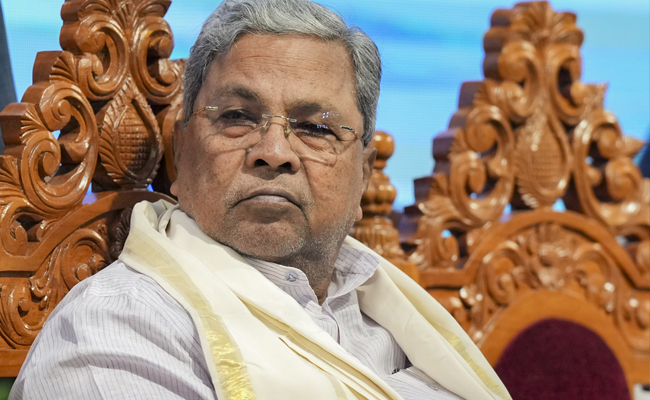
Bengaluru (PTI): Alleging a “criminal conspiracy” by BJP candidate D N Jeevaraj in the Sringeri Assembly poll recounting, Karnataka CM Siddaramaiah on Tuesday said the outcome was manipulated after valid postal ballot votes in favour of Congress leader T D Raje Gowda were tampered with during the recounting process.
Following a Karnataka High Court order on an election petition filed by Jeevaraj, challenging Raje Gowda’s election, the reverification and recounting were conducted on Saturday.
After the reverification and recount of postal ballots for the Sringeri Assembly constituency, votes polled in favour of Raje Gowda were reduced by 255, the returning officer said.
A report on the matter has been submitted to the Election Commission of India for further action, the officer added.
Congress leader Raje Gowda had won the 2023 Assembly polls from Sringeri by 201 votes, defeating his nearest rival Jeevaraj.
Addressing a press conference in Bengaluru, Siddaramaiah said the High Court had directed the recounting of postal ballots and that irregularities were noticed during the exercise conducted on May 2.
“This is a clear case of criminal conspiracy,” Siddaramaiah said, alleging that valid votes cast in favour of Raje Gowda were altered after being accepted by counting agents of all parties, including Congress, BJP, and JD(S).
He claimed that during the recounting of postal ballots, 255 votes were initially accepted as valid by all agents but were later tampered with by subordinate officials.
“There is a second mark on the votes polled in favour of Raje Gowda. They had accepted these as valid votes. Subsequently, another mark was made by officials. This is a clear case of criminal conspiracy,” he said.
When asked who was behind the alleged conspiracy, the CM replied, “It was hatched by Jeevaraj and others. It is planned.”
Siddaramaiah further alleged that the returning officer acted improperly by declaring the result despite the presence of an Election Commission observer during the recounting.
“Immediately after the counting, the returning officer announced the result. He should not have done so; this is against the law,” he said.
He pointed out that Raje Gowda had originally won by 201 votes, but after the recounting, the BJP candidate was declared the winner by 52 votes.
“The BJP has committed a criminal act of conspiracy. This is not vote chori but vote dacoity,” he alleged.
The CM said a police complaint had already been filed by Raje Gowda’s election agent, Sudhir Kumar, and emphasised the need for electoral integrity.
“We want transparency and free and fair elections. That is what our Constitution mandates,” he added.
Stating that the government would pursue legal remedies, Siddaramaiah said, “We are preparing an appeal challenging the returning officer’s announcement in a court of law.”
Responding to a separate query on elections in other states, the CM said there appeared to be an anti-incumbency factor in West Bengal, while results in Tamil Nadu were “surprising,” adding that Vijay’s party was emerging as the largest there.
Following the victory of party candidates in Bagalkote and Davanagere South, Siddaramaiah expressed confidence about future electoral prospects in Karnataka.
“Even in 2028, we will win the Assembly elections. We will come back,” the CM said.
Siddaramaiah added that he would order a forensic examination into the alleged tampering of postal ballots.