Pvt trains should've sliding doors, talk-back, coach surveillance, alarms: Rlys' draft specification
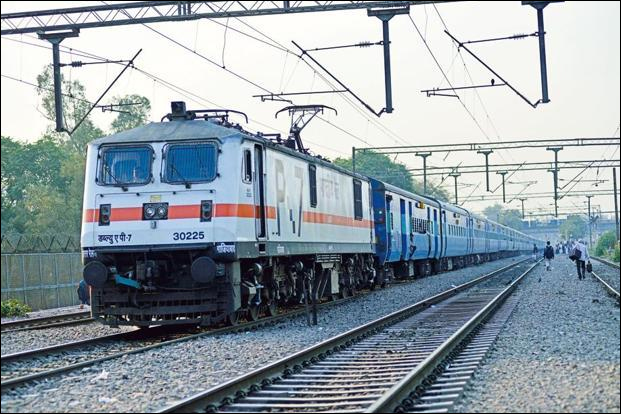
New Delhi: Electronic sliding doors, windows with double-glazed safety glass, Braille signages, emergency talk-back mechanism, passenger surveillance system, and information and destination boards.
These are some of the specifications the Railways has demanded from private operators in trains that they will be running on the Railways network.
A draft specification for private trains, shared by the Railways on Wednesday, also says these trains would provide noise-free travel to passengers and be capable of running at a speed of 160 km/hr.
The train shall be designed so that they can operate safely at a maximum speed of 180 kmph during testing. Train shall be capable of accelerating to a speed of 160 kmph from 0 kmph in a maximum of 140 seconds on level track, says the draft.
These trains will be fitted with an emergency brake which can bring them to a standstill in less than 1,250 m when travelling at 160 kmph, it says.
It also says that the trains should be designed for a life of 35 years.
Each coach shall have minimum four electrically/pneumatically powered, plug type doors, two on each side, it says.
The door mechanism shall have safety provision whereby the train shall not start unless all doors have been closed and electrically locked.
Provision shall be made for passengers to open doors to permit evacuation from a stopped train in an emergency, the draft says.
There shall be an internal and external manual release mechanism on one door per side in each coach. All windows shall be provided with double-glazed safety glass, it says.
Stressing the need for hazard-free environment for users, the draft also says that adequate handholds shall be provided throughout the car.
The document also says normal and emergency equipment and controls which the users or crew may operate shall be clearly identified, and operating procedures presented in both text and graphic formats.
Passenger emergency signs shall also be embossed in Braille raised typeface, it says.
The trains shall be designed to keep the noise emissions as low as possible and designed to prevent drumming, rattles or vibrations throughout its life.
The draft says the train shall provide a public address (PA) facility so that the loco pilot or guard can make announcements to passengers from driving /non-driving cab.
Emergency buttons and talk-back phones shall be located near all the doors and gangways, the draft says, adding provision shall be there for voice recording of the conversations with GPS stamping.
A passenger information system (PIS) shall provide automatic announcement and the display of destination information on displays throughout the train in Hindi, English and regional languages.
Each car shall be provided with two digital destination boards on the outside (one on each side) displaying the originating, destination station, vehicle number, train number, the draft says.
The passenger coach surveillance system (PRSS) shall comprise an IP-based close circuit television (CCTV) network, surveillance cameras and other accessories as required with onboard equipment for streaming of video to the central server for selected cameras, it says.
Each sitting car of train shall be provided with minimum six surveillance cameras to cover the passenger area. For a sleeper train, each car shall be provided with two surveillance cameras at appropriate location to cover the entire corridor, the draft says.
In addition, adequate numbers in the gangway/vestibule area as deemed necessary shall also be provided.
Additionally, at least one camera shall be placed in Driving Cab for gathering frontend view, track and OHE conditions etc. Cameras shall be placed on outer side of the train for gathering rear view of the platform. One/two camera shall be installed on the roof of driving Car/power head towards pantograph to monitor the roof equipment, it said.
An integrated screen shall be provided for the passenger car surveillance system in each driving cab.
The train will also have an Emergency Talk-Back [ETB] (on two physically independent channels) in each coach.
Once pressed/operated, it shall be possible for the passenger to communicate with the train driver/guard. If more than one emergency device has been operated, each demand shall be independently acknowledged, it said.
Let the Truth be known. If you read VB and like VB, please be a VB Supporter and Help us deliver the Truth to one and all.
Leadership issue: Everyone will welcome if Kharge becomes K'taka CM, says Parameshwara
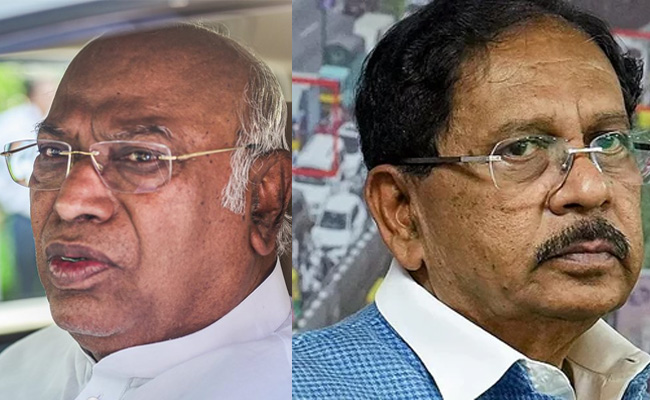
Bengaluru (PTI): Karnataka Home Minister G Parameshwara on Wednesday said everyone in the ruling Congress party will welcome if AICC chief Mallikarjun Kharge, a senior politician with a lot of experience, becomes the chief minister of the state.
He also asserted that fulfilling the promise of "good governance" made to the people of the state was important, amid the ongoing internal politics and confusion within the party regarding the chief minister change issue.
The statements have come amid speculation within the party and political circles about a possible decision on leadership change and cabinet reshuffle after May 4, once the results for Assembly elections in four states and one union territory, along with bypolls to two Assembly segments in Karnataka, are announced.
"If he (Kharge) becomes (the CM) we will be very happy, because he is a senior politician with a lot of experience. If he becomes CM, we will all welcome it," Parameshwara told reporters in response to a question whether Kharge himself has a desire to become the CM.
When asked why Kharge, who is from Karnataka, has not been decisive in resolving the state's leadership issue and whether he was postponing the issue because he wants a Dalit to become the CM, the home minister said, "We don't have much information on the CM change matter appearing in the media, at least I'm not aware of it. So it is not right to speak on it."
The Congress high command will decide whatever they have to, as they are aware of everything in the state. "We are fortunate to have Kharge, who is from the state, as the AICC president," he said.
Kharge is highly experienced and he is aware of everything about the state's politics as he has personally experienced it. "He knows everything and there is no need for us to tell him. I will not say much," he added.
The leadership tussle within the ruling party has intensified amid speculation about a possible change of chief minister after the Congress government completed the halfway mark of its five-year term on November 20, 2025. The speculation has been fuelled by the reported "power-sharing" arrangement between CM Siddaramaiah and Deputy CM Shivakumar at the time of government formation in 2023.
Regarding senior Congress MLA K N Rajanna's statement demanding a "Dalit CM", Parameshwara himself a senior Dalit leader in the party, said, "Let's not speak about it. I don't want to unnecessarily get into that. Without knowing things, let's not comment on them."
Parameshwara downplayed the ministers' visit to Delhi, stating that it is a common thing, mostly concerning official matters. "Whenever we go to Delhi, we will also visit the AICC office and meet our national leaders," he said.
PWD Minister Satish Jarkiholi and Social Welfare Minister H C Mahadevappa on Monday met Kharge and general secretary (in charge of Karnataka) Randeep Surjewala in New Delhi and reportedly requested them to address the leadership issue. Both Jarkiholi and Mahadevappa are considered close to Siddaramaiah.
On the expectation that the Congress high command will put an end to confusion on the leadership issue by May 15, the home minister said, "More than anything, we have promised the people of the state that we will give good governance. Fulfilling that is important. Internal politics and confusions will always be there."
MLAs and leaders who want Shivakumar to be elevated as CM have recently claimed they expect some "sweet news" by May 15, which is their leader's birthday.
Regarding plans to hold the AHINDA convention in Hubballi to mark 25 years of the AHINDA movement, the home minister said, the movement was aimed at the welfare of its communities and the convention has to happen to resolve the issues they face.
AHINDA (Kannada acronym for minorities, backward classes, and Dalits) is considered as the strong support base of Siddaramaiah and also the Congress party.