Qatar Museums, NMACC sign five-year pact to promote cultural education for children

Mumbai: Qatar Museums and the Nita Mukesh Ambani Cultural Centre (NMACC) have entered into a five-year strategic agreement aimed at developing Museum-in-Residence educational initiatives in India and Qatar, with a focus on children’s cultural learning.
According to a report published by Hindustan Times on Tuesday, the partnership seeks to introduce Qatar Museums’ innovative museum-based learning models into schools and cultural institutions in India through the NMACC, while also fostering cross-cultural educational exchange between the two countries.
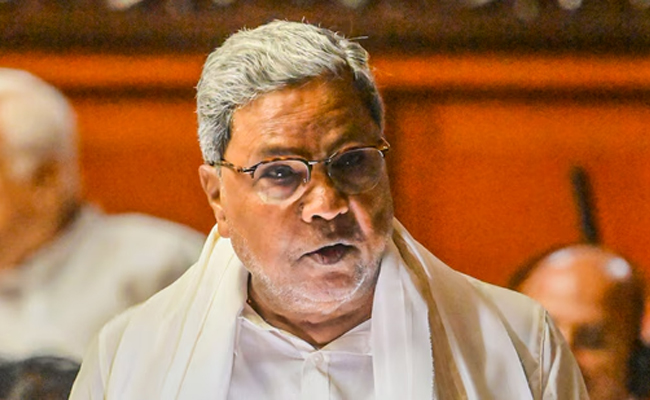
The agreement was signed by Her Excellency Sheikha Al Mayassa bint Hamad bin Khalifa Al Thani, Chairperson of Qatar Museums, and Isha Ambani, Director at Reliance Industries and a key leader at NMACC.
“Qatar Museums and NMACC, share the belief that creativity and cultural exchange are key to shaping a new generation of confident, empathetic young learners. Through this collaboration, led by Ms. Isha Ambani, a legacy of our Year of Culture with India, Qatar Museums will contribute its skills and experiences to the outstanding educational programmes of NMACC’s already robust history and ever-expanding roster providing educational tools and insights, helping them extend their reach in classrooms throughout India.” HT quoted the chairperson of Qatar Museums as saying.
In India, NMACC will work alongside Reliance Foundation to roll out the programmes across multiple regions. The initiative will be guided by QM specialists including experts from the Dadu, Children’s Museum of Qatar who will deliver masterclasses and hands-on mentoring.
Isha Ambani reportedly said, the partnership reflects NMACC’s commitment to bringing global ideas to India while sharing the country’s rich cultural heritage internationally. Emphasising the shared philosophy of both institutions, she said the collaboration aims to create world-class educational experiences that empower children to learn confidently and dream boldly.
Let the Truth be known. If you read VB and like VB, please be a VB Supporter and Help us deliver the Truth to one and all.
Trump launches new effort to reopen Strait of Hormuz
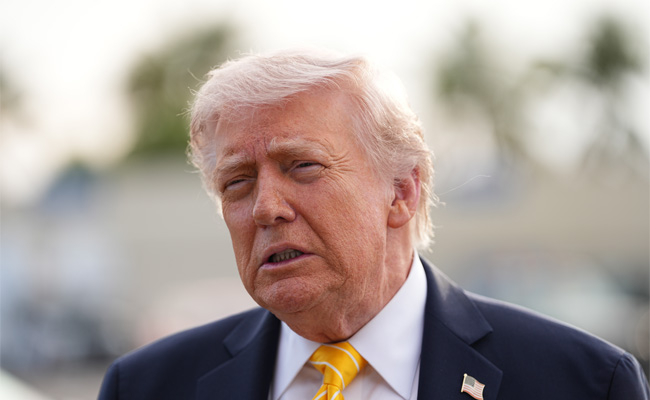
Dubai (AP): US forces on Monday launched an effort to guide commercial ships through the Strait of Hormuz, where hundreds have been stuck since the Iran war began.
Two American-flagged merchant ships have “successfully transited” through the critical waterway, the US military said. Separately, the US military denied Iran's claims that it struck an American Navy vessel southeast of the strait.
Iran handed over its latest proposal for negotiations with the US to mediators in Pakistan, Iran's state-run IRNA news agency reported Friday. Trump subsequently said he's “not satisfied” with it, but did not elaborate on the proposal's apparent shortcomings. The shaky ceasefire between the US and Iran has lasted for three weeks.
Here's the latest:
European leaders see Trump's troop drawdown from Germany as new proof they must go it alone
-----------------------------------------------------------------------------------
European leaders on Monday said President Trump's snap decision to pull thousands of US troops out of Germany came as a surprise but is a fresh sign that Europe must take care of its own security.
The Pentagon announced last week that it would pull some 5,000 troops out of Germany, but Trump told reporters Saturday that “we're going to cut way down. And we're cutting a lot further than 5,000.”
He offered no reason for the move, which blindsided NATO, but his decision came amid an escalating dispute with German Chancellor Friedrich Merz over the US-Israeli war on Iran, and Trump's anger over European allies' reluctance to get involved in the conflict in the Middle East.
Wall Street hesitates and oil prices climb with uncertainty about the Strait of Hormuz
---------------------------------------------------------------------------------
The US stock market is holding tentatively near its record heights Monday, while oil prices climb with uncertainty about when oil tankers can resume crossing the Strait of Hormuz and restore the world's flow of crude. Dueling claims about a possible Iranian strike on a U.S. Navy vessel in the strait heightened the tensions.
The S&P 500 slipped 0.1 per cent, coming off its latest all-time high. The Dow Jones Industrial Average was down 216 points, or 0.4 per cent, as of 9:35 am Eastern time, and the Nasdaq composite was up 0.1 per cent.
The action was stronger in the oil market, where the price for a barrel of Brent crude climbed 2 per cent to USD 110.37 and briefly topped USD 114 during the morning. Iran's closure of the Strait of Hormuz due to its war with the United States has kept oil tankers pent up in the Persian Gulf and away from customers worldwide. That in turn has sent the price of Brent soaring from roughly USD 70 per barrel before the war.
Iran stands firm on its grip of the strait
-------------------------------------------
The disruption of the waterway has squeezed countries in Europe and Asia that depend on Persian Gulf oil and gas, raising prices far beyond the region.
Trump has promised to bring down gas prices as he faces midterm elections this year.
The US has warned shipping companies they could face sanctions for paying Iran for transit of the strait. It has enacted a naval blockade on Iranian ports since April 13, telling 49 commercial ships to turn back, U.S. Central Command said Sunday. The blockade has deprived Tehran of oil revenue it needs to shore up its ailing economy.
US officials have expressed hope the blockade forces Iran back to the negotiation table.
US claims progress in reopening the Strait of Hormuz, saying two merchant ships have transited
------------------------------------------------------------------------------------
The US military said Monday that two American-flagged merchant ships had successfully transited the Strait of Hormuz and Navy guided-missile destroyers in the Persian Gulf were helping to restore shipping traffic. It separately denied Iran's claims to have struck an American Navy vessel.
The announcement came a day after US President Donald Trump announced a new initiative to help guide ships through the critical waterway for global energy. Iran has effectively closed the strait since the US and Israel started the war Feb 28, rattling the global economy.
The US-led Joint Maritime Information Center has advised ships to cross the strait in Oman's waters, saying it set up an “enhanced security area.” U.S. Central Command didn't say when the Navy ships arrived or when the merchant vessels departed.
It was unclear whether shipping companies, and their insurers, will feel comfortable taking the risk given that Iran has fired on ships in the waterway and vowed to keep doing so.