Question in Tamil, reply in Hindi:Heated exchanges in Lok Sabha between Opposition, treasury benches
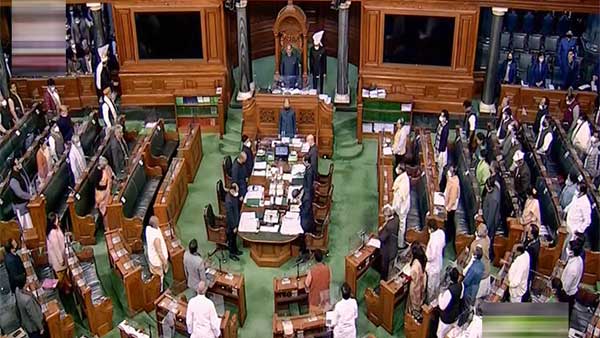
New Delhi, Feb 10: A question asked in Tamil triggered heated exchanges in Lok Sabha on Wednesday between the Opposition and Treasury benches that spilled over to the issue of ministers giving replies in Hindi.
It all started during Question Hour, with DMK member A Ganeshamurthi asking a supplementary question about FDI inflow in Tamil and Union minister Piyush Goyal saying that he missed the first part in Tamil and wanted to know which project was he referring to.
"If I ask a question in English, then the ministers should respond in English only... a member asks a question in Tamil and the minister replies in Hindi," the member remarked and Goyal responded by saying that he can answer in Hindi while the translation is available for the member.
Some opposition members shouted as they also apparently sought to raise the issue of ministers replying in Hindi to questions asked in English. In recent times, there have been instances in the House when opposition members, especially from southern states, have protested against such a trend.
Speaker Om Birla asked Ganeshamurthi to repeat the question and the member asked the same in Tamil.
A visibly peeved Goyal asked the Chair for a ruling on whether there is any rule that a question asked in a language should be replied to in the same language.
"I will give the reply in Hindi... I also listened to the translation (of the question that was asked in Tamil)," the minister said.
As Ganeshamurthi again raised the issue, Birla smiled and asked the member to put on the headphones. Birla, who generally speaks Hindi in the House, spoke in English, saying please member address to the Chair... no problem".
When it was the member's turn to ask the second supplementary question, he said he will ask in Tamil only and raised the question.
And Goyal gave the reply in Hindi.
Last week, Union minister Jyotiraditya Scindia and Congress leader Shashi Tharoor, who were also former party colleagues, sparred over the minister replying to English questions in Hindi.
While responding to supplementary questions asked by members from Tamil Nadu in English, the civil aviation minister had replied in Hindi.
Soon after, Tharoor had commented that it was an "apmaan (insult) that the minister was responding in Hindi.
Scindia had then responded that it was strange for the member to make such a comment.
Immediately after Tharoor made the remarks, Speaker Birla had said, "Ye apmaan nahi hain (this is not an insult)."
Let the Truth be known. If you read VB and like VB, please be a VB Supporter and Help us deliver the Truth to one and all.
Congress using hijab issue to pacify minority anger, alleges Karnataka LoP R Ashoka
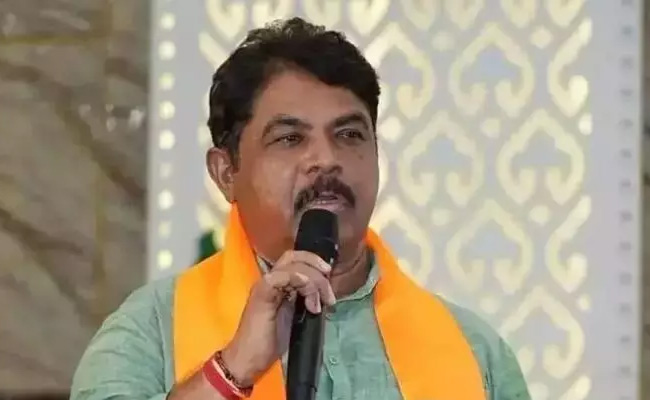
Bengaluru: Leader of Opposition in the Assembly R. Ashoka has accused the Congress government of using the hijab issue to placate what he described as discontent among minority voters after the Davanagere by-election.
In a post on X on Wednesday, Ashoka alleged that the state government, instead of addressing issues such as price rise, corruption, farmers’ distress and law and order, was attempting to retain its minority vote base by reviving the hijab issue.
Referring to the 2022 dress code introduced by the BJP government, which prohibited hijab in schools and colleges, Ashoka said the Karnataka High Court had upheld the policy and emphasised the importance of discipline in educational institutions.
He questioned the Congress government’s move to revisit the issue and asked whether setting aside the court-backed policy to benefit one community could be described as secularism.
Ashoka further alleged that while the government was willing to permit hijab, it continued to prohibit saffron shawls.
He accused the government of dividing students on religious lines rather than treating schools and colleges as spaces of equality.
Drawing a comparison with Mamata Banerjee’s government in West Bengal, Ashoka claimed that excessive appeasement politics had harmed the state and warned that the Congress in Karnataka could face a similar political response.
He said voters in Karnataka would teach the Congress a lesson for what he termed “vote-bank politics” and for compromising constitutional and judicial principles.