Quitting force due to harassment, says jawan captured by Pak; Army rejects charge
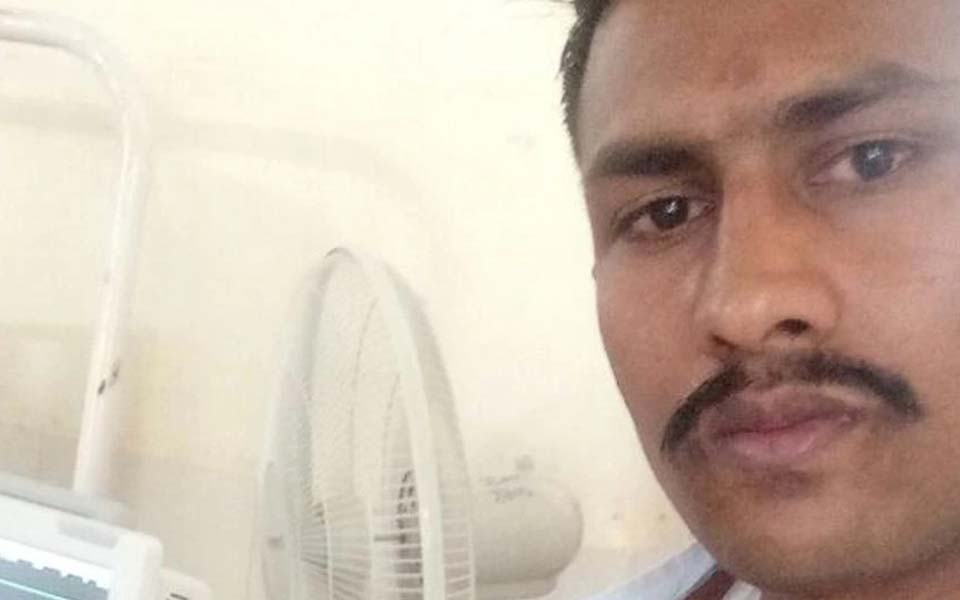
Dhule/New Delhi, Oct 5: Soldier Chandu Chavan, who inadvertently crossed into Pakistan in 2016, said he is quitting the Army due to incessant "harassment" in the force.
The Army strongly rejected his charge, saying he has been a perpetual offender and five disciplinary proceedings have been initiated against him for various offences.
"Since I came back from Pakistan, I have been continuously harassed in the Army and I am being looked at with suspicion, that is why I decided to quit," he said.
Chavan has sent his resignation letter to his unit commander in Ahmednagar, sources close to him said.
In a late evening statement, the Army said Chavan was absconding from his unit following the initiation of disciplinary proceedings against him after he was found intoxicated in the unit lines recently.
It said he was declared "absent without leave" with effect from October 3 and that repeated counselling and efforts to rehabilitate him were futile because of his "lackadaisical and complacent attitude".
"The Army will under no circumstances accept indiscipline of this nature. The unit has also not received any request for premature discharge," it said.
Chavan was captured by Pakistan Rangers and was beaten and tortured for four months before being handed over to India.
Last month, he met with an accident and remained admitted in a hospital with deep injuries to his face and skull. He broke four teeth and sustained abrasion below his eyebrow and left chin, as well as his upper lip.
The accident occurred when he was riding his two-wheeler without a helmet and ran into a pothole near his home town Bohrivir in Dhule district.
In its statement, the Army said it had received a complaint against Chavan from Dhule civil administration for "actively campaigning" during the last general election which was reported in media.
Let the Truth be known. If you read VB and like VB, please be a VB Supporter and Help us deliver the Truth to one and all.
Man arrested with Rs 2.54-crore heroin in Mumbai

Mumbai (PTI): Police have arrested a man and seized over 500 grams of heroin worth Rs 2.54 crore in the illicit market from him in Mumbai, officials said on Friday.
The police's Anti-Narcotics Cell (ANC) made the drug seizure in Santacruz in the western suburbs. The operation was conducted by the Kandivali unit of the ANC on Thursday as part of a special crackdown against drug trafficking in the area, they said.
Acting on specific inputs, an ANC team conducted a raid in Santacruz (East) and intercepted a man. During a search, the team recovered 508 grams of high-grade heroin from his possession, an official said.
The seized contraband, a highly addictive, opioid drug derived from morphine, is estimated to be worth Rs 2.54 crore in the international market, he informed.
Following the seizure, a case was registered against the man under relevant sections of the Narcotic Drugs and Psychotropic Substances (NDPS) Act, 1985, and he was formally placed under arrest in the early hours of Friday.
The police are currently investigating the source of the drug and trying to identify the intended recipients of the consignment, he said.